≥ 99 % · HPLC
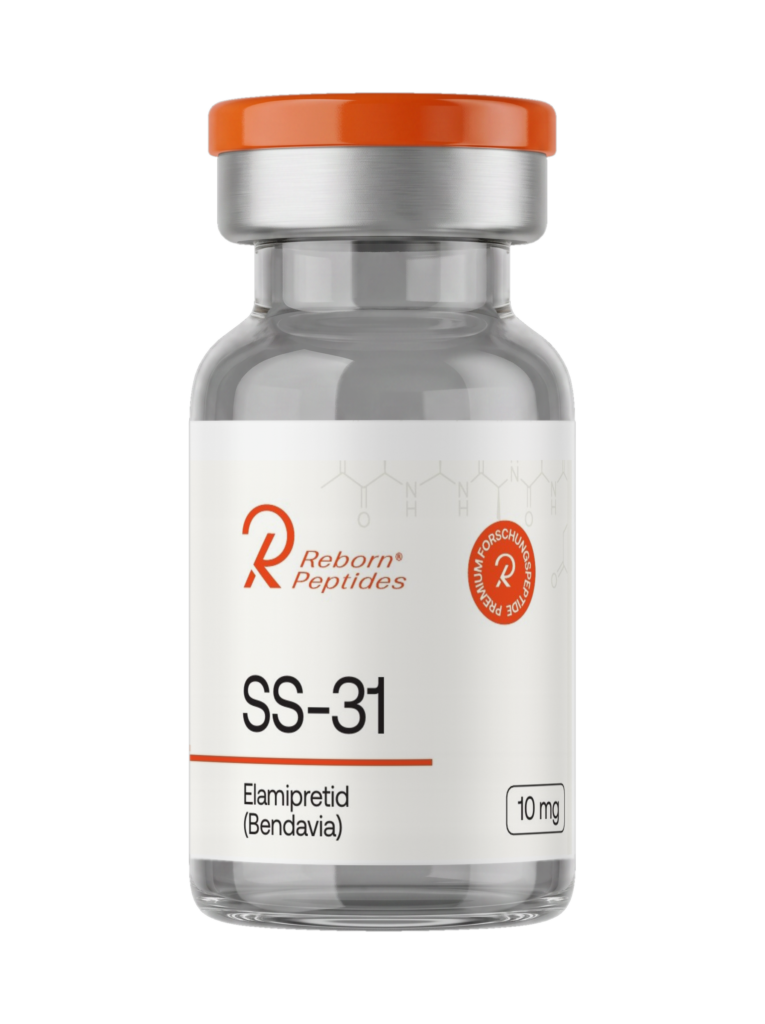
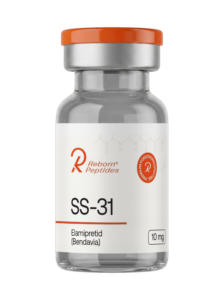
SS-31
Regeneration & Longevity
57,90 €
53,90 €
incl. shipping & VAT

Certificate of analysis per batch

≥ 99 % purity (HPLC)

Shipping across the EU

Delivery in 3–5 business days
Strength: 5 mg
Quantity:

Fast & secure payment

Delivery: 02.11. – 03.11.
Bacteriostatic water 10 ml
For reconstitution — included free with orders over €70.
Only 70,00 € until your free gift.
 View Certificate of Analysis
Laboratory analysis
Tested by an independent EU laboratory using HPLC against a reference standard. Purity and content of the sample at a glance, full report as PDF – with a verification code to check directly with the lab.
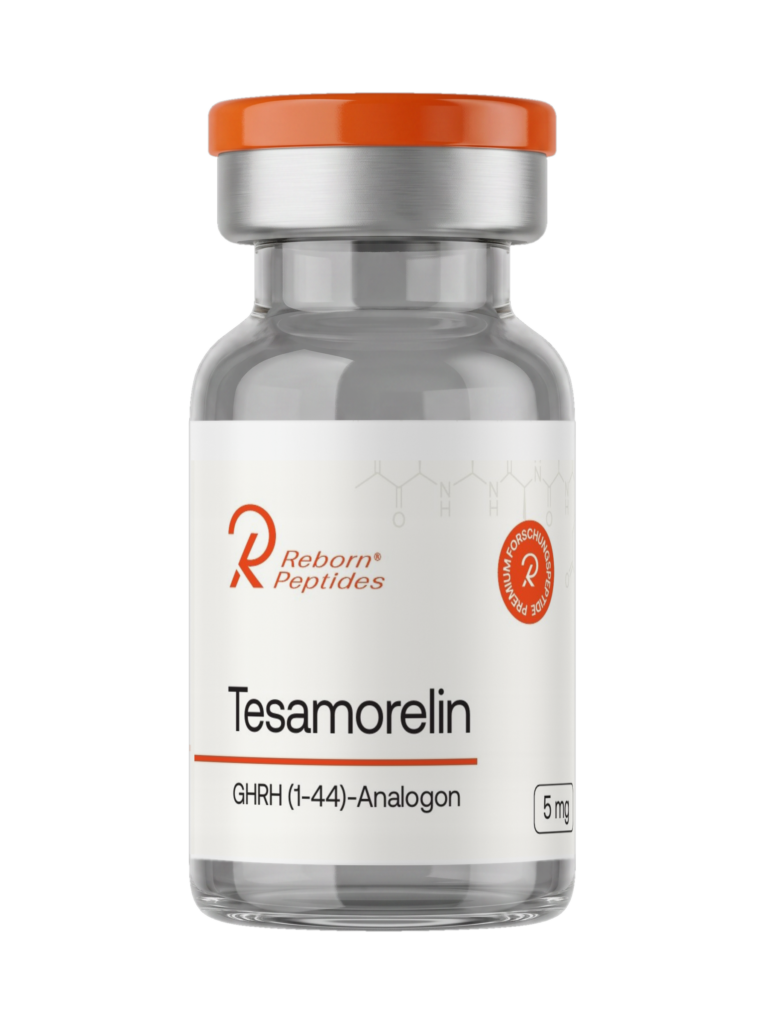
R0BSSGQ7What is Tesamorelin
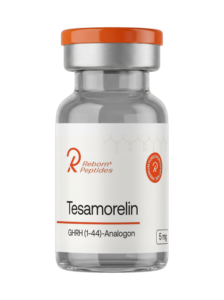
In the catalogue of research peptides Tesamorelin is a synthetic analogue of human GHRH(1-44), also identified in the literature as TH9507. Its defining structural feature is an N-terminal trans-3-hexenoyl modification. Controlled human studies have examined GHRH-receptor-linked GH/IGF-1, imaging and laboratory endpoints under specified protocols; those observations remain limited to the cited models and methods.
The Tesamorelin peptide is supplied strictly for laboratory research, not as a medicine and not for use in humans or animals. Identity, salt form, content and purity require matching product records, a batch identifier and a batch-specific COA.
Tesamorelin is a synthetic, 44-amino-acid GHRH(1-44) analogue distinguished by an N-terminal trans-3-hexenoyl group. The modification is part of the compound identity and must be considered when comparing reference records, analytical methods and research materials. Tesamorelin, Ipamorelin and HGH Fragment 176-191 are distinct compounds whose identity data are not interchangeable.
In controlled human research, the cited literature examined GHRH-receptor-linked GH/IGF-1, biochemical and imaging endpoints. Each finding remains tied to its population, protocol, sampling schedule, method and analysis plan; these measurement layers should not be collapsed into a general outcome.
Scientific literature and batch documentation are separate evidence layers. Publications cannot establish the salt form, content, physical form, purity or analytical profile of supplied material. HPLC describes method-specific chromatographic results for the analysed batch, while MS provides evidence relevant to molecular identity.
When tesamorelin is procured as a research peptide, the product designation, stated salt form, batch code, content and COA must correspond. Storage and handling must follow the applicable released product and batch records rather than general peptide practice.

Evidence
In a randomised human study, researchers reported changes in IGF-1 alongside predefined laboratory and imaging endpoints under the stated protocol.
Falutz et al. 2007 · PMID 18057338
A pooled analysis of two randomised human studies reported IGF-1 as a measured endpoint over the defined observation period.
Falutz et al. 2010 · PMID 20554713
A randomised human study measured inflammatory, adipokine and fibrinolytic markers in the defined study population.
Stanley et al. 2011 · PMID 21516030
A randomised controlled human study measured visceral adipose tissue and GH/IGF-1 endpoints in a cohort without HIV infection who had abdominal obesity and reduced GH secretion.
Makimura et al. 2012 · PMID 23015655
Product identity, salt form, content, batch code and analytical records must correspond; HPLC results remain specific to the analysed batch and stated method.
Reborn batch documentation · COA with HPLC and MS
Research status
4 selected sources — filterable by study type, each linking straight to the source.
Research Deep Dive
Model-qualified findings in depth — every claim tied to a PubMed-indexed source.
Tesamorelin peptide is described in the molecular reference as a stabilised, N-terminal trans-3-hexenoyl-modified analogue of GHRH(1-44). The unmodified reference chain GRF(1-44) is not this material. The compound classes overview provides structural context.
| Control field | Documented information |
|---|---|
| Name | Tesamorelin; development code TH9507 in the reference dataset |
| Class | Stabilised, N-terminal trans-3-hexenoyl-modified analogue of GHRH(1-44) |
| Chain length | 44 amino-acid residues in the reference dataset |
| Molecular formula | C221H366N72O67S in the molecular record's reference dataset; not a measurement of the supplied batch |
| Molecular mass | Approximately 5,135.9 Da in the molecular record's reference dataset; not a measurement of the supplied batch |
| PubChem CID | 16137828 in the molecular record's reference dataset; not a measurement of the supplied batch |
| CAS number and form | 218949-48-5 for the free base; 901758-09-6 for the acetate salt |
| Structural feature | N-terminal trans-3-hexenoyl modification in the reference dataset |
| Amino-acid sequence | The complete sequence was not established in the source documentation and must not be filled from an unlinked source; established control fields are the 44-residue chain length and N-terminal trans-3-hexenoyl modification. |
| Product code | RP-1031 in the material record's reference dataset |
| Declared quantity | 5 mg is a label and batch-document field; it establishes neither composition, purity nor measured total mass. |
| Batch purity | No general purity value is attributed to the batch, only the associated certificate of analysis. |
The two CAS numbers do not conflict; they are form-specific identifiers. Batch documentation determines which form applies to a particular batch.
Identity basis: molecular-record reference data and the batch's separate documentary chain · Falutz et al., 2007, New England Journal of Medicine, PMID 18057338
The reference record, label, batch code, sample reference, method and report perform different controls. A certificate described in the guide to understanding the COA should connect the result to the same sample and batch. The guide to lyophilised material and laboratory containers covers physical presentation; batch form and analytical values require their own documentation.
This page gives no dosage, use schedule or instructions for use. During receipt control, tesamorelin, RP-1031, label fields, batch code, report reference and document version should be reconciled. A catalogue entry is not a sample analysis.
Within the research peptides catalogue, each entry retains its own identity and batch record.
Documentary boundary between molecular reference and analysed batch · Falutz et al., 2010, Journal of Clinical Endocrinology and Metabolism, PMID 20554713
This overview describes findings in controlled research. Each publication defines its model type, cohort, variables, comparison and observation period. These frameworks are not identity or quality evidence for a supplied sample.
The guide to study models explains why every boundary belongs to its publication record. HPLC, mass spectrometry and document control belong separately to the analytical chain for the particular sample; the purity, HPLC and mass-spectrometry guide explains those method-specific limits.
The unmodified GRF(1-44) chain is not tesamorelin. This record concerns the stabilised, N-terminal trans-3-hexenoyl-modified analogue.
Research framework kept separate from batch identity control · Stanley et al., 2011, AIDS, PMID 21516030
This page does not transfer findings from investigations involving human participants to the offered laboratory material.
In the randomised clinical investigation of a cohort with visceral adipose-tissue accumulation, IGF-1, CT measurement of visceral adipose tissue and lipid parameters were measured against placebo; glucose tolerance did not deteriorate overall.
This was an investigation involving human participants.
Falutz et al., 2007, New England Journal of Medicine, PMID 18057338In the pooled analysis of two clinical phase investigations of a cohort with HIV infection and visceral adipose-tissue accumulation, IGF-1 was measured against placebo. Observation period and cohort criterion remained integral to the comparison; no clinically relevant glucose differences occurred between groups.
This was an investigation involving human participants.
Falutz et al., 2010, Journal of Clinical Endocrinology and Metabolism, PMID 20554713In the clinical investigation of a cohort with HIV infection and visceral adipose-tissue accumulation, adiponectin and fibrinolytic markers were compared against placebo. tPA antigen was lower than with placebo and PAI-1 antigen was not significant, without further interpretation.
This was an investigation involving human participants.
Stanley et al., 2011, AIDS, PMID 21516030In the randomised controlled investigation of a different cohort, without HIV infection and with abdominal obesity and reduced GH secretion, IGF-1 was higher and visceral adipose tissue lower than with placebo. The observation cannot transfer to other cohorts, designs or laboratory samples.
This was an investigation involving human participants.
Makimura et al., 2012, Journal of Clinical Endocrinology and Metabolism, PMID 23015655The four publications do not analyse the supplied batch and do not confirm its identity, chemical form, declared quantity or HPLC purity.
Four verified publication records in chronological order · Falutz et al., 2007, New England Journal of Medicine, PMID 18057338 · Makimura et al., 2012, Journal of Clinical Endocrinology and Metabolism, PMID 23015655
Findings from investigations involving human participants are not transferred to the offered laboratory material. Publication results must not be combined into a general material property. Study design, cohort criterion, measured variable, comparison and observation period limit every statement; properties outside the reported experimental frameworks are not established.
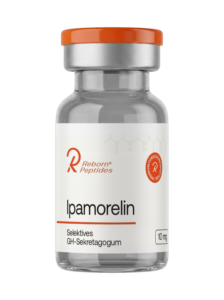
For catalogue orientation, ipamorelin has a separate identity, literature record and documentation. The link makes no comparison and transfers no property or result between catalogue entries.
Boundary by publication, cohort and study design · Makimura et al., 2012, Journal of Clinical Endocrinology and Metabolism, PMID 23015655
Identity, physical form and analytical results for a particular batch are separate information levels. Reference data and literature findings are not an unbroken documentary chain for the analysed sample.
A certificate of analysis should show substance name, product code, batch code, sample reference, method, result and report version, reconciled against the label and specification. Applicable storage and handling records should match documentation for the same batch. The guide to laboratory reconstitution documentation supplies process-record context.
This material is exclusively intended for laboratory research. It is not intended to diagnose, treat, cure or prevent disease in humans or animals and is not a medicinal product, medical device, supplement or food.

FAQ
Tesamorelin, also known in the literature as TH9507, is a synthetic GHRH(1-44) analogue with an N-terminal trans-3-hexenoyl modification.
Controlled human studies have examined GHRH-receptor-linked GH/IGF-1, biochemical and imaging endpoints. Every observation remains limited to the cited model, protocol and method.
No. Publications do not establish a supplied material's salt form, content, physical form, purity or analytical profile. These require matching product and batch documentation.
HPLC can describe a method-specific chromatographic profile and purity result for the analysed batch. MS can provide evidence relevant to molecular identity. Neither replaces sample traceability or acceptance criteria.
It is supplied exclusively as a laboratory research compound, not as a medicine and not for use in humans or animals.
Tesamorelin is a trans-3-hexenoylated GHRH analogue, Ipamorelin is a GHS-R1a agonist pentapeptide, and HGH Fragment 176-191 is a C-terminal growth-hormone fragment. Their records must remain separate.
We accept prepayment by SEPA bank transfer as well as credit card. All payments are processed securely and encrypted.
Discreet shipping from the EU, delivery in 3–5 business days. Neutral packaging with no reference to the contents.