≥ 99 % · HPLC

AOD-9604
Metabolism, Weight & Muscle
50,90 €
38,90 €
incl. shipping & VAT

Certificate of analysis per batch

≥ 99 % purity (HPLC)

Shipping across the EU

Delivery in 3–5 business days
Strength: 10 mg
Quantity:

Fast & secure payment
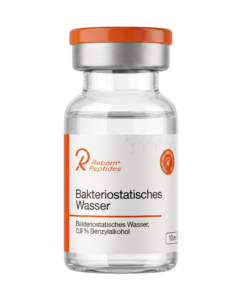
Bacteriostatic water 10 ml
For reconstitution — included free with orders over €70.
Only 70,00 € until your free gift.

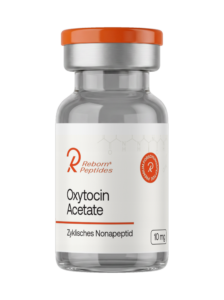
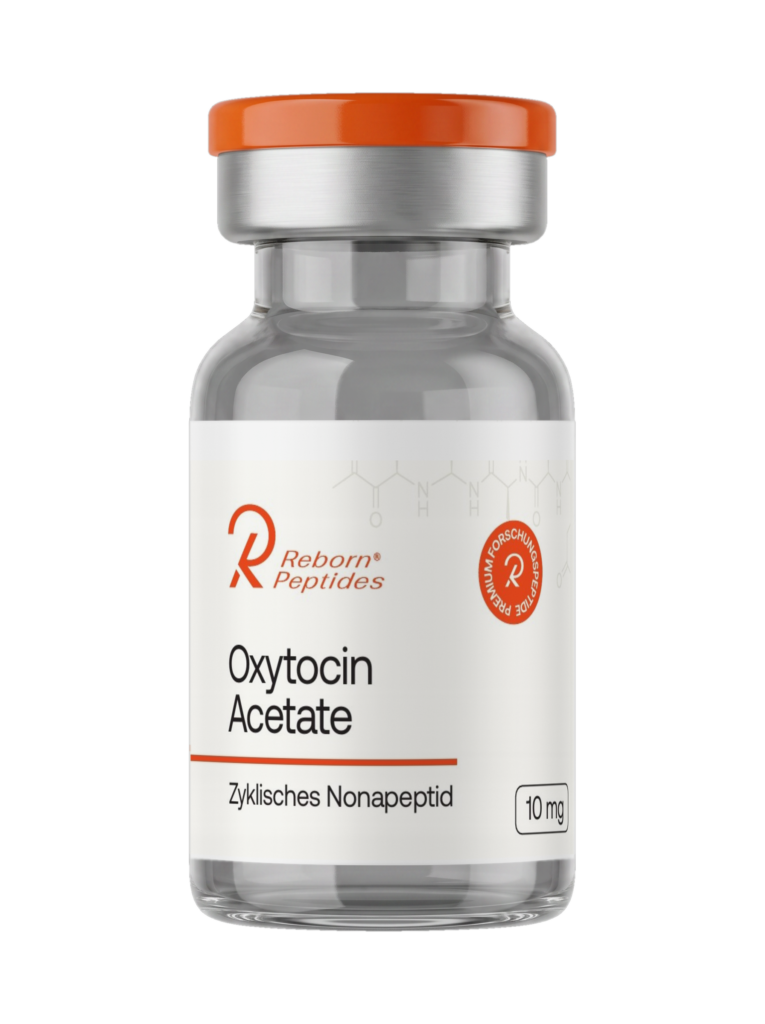
What is Oxytocin Acetate
Oxytocin acetate is the acetate salt of a cyclic, C-terminally amidated nonapeptide. Its defining structural feature is a Cys1-Cys6 disulfide bridge. The free base and the oxytocin acetate salt carry separate identity records: the monoacetate is recorded as oxytocin CAS 6233-83-6, the free base as CAS 50-56-6. A database record does not identify the form of a received batch, and salt equivalence, peptide content and purity remain properties of the documented batch.
This reagent is supplied strictly for laboratory research and is not for use in humans or animals. Product identity and analytical results require matching product, batch and COA documentation with the chemical form stated consistently.
Oxytocin acetate is a cyclic, amidated nonapeptide associated with the oxytocin receptor, OXTR, a G-protein-coupled receptor. The oxytocin peptide sequence comprises nine amino-acid residues, Cys-Tyr-Ile-Gln-Asn-Cys-Pro-Leu-Gly-NH2, placing the compound in the structural class of an oxytocin nonapeptide. Acetate is a counterion rather than an additional amino-acid residue, so gross salt mass and peptide content are not interchangeable.
The cited literature covers human receptor cloning and structure, cell-based receptor pharmacology, a preclinical rat model, a human imaging study and an observational human cohort. Every observation remains limited to its stated material, model, method and endpoint and does not establish a characteristic of supplied reagent.
Chemical identity, biological findings and batch analysis are separate evidence layers. HPLC can report a method-specific chromatographic result for the analysed batch, while MS can support molecular identity. Neither method alone answers every identity question.
For laboratory procurement, the label, specification and COA should consistently identify the acetate form and analysed batch. Physical form and binding storage conditions require confirmation against the applicable approved product and batch records.

Evidence
An expression-cloning study reported a seven-transmembrane G-protein-coupled receptor architecture for human OXTR.
Kimura et al. 1992 · PMID 1313946
A crystallography study resolved human OXTR in complex with a nonpeptide antagonist under the reported structural conditions.
Waltenspühl et al. 2020 · PMID 32832646
Transfected-cell studies examined ligand binding, phosphoinositide turnover, membrane-domain properties and G-protein subtype engagement in defined OXTR systems.
Riley et al. 1996 · PMID 8691097 · Gimpl et al. 2000 · PMID 10785367 · Busnelli et al. 2012 · PMID 22069312
Human imaging, a preclinical rat model and an observational human cohort address distinct endpoints that cannot be treated as equivalent or as batch evidence.
Kirsch et al. 2005 · PMID 16339042 · Neumann et al. 2000 · PMID 10718919 · Cox et al. 2015 · PMID 25768266
Identity, salt form, content and analytical results must refer to the same analysed batch; purity claims apply only to that batch and method.
Reborn batch documentation · COA with HPLC and MS
Research status
8 selected sources — filterable by study type, each linking straight to the source.
Research Deep Dive
Model-qualified findings in depth — every claim tied to a PubMed-indexed source.
Oxytocin acetate is the acetate salt of a cyclic, C-terminally amidated nonapeptide. The defined sequence contains nine amino-acid residues. Its Cys1–Cys6 disulfide closes a six-residue ring, while the short C-terminal segment ends in glycinamide. The disulfide bridge and terminal amide are integral parts of the covalent identity, not presentation details.
| Field | Reference specification |
|---|---|
| Name | Oxytocin Acetate |
| Class | Cyclic nonapeptide; Cys1–Cys6 disulfide; C-terminally amidated |
| Sequence | Cys-Tyr-Ile-Gln-Asn-Cys-Pro-Leu-Gly-NH2 (CYIQNCPLG-NH2) |
| Disulfide bridge | Cys1–Cys6 |
| C-terminus | Amidated |
| Molecular formula, free base | C43H66N12O12S2, free base |
| Average molecular mass, free base | 1007.2 g/mol, free base |
| CAS, free base | 50-56-6, free base |
| PubChem CID, free base | 439302, free base |
| Molecular formula, monoacetate | C45H70N12O14S2, monoacetate salt |
| Average molecular mass, monoacetate | 1067.2 g/mol, monoacetate salt |
| CAS, acetate salt | 6233-83-6, acetate salt |
| PubChem CID, monoacetate | 12004215, monoacetate salt |
| Receptor research target | Oxytocin receptor (OXTR), GPCR |
| Salt stoichiometry / peptide content | Batch-specific; to be confirmed against applicable quality documentation |
The free-base formula and average mass differ from the monoacetate-salt formula and average mass by one equivalent of acetic acid. These paired database identities do not establish which form is present in received material. A product designation, chemical form, batch code and applicable documentation should therefore remain connected.
Identity source: Kimura et al. 1992 · PMID 1313946
Acetate is a counterion rather than an additional amino-acid residue. Gross salt mass and peptide content are consequently not interchangeable quantities. Documented water and other recorded components can also affect material balance. Any quantitative interpretation should follow the batch-specific assay and applicable quality documentation rather than the theoretical formula alone.
The free base and monoacetate salt retain separate formulae, average masses, CAS identifiers and PubChem records. Each value must stay assigned to its stated molecular form.
Reduction changes the disulfide-defined covalent structure. Oxidation conditions may affect disulfide state and permit additional species such as dimers, without establishing their presence in any particular batch.
Changes in molecular state or associated impurities can change chromatographic retention. This is an analytical consideration, not a finding about supplied material.
HPLC may document a method-specific chromatographic result for the tested batch, while MS may support molecular identity when recorded for that batch. Neither method answers every question alone. The useful documentary chain connects the batch, method, result and acceptance criterion, while maintaining the distinction between free-base identity and acetate-salt composition.
Study source: Riley et al. 1996 · PMID 8691097
This section describes findings in controlled research and makes no statement about use. The records progress chronologically across eight distinct evidence settings. Model, material, method and measured endpoint delimit every entry.
A human receptor expression-cloning study measured isolation of human OXTR cDNA and assigned seven-transmembrane GPCR receptor architecture.
PMID 1313946An in-vitro ovine receptor pharmacology study measured ligand binding and phosphoinositide turnover for an ovine endometrial OXTR construct in transiently transfected COS-7 cells.
PMID 8691097A preclinical rat model measured basal and experimentally induced HPA-axis activity in male and female rats, including work concerning the paraventricular nucleus.
PMID 10718919An in-vitro human receptor membrane study measured OXTR properties in cholesterol-rich and cholesterol-poor membrane fractions using a modified receptor expressed in HEK293 cells.
PMID 10785367A human neuroimaging study measured model-specific changes in amygdala activation and amygdala-to-brainstem coupling.
PMID 16339042An in-vitro human receptor pharmacology study used biosensors to measure recruitment of G-protein subtypes by oxytocin and structurally modified peptide ligands.
PMID 22069312A human cohort study of endogenous measurements assessed associations between endogenous oxytocin measurements and cortisol-related HPA-axis reactivity.
PMID 25768266An in-vitro human receptor structural study measured human OXTR structure in complex with a nonpeptide antagonist, including receptor-associated cholesterol and Mg2+ coordination.
PMID 32832646Study sources: the eight linked PubMed records above define this evidence map.
A human receptor expression-cloning study and an in-vitro human receptor structural study address receptor architecture under their stated systems. In-vitro ovine receptor pharmacology and in-vitro human receptor pharmacology address assay-specific interactions or signalling measurements. Signals from a human neuroimaging study are indirect and study-specific. A preclinical rat model remains species- and design-bound. These evidence levels cannot be combined as though they were equivalent.
The human cohort study of endogenous measurements assessed endogenous oxytocin measurements and cortisol-related HPA-axis reactivity, and did not characterise externally supplied oxytocin acetate reagent. Endogenous measurement and an experiment with laboratory reagent answer different research questions. Likewise, a database identity describes a referenced molecular entity, study material belongs to a stated publication, and delivered material requires its own documentary chain.
The cited papers do not establish identity, purity, content, salt equivalence or physical form for supplied material. Agreement across biological observations cannot validate a commercial batch. Literature assignment should preserve molecule, model, method and endpoint; product-specific questions require the applicable label, released specification and batch documentation.
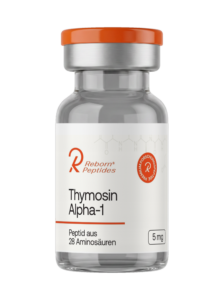
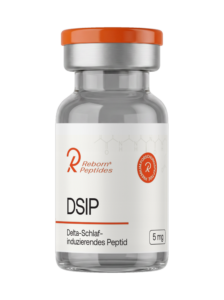
Oxytocin acetate is a cyclic nonapeptide associated with OXTR. Kisspeptin-10 is associated with KISS1R; DSIP is a linear nonapeptide without a disulfide ring; VIP is a C-terminally amidated 28-mer; Selank and Semax are neuropeptide fragments; and Thymosin Alpha-1 belongs to a separate peptide class. These are identity distinctions only. Their identifiers, analytical expectations and literature records do not transfer to oxytocin acetate.
Evidence-boundary sources: Kirsch et al. 2005 · PMID 16339042 · Cox et al. 2015 · PMID 25768266
Physical form, stated content, binding storage conditions and stability period remain open points to be established from the released product information and applicable batch documentation. No presentation, numerical content, temperature or stability interval is inferred from molecular literature or database identity.
The documentation chain should connect product designation, chemical form, batch code, analytical method and reported result. A batch COA should connect the product name and batch code to the stated tests. HPLC may provide a batch-specific chromatographic result, while MS may support identity if such evidence is reported. Any numerical purity applies only to the analysed batch and stated method.
Oxytocin acetate is supplied to laboratories in the EU as research material. Publications define research questions and model-qualified measurements; they do not certify delivered identity, content, physical form, purity, salt equivalence or stability. Those properties require reconciliation against the applicable label, released specification and batch documentation.
Research use only. For laboratory research only. Not for human or veterinary use. Not intended to diagnose, treat, cure or prevent any disease. Not a medicinal product, food or cosmetic.

FAQ
Oxytocin acetate is the acetate salt of a cyclic, C-terminally amidated nonapeptide with a Cys1-Cys6 disulfide bridge.
The literature associates the peptide with OXTR, a G-protein-coupled receptor. This target assignment does not promise an outcome in any experimental system.
Publications on the oxytocin peptide frequently omit the salt form, and the two forms have different identity records. Labels, specifications and the COA should state the chemical form consistently, while salt equivalence and peptide content remain batch-specific.
The literature includes receptor expression and structural systems, transfected-cell assays, a preclinical rat model, a human imaging study and an observational human cohort. Findings remain limited to each reported model.
No. Publications do not establish identity, purity, content, salt equivalence or physical form of supplied material; those properties require batch-specific analytical documentation.
It is supplied strictly for laboratory research and is not for use in humans or animals.
MS can support molecular identity, and HPLC can report method-specific chromatographic purity for the analysed batch. Results must be read with the matching COA.
We accept prepayment by SEPA bank transfer as well as credit card. All payments are processed securely and encrypted.
Discreet shipping from the EU, delivery in 3–5 business days. Neutral packaging with no reference to the contents.