≥ 99 % · HPLC
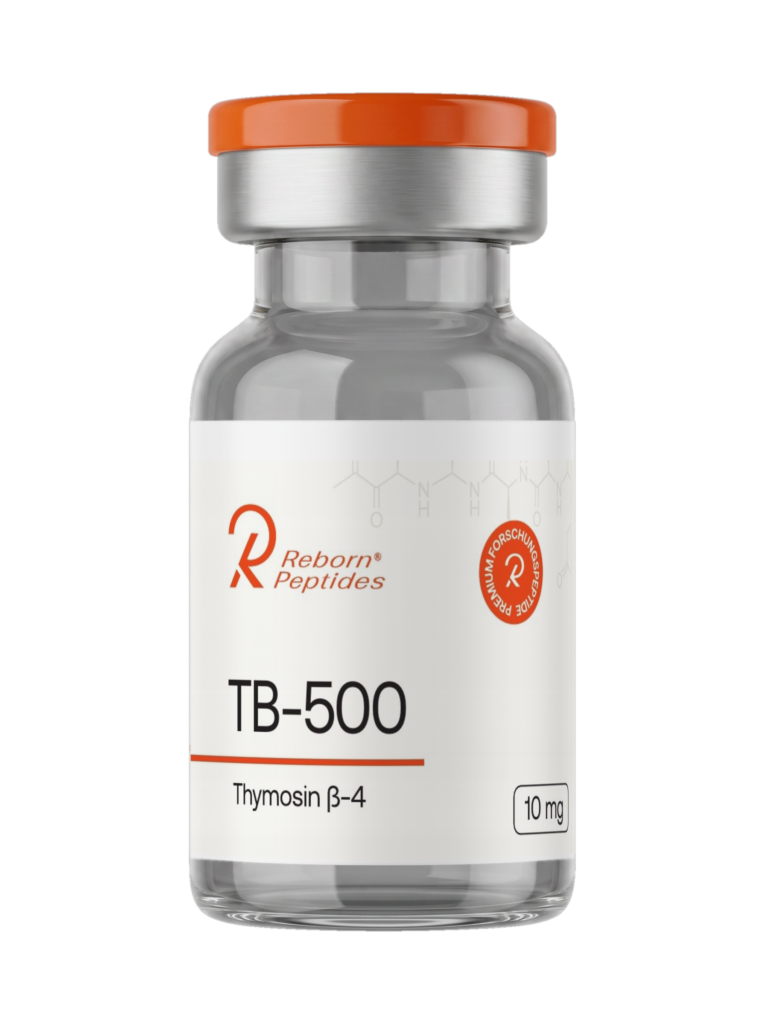
TB-500
Regeneration & Longevity
37,90 €
124,90 €
incl. shipping & VAT

Certificate of analysis per batch

≥ 99 % purity (HPLC)

Shipping across the EU

Delivery in 3–5 business days
Strength: 70 mg
Quantity:

Fast & secure payment
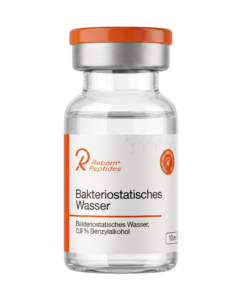
Bacteriostatic water 10 ml
For reconstitution — included free with orders over €70.
Only 70,00 € until your free gift.

What is GLOW Blend
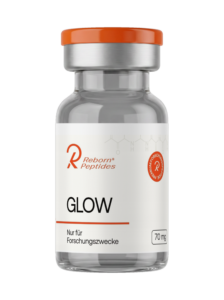
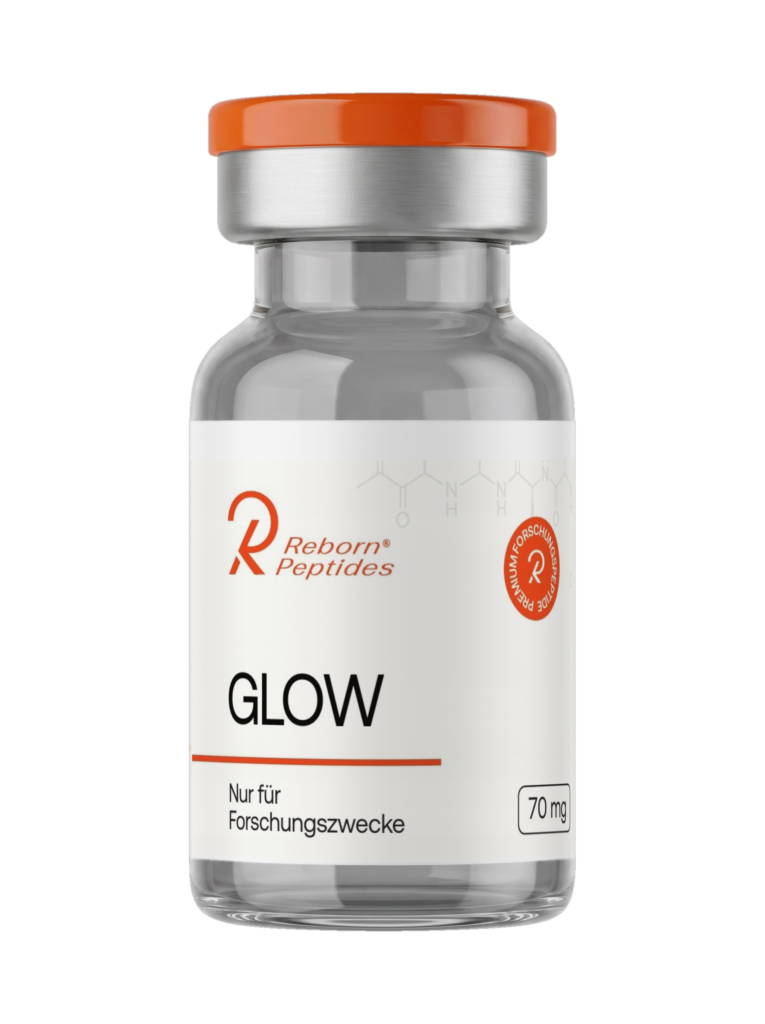
GLOW peptide is a three-component research material containing GHK-Cu 50 mg, TB-500 10 mg and BPC-157 10 mg, giving a declared total of 70 mg per vial. The material is lyophilised, and each component represents a distinct molecular research area. GLOW is a catalogue name, not a cosmetic promise.
The product is supplied strictly for laboratory research, not for use in humans or animals. Not a medicinal product, food or cosmetic. Component publications do not establish properties of the combined material.
Before procuring this glow stack peptide, laboratories should verify its component declaration, batch code and matching COA. Material listed as glow peptide for sale is supplied against the batch documentation of the vial shipped, never against a general specification.
The GLOW peptide is defined by its three-component composition: GHK-Cu 50 mg, TB-500 10 mg and BPC-157 10 mg, giving a declared total of 70 mg per vial. It is supplied as a lyophilised laboratory material. The terms glow blend peptide and glow 70mg refer to the same declared composition; total mass alone does not establish identity or batch purity.
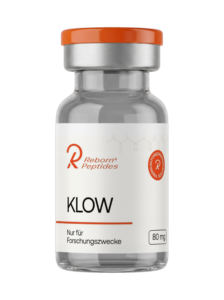
GLOW, KLOW and Wolverine are different materials. GLOW contains GHK-Cu, TB-500 and BPC-157. KLOW contains the same three components plus KPV. Wolverine contains only BPC-157 5 mg and TB-500 5 mg, for a declared total of 10 mg, and contains no copper component. GLOW contains no KPV, glutathione or ascorbic acid. Any product description that assigns those substances to GLOW refers to a different composition.
The ghk-cu tb-500 bpc-157 stack is described here at combination level, not as a monograph for any single component. GHK-Cu is a copper-bound tripeptide, BPC-157 is a synthetic 15-amino-acid peptide, and the precise TB-500 identity requires batch evidence. Ac-LKKTETQ and full-length thymosin beta-4 differ in sequence length and molecular mass. The form present can be established only from the batch designation, mass-spectrometric identity data and matching COA; until then, full-length Tβ4 literature is not evidence for the supplied TB-500 component.
Component findings remain bound to their molecule, model and endpoint. They neither establish mixture behaviour nor verify a commercial batch. HPLC results are batch- and method-specific, while identity documentation must address all three declared substances.

Evidence
GLOW comprises GHK-Cu 50 mg, TB-500 10 mg and BPC-157 10 mg, giving 70 mg declared total per vial.
Product record 102 · SKU RP-1009 · matching batch COA
KLOW adds KPV; Wolverine contains BPC-157 5 mg plus TB-500 5 mg only. GLOW contains no KPV, glutathione or ascorbic acid.
Declared product compositions
In vitro fibroblast studies measured collagen-synthesis and MMP-2-expression endpoints.
Maquart et al. 1988 · Siméon et al. 2000
Ac-LKKTETQ versus full-length thymosin beta-4 requires the batch designation, mass-spectrometric identity data and matching COA.
Esposito et al. 2012 · batch-specific MS/COA
CAM, endothelial-cell, rat and ex vivo rat-aorta systems measured angiogenesis-, VEGFR2-, Akt-, eNOS- and NO-related endpoints.
Hsieh et al. 2017 · Hsieh et al. 2020
Component publications do not establish properties, behaviour or synergy of the combination product; component findings are not evidence for the mixture.
Component-level literature only
HPLC purity results apply only to the tested batch and documented method; identity records must address all three components.
Matching batch COA · HPLC/MS records
Research status
7 selected sources — filterable by study type, each linking straight to the source.
Research Deep Dive
Model-qualified findings in depth — every claim tied to a PubMed-indexed source.
GLOW is the catalogue name for a three-component research stack. It declares GHK-Cu 50 mg, TB-500 10 mg and BPC-157 10 mg, giving 70 mg total declared peptide per vial. The name identifies a catalogue composition; it is not a statement about an effect, experimental result or analytical characteristic.
The component declaration and physical form describe the reference specification for SKU RP-1009. They do not by themselves authenticate the contents of a particular batch. Because GLOW is a multi-component material, a single CAS identifier, formula or molecular mass would incorrectly collapse three separate identities into one.
| Field | Reference specification |
|---|---|
| Catalogue name | GLOW peptide stack |
| Components | 3 |
| Declared amounts | GHK-Cu 50 mg · TB-500 10 mg · BPC-157 10 mg |
| Total declared peptide | 70 mg per vial |
| SKU | RP-1009 |
| Form | lyophilised material in a sealed vial |
| Class | three-component research stack |
| CAS / formula / molecular mass | not applicable to a multi-component material; component identity pending COA reconciliation |
TB-500 requires particular care at the specification boundary. Analytical records have described TB-500 as the N-acetylated fragment Ac-LKKTETQ, while some catalogue contexts use the same name for full-length thymosin beta-4. The exact assignment for supplied material therefore depends on agreement between the label, measured mass and matching batch documentation.
Analytical context: Esposito et al. 2012 · PMID 22962027 · Ho et al. 2012 · PMID 23084823
The profiles below map each declared component to a limited selection of its own research literature. They do not describe research on GLOW as a combined material. Model, species, method and endpoint class remain attached to the cited component and cannot be transferred to either of the other components.
GHK-Cu is the copper-bound Gly-His-Lys complex and provides the copper-peptide component of the declared stack. Published work measured collagen-synthesis and MMP-2-expression endpoints in vitro in fibroblast cultures, while a separate preclinical rat model measured connective-tissue-component accumulation; these observations remain model-specific.
TB-500 names the Tβ4-related component in the declaration, but the exact molecular form must be established for the batch. Synthesis and HPLC/HRMS work, plus animal-sample analytics, characterised Ac-LKKTETQ, whereas full-length Tβ4 work addresses a different molecular object and cannot identify this component.
BPC-157 is the declared synthetic 15-amino-acid component. Component publications measured VEGFR2-, Akt-, eNOS- and angiogenesis-related endpoints across CAM, in vitro endothelial-cell and preclinical rat models, and NO-related endpoints in ex vivo rat aorta and in vitro vascular-cell assays.
There is no cited GLOW combination literature in the source record. Component publications do not establish mixture behaviour, and their findings are neither additive nor evidence of synergy. Results cannot be transferred between GHK-Cu, TB-500 and BPC-157. Full-length Tβ4 literature is specifically not evidence for the supplied TB-500 component unless the batch COA and mass spectrometry confirm that molecular form.
A mixture-level experiment would need to define the material, batch, comparators, controls, model and analytical method independently. Similar endpoint labels across different publications do not turn distinct cell, ex vivo and animal systems into one shared result.
Component model sources: Maquart et al. 1988 · PMID 3169264 · Maquart et al. 1993 · PMID 8227353 · Siméon et al. 2000 · PMID 11045606 · Hsieh et al. 2017 · PMID 27847966 · Hsieh et al. 2020 · PMID 33051481
GLOW means the three-component composition GHK-Cu 50 mg, TB-500 10 mg and BPC-157 10 mg, with 70 mg total declared peptide. KLOW contains the same three named components plus KPV, making it a four-component composition. GLOW contains no KPV. It also contains no glutathione and no ascorbic acid.
Wolverine is a narrower two-component composition: BPC-157 5 mg and TB-500 5 mg, with 10 mg total declared peptide and no copper component. It is therefore not an alternative name for GLOW. Component count, named substances and declared quantities are the decisive distinctions between these catalogue materials.
The expressions “glow peptide”, “glow stack peptide”, “glow blend peptide” and “glow 70mg” are naming variants for the defined GLOW catalogue composition in this record. They do not change its specification, add a fourth substance or imply that unrelated materials share the same identity. Likewise, the names KLOW and Wolverine refer to their own component declarations rather than synonyms for GLOW.
These distinctions matter when interpreting component research. For example, an in vitro and preclinical rat publication concerning BPC-157 endpoints remains evidence about that named component in the stated models. Its inclusion in more than one catalogue composition does not create evidence about either combination and does not make the compositions equivalent.
Model-level example: Huang et al. 2015 · PMID 25995620
GLOW is specified as lyophilised material in a sealed vial. No temperature, stability period, shelf-life or light condition is asserted here because the source record does not verify one. Laboratory inventory records should keep the catalogue designation, SKU, batch code, component declaration and associated analytical documents traceable as one set.
A Certificate of Analysis must be attributable to the applicable batch through its batch code. For a three-component material, identity documentation must address all three declared substances rather than treating total mass or one chromatographic signal as proof of the whole composition. The record should connect the material designation and batch code with test date, method and reported result.
Mass spectrometry is particularly relevant to the TB-500/Tβ4 distinction because Ac-LKKTETQ and full-length thymosin beta-4 differ in sequence length and molecular mass. The label designation, measured mass and COA must agree before an exact molecular form is treated as confirmed. An in vitro biochemical record concerning full-length Tβ4 does not bridge that identity gap.
HPLC may report a chromatographic profile or method-specific purity result for the tested batch. It does not alone establish every component identity, and any numerical purity statement must remain limited to the named batch and stated method. No general purity percentage is claimed for GLOW.
Molecular-form boundary: Safer et al. 1991 · PMID 1999398
GLOW is supplied to laboratories in the EU as research material. The catalogue composition supports material identification and inventory control; it does not define an experimental protocol or predict an outcome. Before material is assigned to a controlled study, the product designation, SKU, batch code, component declaration and applicable COA should be reconciled.
Published component literature provides model-specific context only and does not certify supplied material. Any discrepancy between the label, specification and batch documentation should be resolved before the composition or analytical status is stated as a batch fact. Research records should preserve the separation between component literature, combination-level measurements and batch-specific analysis.
Research use only. For laboratory research only. Not for human or veterinary use. Not intended to diagnose, treat, cure or prevent any disease. Not a medicinal product, food or cosmetic.
FAQ
GLOW is a lyophilised three-component laboratory material containing GHK-Cu 50 mg, TB-500 10 mg and BPC-157 10 mg, giving a declared total of 70 mg per vial. GLOW is a catalogue name, not a cosmetic promise.
GLOW contains GHK-Cu, TB-500 and BPC-157. KLOW contains those three plus KPV. Wolverine contains only BPC-157 5 mg and TB-500 5 mg, for a declared total of 10 mg, with no copper component. GLOW contains no KPV, glutathione or ascorbic acid.
The name alone cannot decide this. Ac-LKKTETQ and full-length thymosin beta-4 differ in sequence length and molecular mass. The exact assignment requires the batch designation, mass-spectrometric identity data and matching COA. Until then, full-length Tβ4 literature is not evidence for the supplied TB-500 component.
It provides model-specific context for the separately studied substances. It does not test this combined material, demonstrate mixture behaviour or make findings transferable between components.
The selected publications used in vitro fibroblast cultures to measure collagen-synthesis and MMP-2-expression endpoints. These observations remain specific to the stated systems.
Analytical work characterised TB-500 as Ac-LKKTETQ, while separate biochemical work examined full-length thymosin beta-4 and actin-monomer binding. These bodies of evidence cannot be treated as interchangeable.
Selected studies examined angiogenesis-, VEGFR2-, Akt-, eNOS- and NO-related measurements in CAM, endothelial-cell, preclinical rat and ex vivo rat-aorta systems.
The component declaration, batch code, analytical methods and results should be read together. HPLC can report a method-specific chromatographic result for the tested batch, while mass spectrometry is relevant to component identity. No general purity percentage is claimed.
GLOW is supplied strictly for laboratory research, not for use in humans or animals. Not a medicinal product, food or cosmetic.
We accept prepayment by SEPA bank transfer as well as credit card. All payments are processed securely and encrypted.
Discreet shipping from the EU, delivery in 3–5 business days. Neutral packaging with no reference to the contents.