≥ 99 % · HPLC
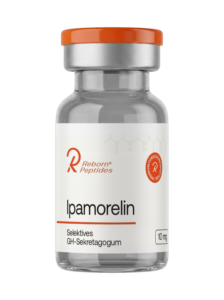
Ipamorelin
Metabolism, Weight & Muscle
44,90 €
57,90 €
incl. shipping & VAT

Certificate of analysis per batch

≥ 99 % purity (HPLC)

Shipping across the EU

Delivery in 3–5 business days
Strength: 10 mg
Quantity:

Fast & secure payment
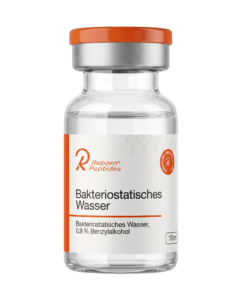
Bacteriostatic water 10 ml
For reconstitution — included free with orders over €70.
Only 70,00 € until your free gift.

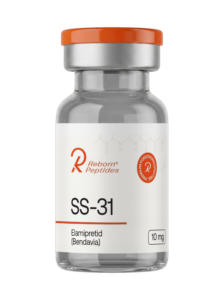
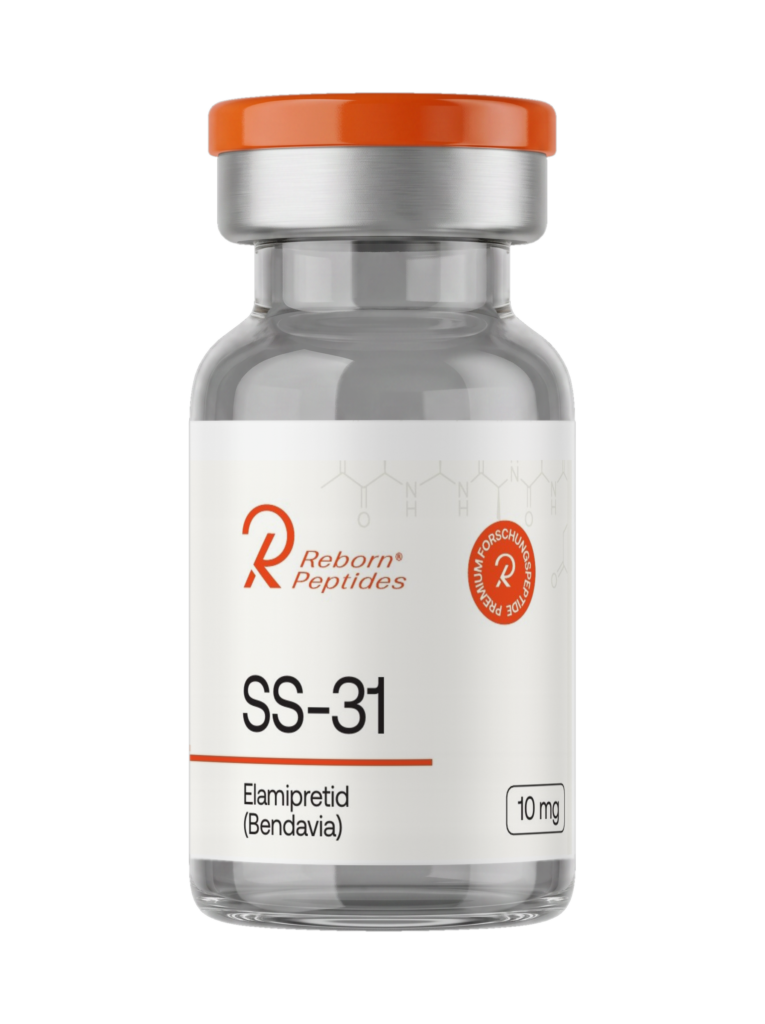
What is SS-31
SS-31 is a synthetic, amidated tetrapeptide studied for interactions with mitochondrial membranes. Its aromatic-cationic motif and affinity for cardiolipin form the mechanistic centre of research using lipid bilayers, isolated mitochondria, cell systems and preclinical animal models. These evidence levels remain distinct.
The SS-31 peptide is supplied strictly for laboratory research and is not for use in humans or animals. Product identity, molecular form and purity require matching batch documentation and a Certificate of Analysis (COA).
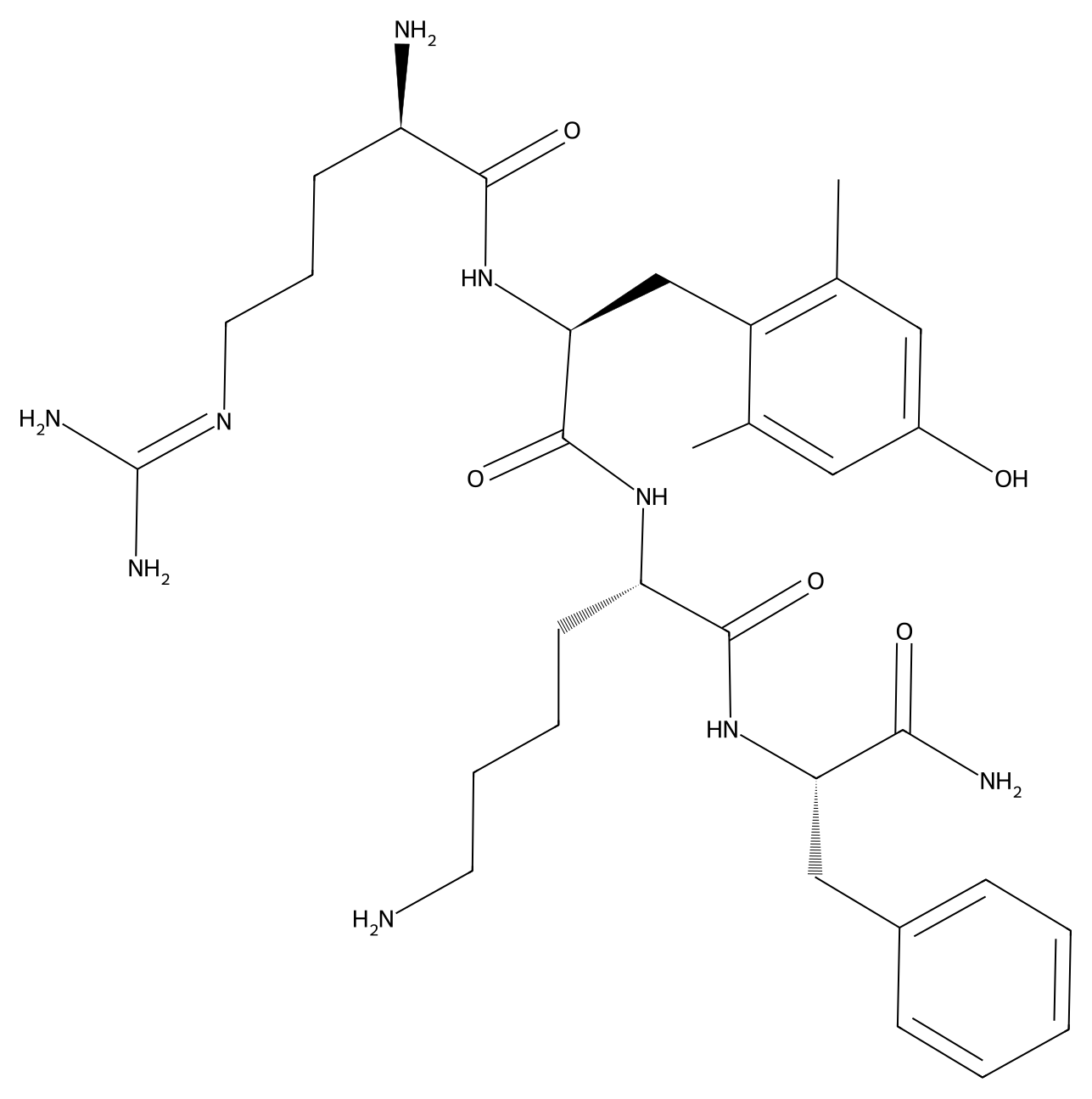
SS-31 comprises the amidated sequence D-Arg-Dmt-Lys-Phe-NH2, where Dmt denotes 2',6'-dimethyltyrosine. The literature also uses the name elamipretide for the same molecular identity, which connects publications concerning it. A synonym alone cannot assign analytical findings to supplied material.
Mechanistic research has examined SS-31 binding in cardiolipin-containing systems, membrane-surface electrostatics and mitochondrial protein interactions. Separate preclinical work has reported model-specific mitochondrial, energetic and redox endpoints in isolated mitochondria, rat models, aged mice and H9C2 cells. Findings remain limited to the stated model, method and intervention design.
SS-31 vs MOTS-c: SS-31 is a synthetic, membrane-addressed tetrapeptide, whereas MOTS-c is described as a mitochondrial-encoded peptide in mitonuclear-signalling research. Their origins, sequences, research questions and analytical records differ, so findings, identifiers and COAs cannot be transferred between them.
Laboratories assessing an SS-31 peptide UK research-market listing should reconcile the product name, SKU RP-1029, batch code, stated content and COA. HPLC may document method-specific purity for the named batch, while suitable MS data can support identity assessment. Binding storage conditions must come from the released label, specification and batch documentation; none are inferred here.
Evidence
In isolated mitochondria and a rat renal ischaemia-reperfusion model, SS-31 showed cardiolipin binding; the rat component reported cristae, swelling and ATP-recovery endpoints.
Birk et al. 2013 · PMID 23813215
Proteomics identified mitochondrial SS-31 interactors enriched in several functional groupings; association does not establish increased or decreased pathway activity.
Chavez et al. 2020 · PMID 32554501
In cardiolipin-containing model lipid bilayers, SS-31 binding modified membrane-surface electrostatics under the defined in-vitro conditions.
Mitchell et al. 2020 · PMID 32273339
An aged-mouse skeletal-muscle model reported changes in mitochondrial ATP production, oxidative-phosphorylation coupling and redox-homeostasis markers.
Campbell et al. 2019 · PMID 30597195
H9C2 cell findings were reported separately; the rat component combined SS-31 with mitochondrial transplantation and cannot be assigned to SS-31 alone.
Lee et al. 2018 · PMID 30223594
Research status
5 selected sources — filterable by study type, each linking straight to the source.
Research Deep Dive
Model-qualified findings in depth — every claim tied to a PubMed-indexed source.
SS-31 peptide is a four-amino-acid-residue chain with a terminal amide, described by the sequence D-Arg-Dmt-Lys-Phe-NH2. Dmt denotes 2',6'-dimethyltyrosine. This construction is a tetrapeptide, not a protein or an active ingredient. Amidation is part of its structural identity.
| Characteristic | Information |
|---|---|
| Name / synonyms | SS-31; SS 31; elamipretide; MTP-131; Szeto-Schiller peptide |
| Class | Synthetic amidated tetrapeptide for which mitochondrial accumulation is described in the literature; this is a structural-class description |
| Sequence | D-Arg-Dmt-Lys-Phe-NH2; Dmt denotes 2',6'-dimethyltyrosine. Only arginine has the D configuration; the Dmt residue has the L configuration, as represented by H-D-Arg-Tyr(2,6-diMe)-Lys-Phe-NH2 |
| Molecular formula | C32H49N9O5 (free base) |
| Molecular mass | approximately 639.80 g/mol (average mass of the free base) |
| PubChem CID | 11764719 |
| CAS number | 736992-21-5 (free base; PubChem CID 11764719 and FDA GSRS UNII 87GWG91S09). PubChem reports 1354575-91-9 as obsolete, so it is not reproduced here; a salt form may have a different identifier |
| SKU / format | RP-1029; lyophilised material in a vial |
| Declared content | 10 mg per vial according to the label |
The formula and mass describe the free base. They do not determine the salt form, hydration state or exact mass of material from a specific batch. Assignment to a sample depends on agreement between the label, batch code and COA.
The compound classes overview provides the wider structural classification framework.
The catalogue groups research peptides as distinct entries with their own identities and batch documentation.
Source: Birk AV et al. (2013), Journal of the American Society of Nephrology · PMID 23813215
Catalogues and analytical records also use SS 31 without the hyphen, along with the expression SS 31 peptide. The compact form SS31 appears in the same catalogues and in the title of one cited publication (Lee et al. 2018). MTP-131 is another recorded code variant. The name Szeto-Schiller peptide indicates the origin of the initials in SS-31. These variants alone cannot assign a result: the amidated sequence, declared form, batch code and analytical records must agree.
The description “mitochondria-targeted” names behaviour observed in measurement systems and assigns no destination to supplied material. Likewise, “mitochondrial accumulation” qualifies the experimental conditions reported by the authors. It is neither a general characteristic of every batch nor an extrapolation beyond the models studied.
Binding to cardiolipin is a chemical observation obtained in defined environments.
A result in a model membrane does not automatically become a cellular or animal result.
A COA should identify the sample, batch code, method and result; these fields must agree with the label and specification.
MOTS-c has its own sequence, identity and documentation as a separate research material. This link marks an identity boundary. It makes no outcome comparison.
Sources: PMID 23813215 · PMID 32273339
This overview describes findings in controlled research and ties each measurement to the publication's model, method, sample material and observation period. Guidance on study models helps keep isolated organelles, cell lines, proteomics, model membranes and animal models separate.
Birk et al. (2013) reported cell-free observations on cardiolipin binding and cytochrome c peroxidase activity alongside a rat renal ischaemia-reperfusion model; the abstract does not enumerate the full set of experimental systems used. The compound bound cardiolipin with high affinity in the described system. The complex formed with this lipid inhibited cytochrome c peroxidase activity associated with cardiolipin peroxidation. These are chemical and biochemical observations confined to the study conditions.
Birk AV et al. (2013) · PMID 23813215Lee et al. (2018) combined the H9C2 cell line with a rat myocardial ischaemia-reperfusion model. In H9C2 cells, the compound reduced menadione-induced oxidative-stress markers and increased SIRT1 and SIRT3 expression as well as ATP content. The animal component combined two interventions, SS-31 and mitochondrial transplantation, as the publication title also states. Cardiac, inflammatory and mitochondrial measurements from that component are therefore outcomes of the combined design and are not attributed here to SS-31 alone.
Lee FY et al. (2018) · PMID 30223594Campbell et al. (2019) measured skeletal-muscle mitochondrial criteria in young and old female mice. In this model, the compound reversed the age-related decline in maximal mitochondrial ATP production and in vivo oxidative-phosphorylation coupling. The authors also recorded restored markers of redox homeostasis. Exercise-tolerance measurements in the model were higher without an increase in mitochondrial content. This distinction separates measured functional criteria from a simple variation in protein quantity.
Campbell MD et al. (2019) · PMID 30597195Chavez et al. (2020) used chemical cross-linking proteomics with mass spectrometry to map mitochondrial proteins interacting with the compound. The interacting proteins, all known cardiolipin binders, fell into two groups: proteins involved in ATP production through the oxidative phosphorylation pathway and proteins involved in 2-oxoglutarate metabolic processes. The result is a map of the interactome and functional group membership; the publication does not report a direction of change in the cited context.
Chavez JD et al. (2020) · PMID 32554501Mitchell et al. (2020) analysed the interactions of the compound with model and mitochondrial membranes. It partitioned into the membrane interfacial region and modulated membrane surface electrostatics. The finding documents a change without defining it unambiguously as an increase or decrease. The authors extended the same design to mitochondrial membranes and isolated mitochondria. This biophysical level describes interaction with the membrane studied and remains distinct from cellular or animal observations.
Mitchell W et al. (2020) · PMID 32273339Sources: PMID 23813215 · PMID 30223594 · PMID 30597195 · PMID 32554501 · PMID 32273339
All cited results come from isolated systems, cell cultures or animal models; this page lists no study involving human participants. That absence is not an argument in favour of the material.
The purity, HPLC and mass-spectrometry guide explains why a chromatographic result is sample-, method- and batch-specific rather than a general literature property.
Sources: PMID 32554501 · PMID 32273339
HPLC purity belongs to the sample, batch code and certificate method. It applies within the limits of that method, not to other batches. The guide to understanding the COA distinguishes chromatographic results, identity evidence and traceability. No percentage independent of a batch COA is assigned here.
An HPLC analysis alone does not confirm sequence or identity. Appropriate data, including mass spectrometry, are required. The documentary chain should connect the name, SKU RP-1029, batch code, declared content of 10 mg, sample and COA. The label and certificate should display the same code.
The guide to lyophilised material and laboratory containers describes the physical presentation of the material.
Applicable storage and handling records should be reconciled with the released documentation for the same batch. Generic conditions cannot be inferred from the molecular literature.
Before procurement, a laboratory should check the name, four-amino-acid-residue sequence, amidation, supply format, declared content, batch code and corresponding certificate of analysis. The spelling on every record should refer to the same structure and sample.
Reborn Peptides SRL presents this research reagent exclusively for laboratory research. It is not intended for use on people or animals.
Research use only. For laboratory research only. Not for human or veterinary use. Not intended to diagnose, treat, cure or prevent any disease. Not a medicinal product, food or cosmetic.

FAQ
SS-31 is a synthetic, amidated tetrapeptide with the sequence D-Arg-Dmt-Lys-Phe-NH2. Published research examines its interaction with cardiolipin-containing mitochondrial membrane systems.
The cited literature includes model lipid bilayers, mitochondrial proteomics, isolated mitochondria, cell systems and preclinical rat and mouse models. Results remain limited to each stated model and method.
SS-31 is a synthetic, membrane-addressed tetrapeptide, whereas MOTS-c is described as a mitochondrial-encoded peptide studied in mitonuclear signalling. Their identities, research questions and analytical documentation are distinct.
Strictly for laboratory research and not for use in humans or animals. The page provides no instructions for use and makes no claim beyond the cited experimental systems.
The product identifier, molecular form, batch code and analytical records must correspond. Purity is batch-specific and method-specific and should be read from the applicable COA.
We accept prepayment by SEPA bank transfer as well as credit card. All payments are processed securely and encrypted.
Discreet shipping from the EU, delivery in 3–5 business days. Neutral packaging with no reference to the contents.