≥ 99 % · HPLC
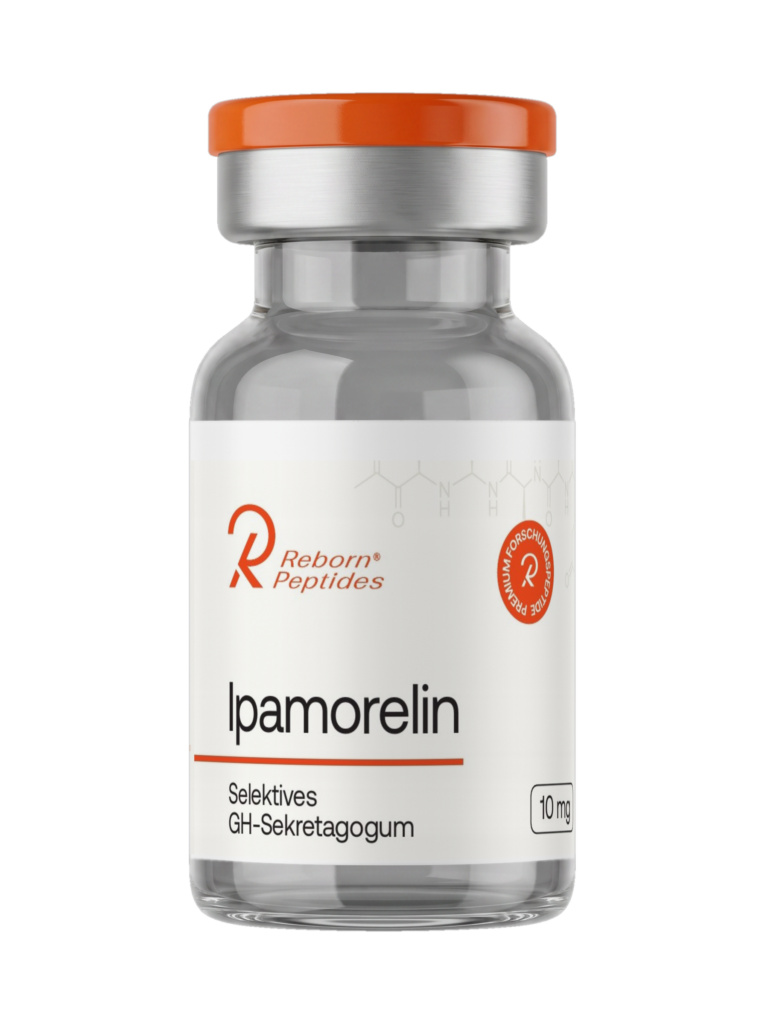
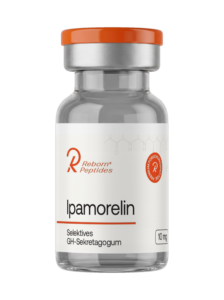
Ipamorelin
Metabolism, Weight & Muscle
44,90 €
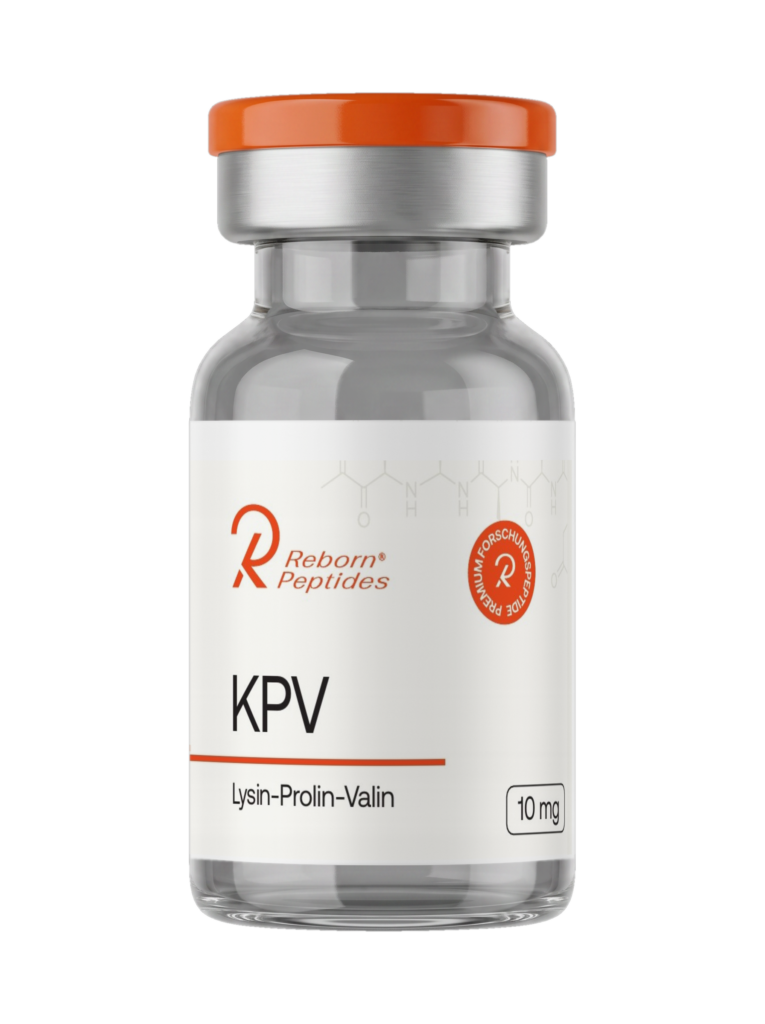
54,90 €
incl. shipping & VAT

Certificate of analysis per batch

≥ 99 % purity (HPLC)

Shipping across the EU

Delivery in 3–5 business days
Strength: 10 mg
Quantity:

Fast & secure payment

Delivery: 02.11. – 03.11.
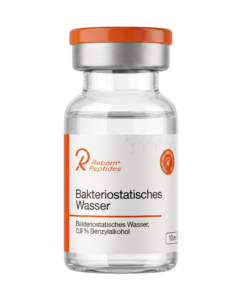
Bacteriostatic water 10 ml
For reconstitution — included free with orders over €70.
Only 70,00 € until your free gift.

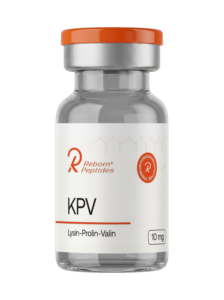
What is KPV
KPV is the tripeptide Lys-Pro-Val, a three-amino-acid sequence corresponding to residues 11–13 at the C-terminus of alpha-melanocyte-stimulating hormone (alpha-MSH). It is not the full 13-residue alpha-MSH molecule. This molecular identity and its distinct research record define KPV.
Published research has examined KPV in cell cultures, murine systems and a rabbit corneal epithelial model, with each observation limited to the stated model, method and endpoint. Reborn catalogues KPV under SKU RP-1016 as a kpv 10mg research article; the fill quantity per unit and the presentation must be confirmed against the label, the product specification and the COA for the applicable batch. The material is supplied strictly for laboratory research and not for use in humans or animals.
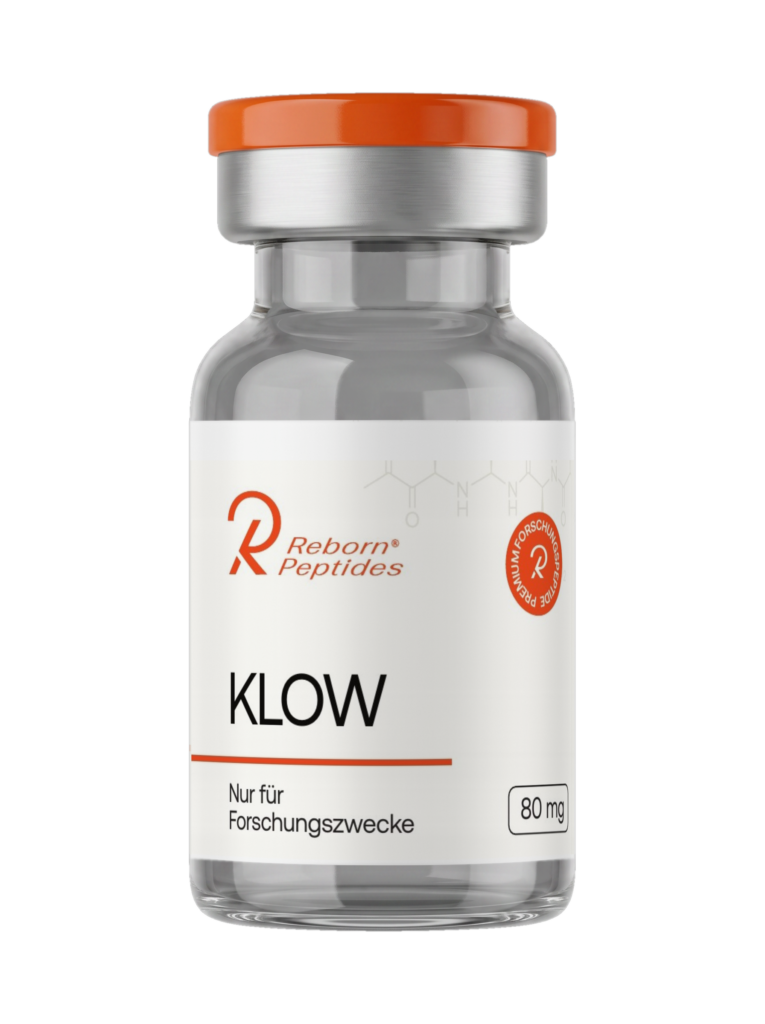
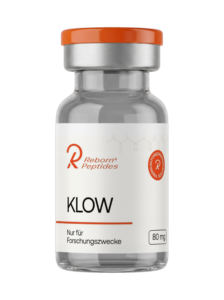
KPV is a synthetic tripeptide with the sequence K-P-V, expanded as Lys-Pro-Val. Describing it as an alpha-MSH fragment identifies its sequence lineage: KPV reproduces the final three residues of alpha-MSH, not the full molecule. Sequence ancestry does not transfer every property or signalling interaction reported for alpha-MSH to KPV. Lys-Pro-Val is also not GHK-Cu, which is a copper(II) complex of the Gly-His-Lys sequence and carries no shared identity with KPV, and it is not the separately catalogued VIP peptide, whose similar-looking abbreviation is no reason to substitute it. KPV appears as one declared component of the KLOW stack, but that component relationship does not transfer findings from isolated KPV to the combined composition; KPV publications, a KPV batch certificate and KLOW documentation answer separate questions and stay separately attributable.
The cited literature spans distinct experimental questions. Dalmasso and colleagues examined PepT1-mediated uptake and signalling measurements in intestinal epithelial and immune-cell systems and murine colitis models. Viennois and colleagues used a murine colitis-associated carcinogenesis model, while Xiao and colleagues studied a formulated nanoparticle and hydrogel system in a murine colitis model. Findings from a carrier-based system cannot be assigned to unformulated lyophilised KPV powder.
Other publications examined IL-1beta-related measurements in a murine inflammation model, selected endpoints in two murine colitis models, signalling in cultured human bronchial epithelial cells, particulate-matter stress in keratinocyte and three-dimensional skin models, a rabbit corneal epithelial model and microbial-growth measurements in vitro. These endpoints cannot be collapsed into a universal mechanism or a human outcome.
Reborn catalogues the article as kpv 10mg under SKU RP-1016; that is a catalogue entry, not a verified fill quantity or presentation. UK suppliers list KPV at 500 mcg, 5 mg and 10 mg and additionally offer capsule presentations, so a strength or format stated by one supplier says nothing about another's material. Reborn's article is catalogued as laboratory material, not as a capsule product — a neutral format distinction that implies no performance difference and recommends no route. Product identity, declared amount and any purity result must be supported by the label, specification and COA for the applicable batch.
A batch-attributable COA should connect the KPV designation, batch code, analytical method and result. Any HPLC purity finding applies only to the tested batch and method. Published work on reference KPV does not verify the identity, amount, purity or performance of supplied material.

Evidence
KPV is Lys-Pro-Val, the C-terminal alpha-MSH sequence corresponding to residues 11–13; it is not full-length alpha-MSH.
Luger et al. 2007 · PMID 17934097
PepT1-mediated uptake and downstream measurements were examined in defined cell systems and murine colitis models.
Dalmasso et al. 2008 · PMID 18061177
PepT1 dependence and tumour-burden measurements were examined in a murine colitis-associated carcinogenesis model, not in humans.
Viennois et al. 2016 · PMID 27458604
Targeted uptake and mucosal measurements were examined with hyaluronic-acid-functionalised nanoparticles and a hydrogel system in a murine colitis model.
Xiao et al. 2017 · PMID 28143741
Signalling measurements were examined in cultured human bronchial epithelial cells under specified stimuli; human cells do not constitute a human study.
Land 2012 · PMID 22837805
Published findings do not establish the identity, amount or purity of supplied material; analytical results apply to the corresponding tested batch.
Reborn batch documentation · COA with HPLC
Research status
10 selected sources — filterable by study type, each linking straight to the source.
Research Deep Dive
Model-qualified findings in depth — every claim tied to a PubMed-indexed source.
The KPV peptide is the three-amino-acid sequence lysine-proline-valine, also written as Lys-Pro-Val or K-P-V. It corresponds to residues 11–13 at the C-terminus of alpha-melanocyte-stimulating hormone. This lineage identifies the final three residues of alpha-MSH; it does not make the KPV tripeptide the full 13-residue molecule or transfer every property reported for full-length alpha-MSH.
Reborn catalogues the article under SKU RP-1016, with “kpv 10mg” used as its catalogue entry. This wording is not a verified fill quantity or presentation. Amount and physical form remain subject to reconciliation across the released label, product specification and Certificate of Analysis for the applicable batch.
| Field | Reference specification |
|---|---|
| Name | KPV / Lys-Pro-Val |
| Code / SKU | RP-1016; catalogued as “kpv 10mg” |
| Lineage | alpha-MSH residues 11–13 |
| Class | Synthetic tripeptide |
| Molecular formula | C16H30N4O4 |
| Approximate molecular mass | 342.4 g/mol |
| PubChem CID | 125672 |
| InChIKey | YSPZCHGIWAQVKQ-AVGNSLFASA-N |
| CAS identifier | per COA reconciliation |
Reference identifiers must be read against the offered molecular form and batch documents. They do not authenticate supplied material, and salt or other form-specific information may be stated only when released documentation supports it.
Identity and lineage sources: Getting et al. 2003 · PMID 12750433 · Bonfiglio et al. 2006 · PMID 16965771
PepT1-mediated uptake describes transport through the peptide transporter examined in defined intestinal epithelial, immune-cell and murine systems. Dalmasso and colleagues connected this transport question with NF-kappaB activation, MAP-kinase activation and cytokine-response measurements in in vitro intestinal epithelial and immune-cell models and murine colitis models. Viennois and colleagues examined PepT1 dependence through wild-type and knockout mice in a murine colitis-associated carcinogenesis model.
Uptake and transporter dependence are model-bound measurements. They do not establish how unrelated systems will respond.
Activation, nuclear-import and oxidative-stress measurements were reported under specified cellular stimuli in intestinal, bronchial epithelial, keratinocyte and three-dimensional skin models.
The C-terminal alpha-MSH sequence was examined in murine models, including a mechanism reported as distinct from classical melanocortin-receptor activation in the Getting design.
Land examined p65RelA nuclear import, NF-kappaB signalling, importin-alpha3 and melanocortin-related signalling in an in vitro human bronchial epithelial-cell model under specified stimuli. Sung and colleagues measured reactive oxygen species, IL-1beta, viability and MAPK/NF-kappaB endpoints in in vitro human keratinocytes and three-dimensional skin models exposed to fine particulate matter. These are mechanistic endpoints within their named systems, not human outcomes.
Xiao and colleagues used hyaluronic-acid-functionalised nanoparticles and a hydrogel system in cell-uptake work and a murine colitis model. Carrier and formulation are integral to those findings, which cannot be assigned to unformulated KPV material.
Mechanism sources: Dalmasso et al. 2008 · PMID 18061177 · Viennois et al. 2016 · PMID 27458604 · Land 2012 · PMID 22837805 · Sung et al. 2025 · PMID 40073467 · Xiao et al. 2017 · PMID 28143741
This section describes findings in controlled research and makes no statement about use. The records must be read by model, species, stressor, transport system, method and measured endpoint; they do not form a body of human intervention evidence.
Microbial and human-neutrophil models involving Staphylococcus aureus and Candida albicans measured microbial growth and neutrophil-associated killing under the paper's experimental conditions.
PMID 10670585An in vitro human bronchial epithelial-cell model examined p65RelA nuclear import, NF-kappaB signalling, importin-alpha3 and melanocortin-related signalling under specified stimuli.
PMID 22837805In vitro human keratinocytes and three-dimensional skin models exposed to fine particulate matter were used to measure reactive oxygen species, IL-1beta, viability and MAPK/NF-kappaB endpoints.
PMID 40073467A murine inflammation model measured polymorphonuclear-leukocyte accumulation and IL-1beta-related variables while examining the C-terminal alpha-MSH sequence.
PMID 12750433A rabbit corneal epithelial model measured re-epithelialisation and nitric-oxide-related endpoints. The observations remain species- and tissue-specific.
PMID 16965771In vitro intestinal epithelial and immune-cell work and murine colitis models connected PepT1-mediated uptake with NF-kappaB, MAP-kinase and cytokine-response measurements.
PMID 18061177A murine colitis-associated carcinogenesis model compared wild-type and knockout mice to examine PepT1-dependent uptake and tumour-burden measurements.
PMID 27458604The review classified KPV among alpha-MSH-related peptides studied for anti-inflammatory and immunomodulating mechanisms. It reports no new measurement.
PMID 17934097Two further murine records refine, rather than remove, these boundaries. Kannengiesser and colleagues measured body-weight recovery and inflammatory infiltrates in two murine colitis models. Xiao and colleagues measured targeted cellular uptake, mucosal markers and TNF-alpha in a carrier-dependent nanoparticle and hydrogel system used in a murine colitis model.
Additional study sources: Kannengiesser et al. 2008 · PMID 18092346 · Xiao et al. 2017 · PMID 28143741
KPV, K-P-V and Lys-Pro-Val name the same three-residue sequence. “alpha-MSH 11–13” describes its lineage, not full-length alpha-MSH. Sequence ancestry does not imply that KPV reproduces every property or signalling interaction reported for the full 13-residue molecule.
GHK-Cu is a copper(II) complex of the Gly-His-Lys sequence. KPV is Lys-Pro-Val and carries no copper designation; sequence, chemical identity and literature record differ. KPV is also a declared component of KLOW, but a component relationship does not transfer findings from isolated KPV to the combined composition. VIP is a separately catalogued peptide with a different molecule, literature record and batch documentation despite its similar-looking abbreviation.
Suppliers in this market list KPV at 500 mcg, 5 mg and 10 mg, and further offer capsule and other oral presentations. This spread is a neutral format distinction: a declared amount or presentation from one supplier establishes nothing about another material. For Reborn, “kpv 10mg” is only the catalogue designation under RP-1016 until amount and presentation are reconciled with released documentation.
Delimitation sources: Getting et al. 2003 · PMID 12750433 · Luger et al. 2007 · PMID 17934097
Amount and physical form are not established in this record. The binding sources are the released label, product specification and applicable batch documentation. The same sources must provide any storage temperature, light-protection requirement, stability period or other condition; no temperature value is asserted here. Laboratory inventory records should preserve the product designation, SKU, batch code and related analytical documents together.
Every released batch should have an attributable Certificate of Analysis linked through the KPV product name and batch code. The certificate should identify the tested material, test date, reported amount, analytical method and result. A certificate without a matching product name and batch code cannot substantiate the offered material.
HPLC may document a chromatographic profile and a numerical purity finding only for the tested batch and within the stated method. This record makes no blanket purity claim. HPLC alone may not settle every identity or quantity question, so its result must be read with the label, specification and any other identity method reported for that batch.
Analytical boundary illustrated by formulated research: Xiao et al. 2017 · PMID 28143741
KPV is supplied to laboratories in the EU as research material. Procurement review should reconcile the precise Lys-Pro-Val identity, catalogue entry, label, specification, matching batch code, attributable COA and documented analytical methods before material is assigned to a controlled study. Laboratories that buy KPV receive research material only, within the documentation boundary described above.
The literature supplies a model-specific framework spanning PepT1 transport, signalling, epithelial, antimicrobial and animal measurements. It neither demonstrates a combined human outcome nor verifies commercial material. Product identity, amount, physical form, storage conditions and any numerical purity statement require the applicable released batch documentation.
Research use only. For laboratory research only. Not for human or veterinary use. Not intended to diagnose, treat, cure or prevent any disease. Not a medicinal product, food or cosmetic.

FAQ
Why KPV from Reborn?
Researchers looking to buy KPV require a documented research peptide with a traceable literature basis. RP-1016 is listed as a 10 mg research material. Its scientific context includes the melanocortin-derived α-MSH tripeptide, NF-κB/MAPK signalling research, epithelial/keratinocyte/barrier models, cytokine signalling and PepT1 biology.
KPV is supplied strictly for laboratory research. Batch-specific COA and HPLC/MS documentation, together with the lot number, provide the basis for assessing the respective batch. This page describes research areas and published study findings, without claims of effects in humans.
KPV is the synthetic tripeptide Lys-Pro-Val, written in one-letter notation as K-P-V.
KPV corresponds to residues 11–13 at the C-terminus of alpha-MSH. It is not the full 13-residue alpha-MSH molecule, and findings for the two substances are not automatically interchangeable.
Reborn catalogues the article as kpv 10mg under SKU RP-1016; the fill quantity and the presentation must be confirmed against the label, specification and batch COA. UK suppliers list KPV at 500 mcg, 5 mg and 10 mg and also in capsule form, so a strength or format from one supplier says nothing about another's material. This is a neutral format description and does not imply a route or performance difference.
The literature includes cell cultures, murine systems, a rabbit corneal epithelial model and a review. Each finding remains limited to its stated model, method and endpoint.
They report transport and downstream measurements in defined cell systems and named preclinical colitis or colitis-associated carcinogenesis models. They do not establish a human outcome or verify supplied material.
No. The cited nanoparticle study used a formulated carrier and hydrogel system, so its findings remain specific to that experimental setup.
The product designation, batch code, declared amount, analytical method and result must match across the label, specification and applicable COA. Any HPLC purity result is batch- and method-specific.
KPV is supplied strictly for laboratory research and is not intended for use in humans or animals.
We accept prepayment by SEPA bank transfer as well as credit card. All payments are processed securely and encrypted.
Discreet shipping from the EU, delivery in 3–5 business days. Neutral packaging with no reference to the contents.