≥ 99 % · HPLC
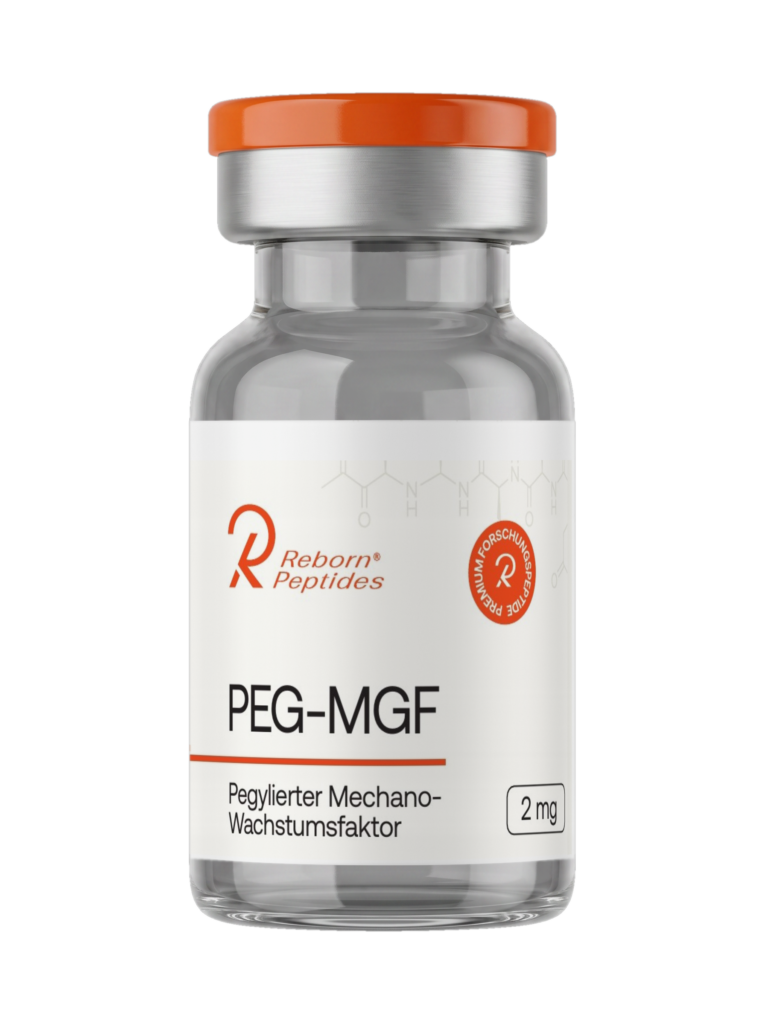
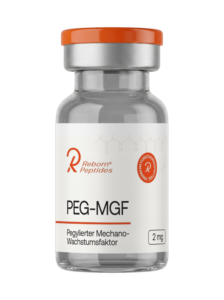
PEG-MGF
Metabolism, Weight & Muscle
45,90 €
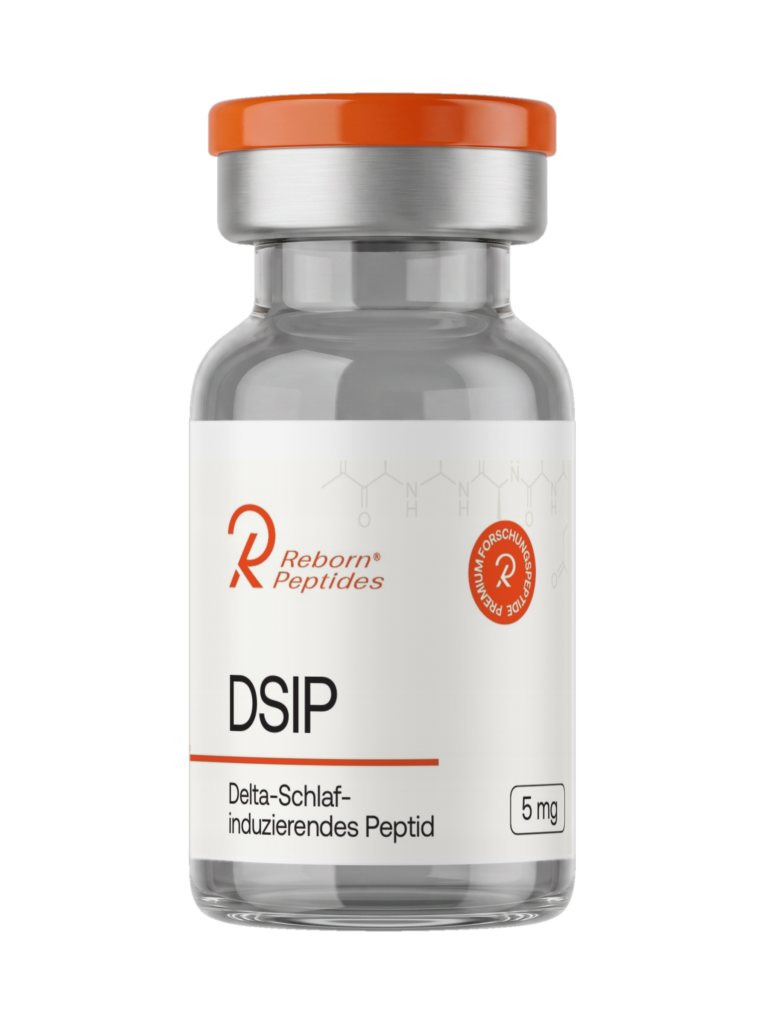
36,90 €
incl. shipping & VAT

Certificate of analysis per batch

≥ 99 % purity (HPLC)

Shipping across the EU

Delivery in 3–5 business days
Strength: 5 mg
Quantity:

Fast & secure payment

Delivery: 02.11. – 03.11.
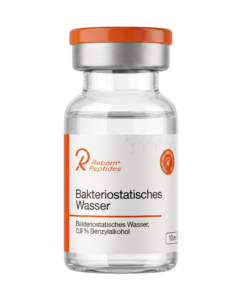
Bacteriostatic water 10 ml
For reconstitution — included free with orders over €70.
Only 70,00 € until your free gift.
 View Certificate of Analysis
Laboratory analysis
Tested by an independent EU laboratory using HPLC against a reference standard. Purity and content of the sample at a glance, full report as PDF – with a verification code to check directly with the lab.
R06SE46DWhat is DSIP
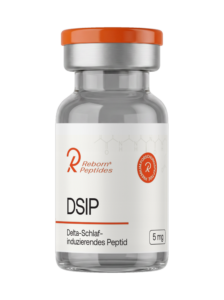
DSIP is a linear, non-amidated neuropeptide comprising nine amino-acid residues. Its expanded name, delta sleep-inducing peptide, reflects the historical circumstances of its description in rabbit experiments and is a bibliographic designation, not a claim about the supplied research material.
Its sequence is Trp-Ala-Gly-Gly-Asp-Ala-Ser-Gly-Glu, represented as WAGGDASGE. Molecular identity, experimental observations and batch analysis are separate evidence levels. DSIP is supplied strictly for laboratory research and is not for use in humans or animals.
Laboratories seeking to buy DSIP should confirm before procurement that the product name, declared molecular form, lot code and analytical documentation identify the same material; purity is stated only for the applicable batch with its COA.
DSIP is the linear, non-amidated nonapeptide WAGGDASGE. Sequence analysis and chemical synthesis support the bibliographic identity of this molecule, while the historical name derives from early rabbit neurophysiology experiments. Those observations remain specific to the named animal models and endpoints and do not establish a human outcome or a property of supplied material.
The cited literature includes early animal-model characterisation, analytical sequence work, a review of heterogeneous and predominantly preclinical findings, and defined rat pineal-gland, tissue and isolated-mitochondria models. Results from different species, tissues, designs and endpoints cannot be combined into a general property. DSIP must also be distinguished from the serine-phosphorylated variant P-DSIP.
The product name, declared molecular form, lot code and analytical documentation must identify the same material. HPLC can provide a method-specific chromatographic profile and batch-specific purity value, while appropriate mass-spectrometric evidence can support molecular identity when linked to the same lot. Purity is stated only for the applicable batch with its COA.
Binding storage conditions must follow the approved product specification, label and documentation for the relevant batch; no temperature or stability period is inferred. The material is strictly for laboratory research only and is not intended for human or veterinary use.

Evidence
The expanded name arose from rabbit experiments and remains a bibliographic designation rather than a claim about supplied material.
Monnier et al. 1975 · PMID 1237876 · Schoenenberger et al. 1977 · PMID 265572
Amino-acid analysis and chemical synthesis established the nine-residue DSIP sequence in analytical and preclinical work.
Schoenenberger et al. 1978 · PMID 568769
A review covering occurrence, distribution, structure and varied neurophysiological observations noted variability and inconsistency across parts of the predominantly preclinical evidence base.
Graf et al. 1984 · PMID 6145137
Pineal-gland, isolated-mitochondria and tissue studies measured distinct endpoints in separate rat systems and do not establish a general organism-level result.
Oaknin et al. 1986 · PMID 3774211 · Khvatova et al. 2003 · PMID 12668217 · Bondarenko et al. 2001 · PMID 11265821
Molecular form, lot code and analytical results must refer to the same material; any purity value applies only to the analysed batch.
Reborn batch documentation · COA with HPLC and identity analysis
Research status
7 selected sources — filterable by study type, each linking straight to the source.
Research Deep Dive
Model-qualified findings in depth — every claim tied to a PubMed-indexed source.
DSIP peptide is a linear, non-amidated nonapeptide with the sequence Trp-Ala-Gly-Gly-Asp-Ala-Ser-Gly-Glu, or WAGGDASGE in one-letter notation. Amino-acid analysis and chemical synthesis established this sequence in an analytical and preclinical publication. The sequence definition is the starting point for literature assignment, but it is not evidence that a received sample contains the named molecule.
The identifiers below describe non-phosphorylated DSIP as the free acid. Formula, average mass, registry identifiers and sequence must be kept distinct from presentation, stated content and batch results.
| Field | Reference specification |
|---|---|
| Name | DSIP |
| Code / synonym | Emideltide (INN); SKU RP-1006 |
| Originator | to be reconciled against released label, specification and batch documentation |
| Class | Linear, non-amidated neuropeptide; 9 residues |
| Sequence | Trp-Ala-Gly-Gly-Asp-Ala-Ser-Gly-Glu (WAGGDASGE) |
| Target profile | No established receptor or unified mechanism; model-qualified experimental endpoints only |
| Molecular formula | C35H48N10O15, free acid |
| Molecular mass | 848.8 g/mol, average mass for the free acid |
| PubChem CID | 68816 |
| CAS Registry Number | 62568-57-4 |
These registry values define a referenced molecular entity and do not identify a supplied sample. Supplied form and stated content are to be reconciled against released label, specification and batch documentation. The same documentary boundary applies to salt form, phosphorylation state and any batch-specific analytical result.
Identity source: Schoenenberger et al. 1978 · PMID 568769
No established receptor or unified mechanism is assigned to DSIP in the source evidence. The cited literature instead covers separate delta-EEG, pineal-gland, mitochondrial-respiration and tissue-marker endpoints in defined rabbit and rat systems. A measured endpoint in one preparation cannot be converted into a general mechanism or transferred to another model.
Early rabbit experiments linked the bibliographic name to delta-EEG observations. They did not analyse contemporary catalogue material.
Pineal-gland, isolated-mitochondria and tissue studies measured different biochemical endpoints under different experimental conditions.
Molecule, species, tissue, method and endpoint must remain attached to each finding; literature does not authenticate a batch.
Oaknin and colleagues studied melatonin synthesis in a rat pineal-gland model. Khvatova and colleagues measured respiratory activity in isolated rat-brain mitochondria under experimental hypoxia. Bondarenko and colleagues measured lipid peroxidation and xanthine oxidase activity in rat tissues during experimental cold exposure. These publications concern distinct systems and do not establish one organism-level property.
Graf and Kastin reviewed occurrence, distribution, structure and varied neurophysiological observations across a predominantly preclinical literature, noting variability and inconsistency in parts of that evidence base. The review helps map the field, but does not resolve molecular form or certify a supplied lot.
Target-system sources: Graf & Kastin 1984 · PMID 6145137 · Oaknin et al. 1986 · PMID 3774211 · Khvatova et al. 2003 · PMID 12668217 · Bondarenko et al. 2001 · PMID 11265821
This section describes findings in controlled research and makes no statement about use. The records progress from analytical characterisation through preclinical animal and isolated-tissue systems to one observational human study of endogenous peptide. Model type, analyte, method and endpoint delimit every interpretation.
Amino-acid analysis determined the nine-residue sequence and chemical synthesis supported the bibliographic identity, alongside preclinical characterisation. This does not authenticate supplied material.
PMID 568769Cerebral and systemic blood fractions were compared in a rabbit model during electrically induced delta activity. The work explains part of the historical naming context.
PMID 1237876An isolated peptide was characterised with a delta-EEG endpoint in a recipient animal model. The finding remains specific to that experimental design.
PMID 265572A rat pineal-gland model measured melatonin synthesis as a defined neuroendocrine endpoint.
PMID 3774211Rat tissues were assessed through lipid-peroxidation and xanthine-oxidase measurements during experimental cold exposure.
PMID 11265821Respiratory activity was measured in isolated rat-brain mitochondria under experimental hypoxia. This preparation does not establish a general organism-level result.
PMID 12668217Endogenous plasma DSIP and other variables were measured in an observational study. No supplied research material was investigated.
PMID 7700506A predominantly preclinical literature was reviewed across occurrence, distribution, structure and varied observations, with variability and inconsistency noted in parts of the field.
PMID 6145137Study sources: PMID 568769 · PMID 1237876 · PMID 265572 · PMID 3774211 · PMID 11265821 · PMID 12668217 · PMID 7700506 · PMID 6145137
The historical expanded name is “delta sleep-inducing peptide”. It arose from the circumstances of early rabbit neurophysiology experiments and functions here solely as scientific nomenclature. The unhyphenated rendering “delta sleep inducing peptide DSIP” refers to that same historical name; neither form establishes a human outcome or a property of supplied material.
DSIP and P-DSIP are different molecular forms. DSIP in this profile is the non-phosphorylated sequence WAGGDASGE. P-DSIP is phosphorylated at the serine residue. A shared base name does not transfer molecular identity data, analytical results or literature assignments between the two forms.
This distinction is analytically consequential. HPLC reports chromatographic behaviour and a method-specific purity result for the tested lot, but retention behaviour alone does not establish whether the intact analyte is non-phosphorylated DSIP or P-DSIP. Lot-linked mass-spectrometric evidence is needed to support molecular-form identity. Conversely, an identity-supporting mass result does not by itself establish chromatographic purity.
A defensible record therefore connects the declared molecular form, sequence, product identifier, lot code, identity method and result. Literature mentioning the same base name cannot substitute for this chain and cannot be assigned across molecular forms without analytical justification.
Nomenclature and sequence sources: Monnier et al. 1975 · PMID 1237876 · Schoenenberger et al. 1977 · PMID 265572 · Schoenenberger et al. 1978 · PMID 568769
Physical form, stated content, storage conditions and stability period are to be reconciled against the released label, specification and batch documentation. No numerical content, temperature or stability period is inferred from molecular literature. If the supplied material is confirmed as lyophilised, that term describes physical presentation only; it does not establish sequence, molecular form, content, stability or purity.
Laboratories seeking to buy DSIP for research should verify before procurement that the product name, SKU RP-1006, declared molecular form, lot code and COA identify the same material. Any discrepancy among the released label, specification and certificate should be resolved before the material is assigned to an experiment.
A numerical purity statement applies only to the analysed lot and the method reported on its COA. HPLC can support a batch-specific chromatographic result. It cannot alone distinguish non-phosphorylated DSIP from serine-phosphorylated P-DSIP; that identity question requires appropriate lot-linked mass-spectrometric evidence. Literature establishes neither the purity nor the identity of supplied material.
Analytical context: Schoenenberger et al. 1978 · PMID 568769
DSIP is supplied to laboratories in the EU as research material. Published records define research questions and model-specific measurements; they do not certify the molecular form, physical form, content, purity or stability of supplied material. Those properties require the applicable released specification, label and lot documentation.
Experimental findings remain attached to the named molecule, model, method and endpoint. Observations involving endogenous peptide, animal models, isolated tissues or a review are not interchangeable with one another and do not predict an outcome outside the stated system.
Research use only. For laboratory research only. Not for human or veterinary use. Not intended to diagnose, treat, cure or prevent any disease. Not a medicinal product, food or cosmetic.

FAQ
The following identifiers are from PubChem (CID 68816). Molecular form (DSIP versus phosphorylated P-DSIP), salt form and exact molecular weight require the matching batch COA.
DSIP is supplied strictly for laboratory research. Batch-specific COA and HPLC/MS documentation, together with the lot number, provide the basis for assessing the respective batch. Sleep-EEG, HPA/cortisol, melatonin, mitochondrial and oxidative-stress markers are research endpoints limited to the stated models. Parts of the DSIP literature are older and report heterogeneous findings; they do not establish effects of the supplied material in humans.
DSIP is a linear, non-amidated neuropeptide with the nine-residue sequence Trp-Ala-Gly-Gly-Asp-Ala-Ser-Gly-Glu, represented as WAGGDASGE.
Delta sleep-inducing peptide DSIP takes its historical name from early rabbit experiments. It is a bibliographic designation and does not establish a human outcome or a property of supplied research material.
No. P-DSIP is phosphorylated at the serine residue. Identity data, analytical results and literature findings cannot be transferred between the two forms solely because they share a base name.
The cited literature includes analytical sequence work, rabbit and rat models, isolated rat-brain mitochondria, and a review of predominantly preclinical research. Each observation remains limited to its molecule, model, method and endpoint.
It is supplied strictly for laboratory research and is not for use in humans or animals.
The product name, declared molecular form, lot code and COA must identify the same material. HPLC purity is batch- and method-specific, while appropriate identity analysis must be linked to the same lot.
We accept prepayment by SEPA bank transfer as well as credit card. All payments are processed securely and encrypted.
Discreet shipping from the EU, delivery in 3–5 business days. Neutral packaging with no reference to the contents.