≥ 99 % · HPLC
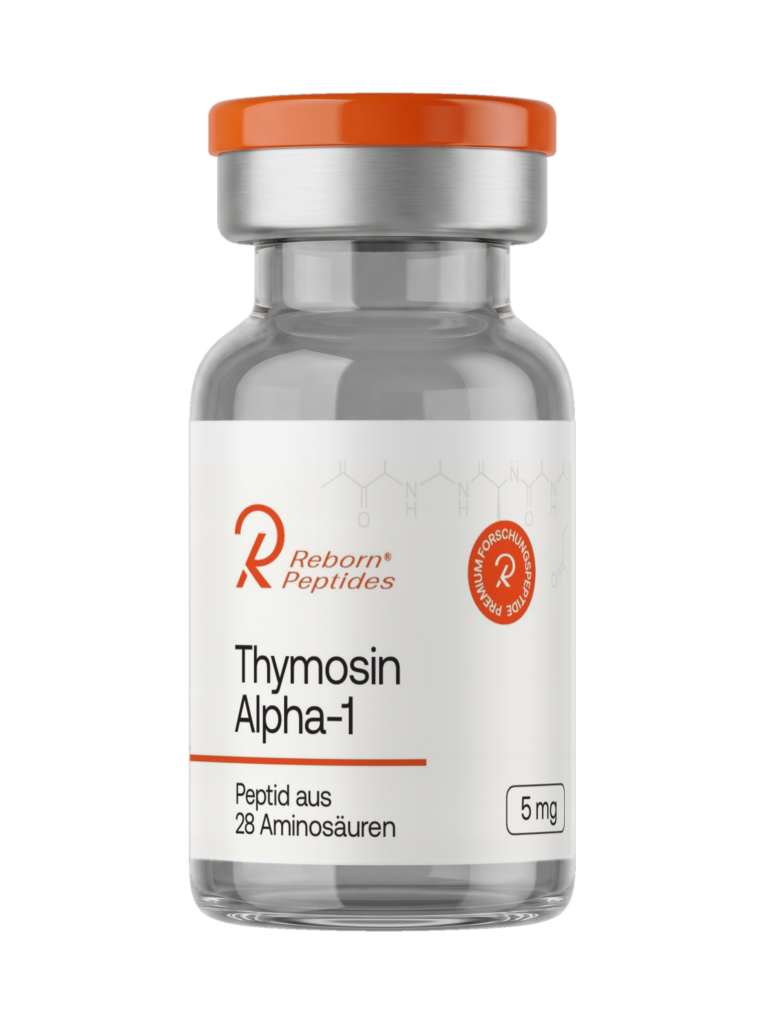
Thymosin Alpha-1
Regeneration & Longevity
44,90 €
44,90 €
incl. shipping & VAT

Certificate of analysis per batch

≥ 99 % purity (HPLC)

Shipping across the EU

Delivery in 3–5 business days
Strength: 10 mg
Quantity:

Fast & secure payment

Delivery: 02.11. – 03.11.
Bacteriostatic water 10 ml
For reconstitution — included free with orders over €70.
Only 70,00 € until your free gift.
 View Certificate of Analysis
Laboratory analysis
Tested by an independent EU laboratory using HPLC against a reference standard. Purity and content of the sample at a glance, full report as PDF – with a verification code to check directly with the lab.
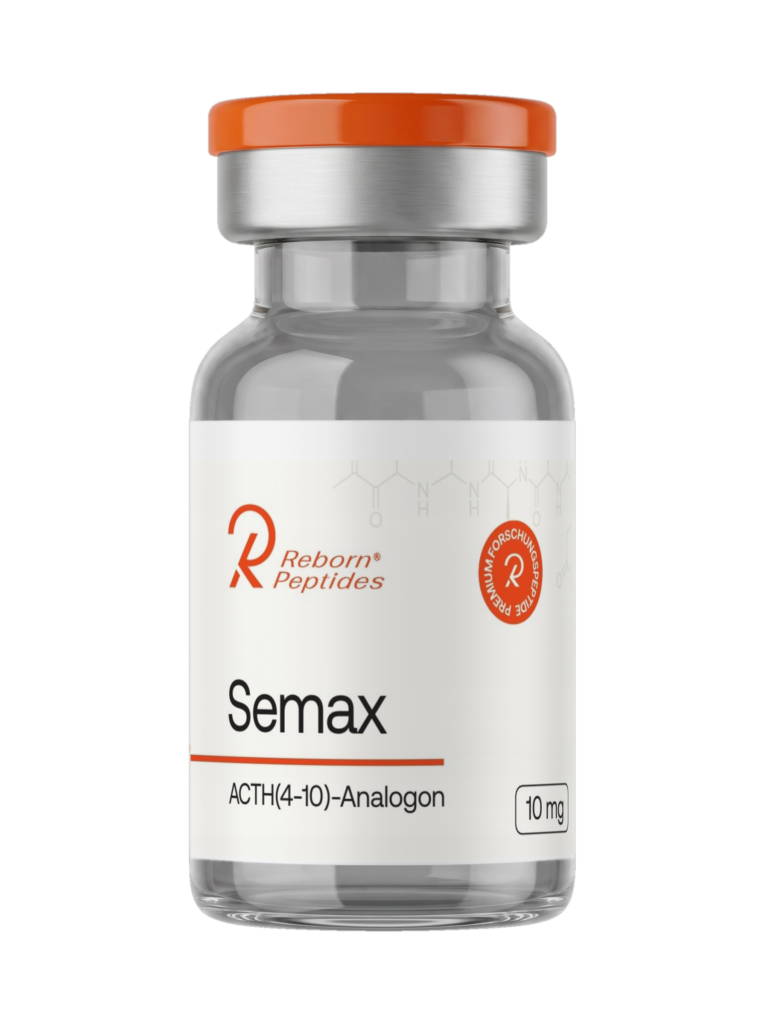
ITW9VZ5FWhat is Semax
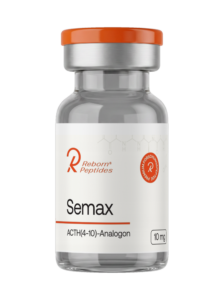
Semax peptide is the synthetic linear heptapeptide Met-Glu-His-Phe-Pro-Gly-Pro (MEHFPGP). The free-peptide database reference is represented as H-Met-Glu-His-Phe-Pro-Gly-Pro-OH, with CAS 80714-61-0, PubChem CID 9811102, molecular formula C37H51N9O10S and molecular weight 813.9 g/mol. The listed free-peptide reference identifiers, formula and molecular weight do not verify the supplied batch and may differ where a salt or counter-ion form is documented.
The cited literature comprises preclinical rat and rodent models. It examines separate BDNF/TrkB-, monoamine-marker-, transcriptomic, proteomic and nitric-oxide-related endpoints without establishing one receptor or pathway that explains all observations.
Listings that offer Semax for sale differ in what they document. For a buy Semax procurement record, the compound name, documented chemical form, batch code, test date, analytical methods, acceptance criteria and findings must be traceable across the released product specification and matching COA.
The material is supplied strictly for laboratory research, not for use in humans or animals.
Semax is a synthetic linear heptapeptide with the sequence Met-Glu-His-Phe-Pro-Gly-Pro, abbreviated MEHFPGP. It is derived from the ACTH residue sequence 4–10 and may also be described structurally as ACTH(4–7) followed by Pro-Gly-Pro. Reborn lists Semax strictly as a research peptide.
The free-peptide database reference is H-Met-Glu-His-Phe-Pro-Gly-Pro-OH, CAS 80714-61-0, PubChem CID 9811102, formula C37H51N9O10S and molecular weight 813.9 g/mol. These identifiers describe the free peptide represented by the reference record, not a supplied batch. Formula and mass may differ if the released specification documents a salt or counter-ion form; no such form should be inferred from the substance name.
The source set is wholly preclinical and uses rat or broader rodent models. Separate publications measured hippocampal BDNF protein, TrkB tyrosine phosphorylation and transcript markers; basal-forebrain binding and BDNF protein; dopaminergic and serotonergic markers; cortical transcriptional programmes; proteomic differences; and nitric-oxide- and lipid-peroxidation-related parameters. These evidence layers remain distinct and do not establish a single receptor, pathway or cross-model mechanism.
Semax and Selank are separate research peptides. Semax is ACTH-derived with the sequence MEHFPGP, whereas Selank is tuftsin-derived with the sequence TKPRPGP. Their shared C-terminal PGP motif does not make them equivalent, and findings cannot be transferred between them. Selank is a separate catalogue position; this distinction is neither a ranking nor a recommendation.
HPLC can report chromatographic purity only for the tested batch under the stated method and does not automatically prove molecular identity. MS interpretation depends on the documented form, counter-ions, adducts and acceptance criteria. The material is strictly for laboratory research, not for use in humans or animals.

Evidence
MEHFPGP, the condensed sequence, CAS, PubChem CID, formula and mass describe the free-peptide database reference; they do not verify the supplied batch or establish a salt or counter-ion form.
Released product specification and matching batch documentation
Preclinical rat models measured hippocampal BDNF protein, TrkB tyrosine phosphorylation, BDNF exon-III mRNA and trkB mRNA, and a separate publication measured basal-forebrain binding and BDNF protein. These remain different evidence levels and do not support a uniform BDNF claim.
Preclinical rat models · cited source set
Dopaminergic, serotonergic and 5-HIAA-related parameters were measured in preclinical rodent models; those markers remain specific to the stated models and methods.
Preclinical rodent models · cited source set
Genome-wide cortical transcription of immune- and vascular-system-related genes was examined in a preclinical rat focal-ischaemia model; RNA-level measurements do not establish direct binding or a medical indication.
Preclinical rat model · cited source set
Brain proteomic differences were measured in a preclinical rat ischaemia-reperfusion model; a proteomic profile does not by itself establish causality or direct binding.
Preclinical rat model · cited source set
Semax and glycine comparison arms were included, and nitric-oxide formation and lipid-peroxidation-related parameters were measured in a preclinical rat incomplete-global-ischaemia model; the findings remain limited to that experimental setting.
Preclinical rat model · cited source set
HPLC reports chromatographic purity only for the tested batch and stated method and does not automatically prove molecular identity. MS interpretation depends on the documented form, counter-ions, adducts and acceptance criteria.
Released product specification and matching COA
Research status
6 selected sources — filterable by study type, each linking straight to the source.
Research Deep Dive
Model-qualified findings in depth — every claim tied to a PubMed-indexed source.
Semax is a synthetic linear heptapeptide with the sequence Met-Glu-His-Phe-Pro-Gly-Pro. Its one-letter sequence, MEHFPGP, records seven residues in a defined order. The substance is described as an ACTH(4-10) analogue because the seven-residue designation relates it to that segment of adrenocorticotropic hormone. A second structural description, ACTH(4-7) followed by Pro-Gly-Pro, specifies how the reference sequence is assembled.
The identifiers below refer to the free peptide represented in the database record. They provide reconciliation points for a reference structure, but none alone authenticates supplied material. Sequence, formula and mass must be interpreted alongside the documented chemical form.
| Field | Reference specification |
|---|---|
| Designation | Semax |
| Chemical class | Synthetic linear heptapeptide; ACTH(4-10) analogue |
| Amino-acid sequence | Met-Glu-His-Phe-Pro-Gly-Pro |
| One-letter sequence | MEHFPGP |
| Condensed sequence | H-Met-Glu-His-Phe-Pro-Gly-Pro-OH |
| CAS | 80714-61-0 |
| PubChem CID | 9811102 |
| Molecular formula | C37H51N9O10S |
| Molecular weight | 813.9 g/mol |
| Structural description | ACTH(4-7) sequence followed by Pro-Gly-Pro |
| Salt/counter-ion form | The registry values describe the free peptide form, and formula and mass may differ if a salt or counter-ion form is present — therefore no identifier for the supplied material is stated here; the label, released specification, MS record and applicable COA decide this. |
These values describe a database reference structure, not the commercial batch. A matching designation is only one part of material reconciliation, and batch identity remains a separate analytical question.
Chemical context: PubMed index
BDNF and TrkB name a pathway-focused research area, not a settled account of Semax. The cited preclinical rat models measured several different variables: BDNF protein abundance, BDNF exon III transcript abundance, trkB transcript abundance, TrkB tyrosine phosphorylation and specific binding. A measurement at one layer does not establish a change at another layer, and simultaneous observations do not establish a universal causal chain.
BDNF protein and BDNF exon III mRNA were separate measurements in a preclinical rat model. Protein abundance cannot be substituted for an RNA readout, or vice versa.
TrkB tyrosine phosphorylation was measured in a preclinical rat model. A phosphorylation readout is not identical to receptor abundance, ligand binding or a downstream endpoint.
Specific binding and basal-forebrain BDNF protein were measured in a preclinical rat model. Binding data and expression data answer different experimental questions.
The two 2006 records also concern different anatomical contexts: one reports hippocampal measurements in a preclinical rat model, while the other reports basal-forebrain measurements in a preclinical rat model. Tissue, assay, sampling time and comparator remain part of each observation. The records therefore do not justify the simplified statement that Semax uniformly “raises BDNF”. Nor do these molecular measurements establish properties of a supplied batch.
Pathway-context records: PubMed index
This section describes findings in controlled research and makes no statement about use. All six sources are preclinical rodent studies; this evidence map contains no in-vitro, human or review layer. The rows are ordered by measurement layer, from binding and protein through neurochemistry, transcriptomics and proteomics to biochemical parameters. That order is organisational, not an evidential hierarchy.
A preclinical rat model examined specific binding and measured BDNF protein in basal forebrain. Binding and protein abundance remain separate endpoint classes within that rat model.
PMID 16635254A preclinical rat model measured hippocampal BDNF protein, TrkB tyrosine phosphorylation, BDNF exon III mRNA and trkB mRNA. Each is a distinct endpoint in that rat model.
PMID 16996037Preclinical rodent models measured dopaminergic and serotoninergic markers, including 5-HIAA-related parameters. Those neurochemical readouts remain specific to the stated rodent models.
PMID 16362768A preclinical rat focal-ischaemia model used genome-wide transcriptional analysis of immune- and vascular-system-related genes. RNA-level differences at the assessed time points belong to that model and do not establish another measurement layer.
PMID 24661604A preclinical rat ischaemia-reperfusion model examined proteomic differences in brain samples. A protein profile in that rat model does not establish direct binding or causality.
PMID 34201112A preclinical rat model of incomplete global ischaemia included Semax and glycine comparison arms and measured nitric-oxide formation and lipid-peroxidation-related parameters. These biochemical parameters describe only that rat model.
PMID 11245825Model names describe experimental systems, not indications. Across the six records, anatomical setting, analytical platform, comparator and sampling schedule differ. Binding, protein, phosphorylation, transcript, monoamine, proteomic, nitric-oxide and lipid-peroxidation measurements must therefore remain separate. The cited source set also provides no single transferable half-life value; stability depends on matrix, method and conditions.
Study sources: PubMed evidence index
“ACTH(4-10) analogue” and “ACTH(4-7) followed by Pro-Gly-Pro” are complementary descriptions of Semax nomenclature. The former places the seven-residue sequence in relation to an ACTH segment; the latter spells out the N-terminal relationship and C-terminal PGP extension. Neither phrase changes the reference sequence MEHFPGP.
N-acetyl Semax amidate is chemically modified and is not a synonym for the free peptide documented here. It is a separate research material, so its name, chemical form, identifiers and analytical records must not be substituted for those of Semax.
Semax and Selank are distinct research peptides. Semax is ACTH-derived and has the sequence MEHFPGP; Selank is tuftsin-derived and has the sequence TKPRPGP. Their shared C-terminal PGP motif does not make them equivalent, and findings are not transferable between them. Each requires its own identity data, model-specific literature and batch documentation. This distinction is neither a ranking nor a recommendation.
Reborn Peptides frames Semax strictly as a research peptide. The research record is organised by named substances, defined rodent models and discrete analytical endpoints.
Terminology context: PubMed index
Laboratory procurement should reconcile the designation, sequence, reference identifiers and batch code with the released product specification and the matching batch documentation. The applicable COA should connect the test date, analytical method and reported finding to the same batch. Literature records establish neither the identity nor the analytical characteristics of supplied material.
Any purity statement must be batch- and method-specific. HPLC can document a chromatographic profile or a method-specific purity finding for the tested batch, but it does not automatically establish molecular identity. MS interpretation depends on the documented form, counter-ions, adducts and acceptance criteria. The label, released specification, MS record and applicable COA must be reconciled before an identity or purity statement is made.
No storage condition, temperature, stability period or shelf-life statement is made here. Research supply documentation and preclinical literature serve different purposes and cannot substitute for one another. The material is strictly for laboratory research, not for use in humans or animals.
Research use only. For laboratory research only. Not for human or veterinary use. Not intended to diagnose, treat, cure or prevent any disease. Not a medicinal product, food or cosmetic.

FAQ
Semax RP-1024 is intended exclusively for laboratory research, not for clinical use or use in humans or animals.
Semax is the synthetic linear heptapeptide Met-Glu-His-Phe-Pro-Gly-Pro (MEHFPGP). H-Met-Glu-His-Phe-Pro-Gly-Pro-OH, CAS 80714-61-0, PubChem CID 9811102, C37H51N9O10S and 813.9 g/mol describe the free-peptide database reference, not the supplied batch; formula and mass may differ if a salt or counter-ion form is documented.
ACTH(4–10) denotes residues 4 through 10 of the longer ACTH sequence. Semax retains Met-Glu-His-Phe and continues with Pro-Gly-Pro; this structural classification does not establish a use or a unified molecular target.
Register values identify a reference structure. Only the released product specification, label and matching batch documentation can establish the supplied chemical form and connect analytical findings to the applicable batch.
N-acetyl Semax amidate is chemically modified and is not a synonym for the free peptide documented here; it is a distinct research material.
Semax is ACTH-derived with sequence MEHFPGP, while Selank is tuftsin-derived with sequence TKPRPGP. A shared C-terminal PGP motif does not make them equivalent, and findings are not transferable between these separate catalogue positions.
All six cited publications use preclinical rat or rodent models. The cited source set provides no single transferable half-life value; stability depends on matrix, method and conditions.
The COA should link compound designation, documented form, batch code, test date, methods, acceptance criteria and findings. HPLC purity is batch- and method-specific and does not automatically establish molecular identity; MS interpretation depends on the documented form, counter-ions and adducts.
We accept prepayment by SEPA bank transfer as well as credit card. All payments are processed securely and encrypted.
Discreet shipping from the EU, delivery in 3–5 business days. Neutral packaging with no reference to the contents.