≥ 99 % · HPLC
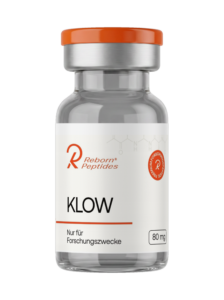
KLOW Blend
Regeneration & Longevity
149,90 €
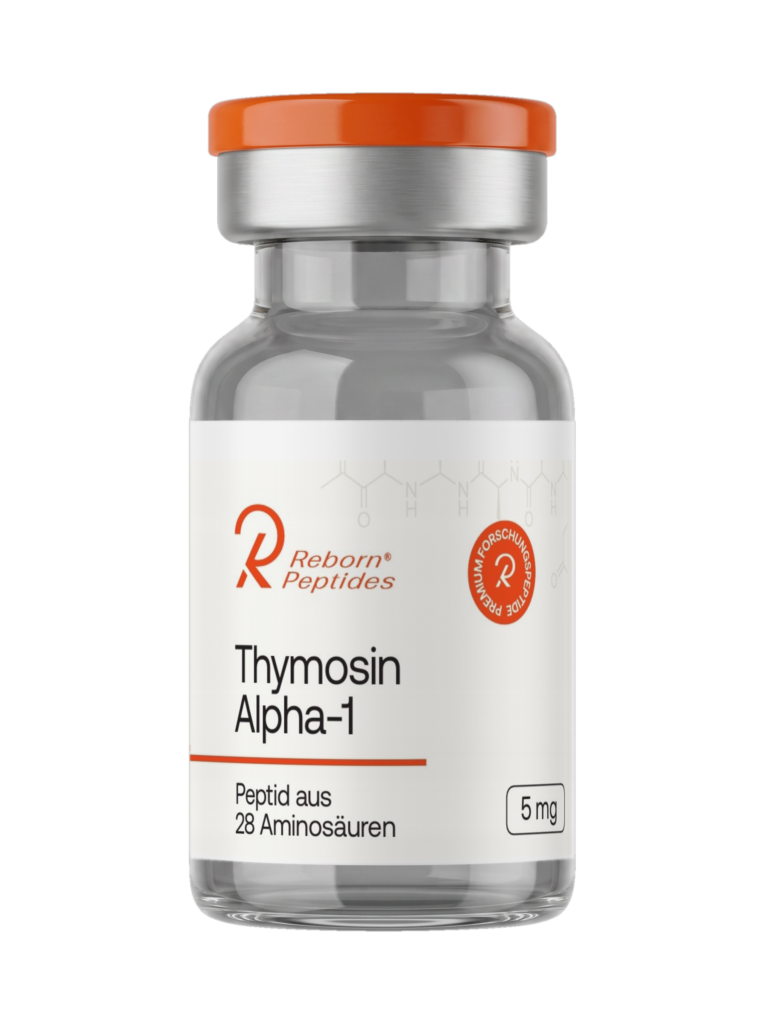
44,90 €
incl. shipping & VAT

Certificate of analysis per batch

≥ 99 % purity (HPLC)

Shipping across the EU

Delivery in 3–5 business days
Strength: 5 mg
Quantity:

Fast & secure payment
Bacteriostatic water 10 ml
For reconstitution — included free with orders over €70.
Only 70,00 € until your free gift.

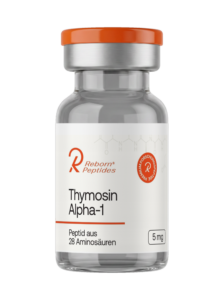
What is Thymosin Alpha-1
Thymosin alpha-1 is a sequence-defined peptide comprising 28 amino-acid residues and an N-terminal acetyl group. Its reference sequence is Ac-SDAAVDTSSEITTKDLKEKKEVVEEAEN, where the Ac prefix is part of the molecular identity rather than an optional formulation detail. The peptide is described as the N-terminal segment of prothymosin alpha, but prothymosin alpha itself is a larger precursor and not a synonym for the isolated 28-residue entity. The original biochemical isolation and sequence analysis established the chain length and terminal acetylation for the reference substance (Goldstein et al. 1977, biochemical isolation and sequence analysis, PMID 265536). That historical characterisation does not authenticate material from a current batch.
Two CAS numbers circulate for this molecular entry and should be disclosed rather than collapsed into one supposedly definitive number. CAS 62304-98-7 appears in the PubChem synonym set associated with the INN thymalfasin, while CAS 69521-94-4 is used by CAS Common Chemistry for the title Thymosin alpha-1. That INN designation serves here only as an identity and literature key. Neither CAS number alone establishes what is present in a received sample; the number on the released label and corresponding COA is the relevant documentary reference. Additional reference identifiers include molecular formula C129H215N33O55, an average mass of approximately 3108.3 g/mol for the free form, PubChem CID 16130571 and InChIKey NZVYCXVTEHPMHE-ZSUJOUNUSA-N.
The experimental literature describes thymosin alpha-1 as a subject of context-dependent immune modulation, not as a general immune stimulant. Modulation is the more accurate term because the cited studies measured particular signalling, differentiation and regulatory endpoints under defined conditions, sometimes with apparently different directional implications. They did not demonstrate a universal increase in immune activity. Much of this research concerns dendritic cells, Toll-like-receptor pathways and the balance between inflammatory and regulatory markers. Naming a pathway does not establish a single molecular target, and a marker change is not equivalent to an outcome beyond the experimental system in which it was recorded.
In a mouse study incorporating dendritic-cell experiments, Romani and colleagues reported maturation-related observations, IL-12 production and signalling associated with p38 MAPK, NF-kappaB, MyD88 and Toll-like receptors (Romani et al. 2004, animal model: mouse, PMID 14982877). These measurements belong to the fungal challenge, cellular preparation and mouse design used by the investigators. They support laboratory questions about linked signalling events but do not show that the same relationships occur across species, unrelated challenges or different protocols.
A separate in vitro study used murine bone-marrow-derived dendritic cells and examined differentiation and activation-marker expression. The reported IL-12 observations varied with experimental context, including the presence of TNF-alpha (Huang et al. 2004, in vitro: murine dendritic cells, PMID 15099531). This is direct cell-culture evidence, not an intact-animal experiment and not a human study. It is useful for separating cell-level observations from whole-system interpretation, while its species, culture conditions, exposure design and selected endpoints remain firm boundaries on any conclusion.
Tryptophan catabolism provides another example of why the literature should be read as modulation rather than simple stimulation. In a mouse model, investigators examined TLR9-related signalling, indoleamine 2,3-dioxygenase activity, tryptophan catabolism, IL-10 and regulatory T-cell generation under the study conditions (Romani et al. 2006, animal model: mouse, PMID 16741252). The reported dependencies on TLR9 and type-I interferon-receptor signalling are features of that experimental framework. They neither establish a universal mechanism nor justify transferring the observed network of endpoints to another species or model.
Bozza and colleagues examined plasmacytoid dendritic cells under an experimental murine viral condition and reported TLR9/MyD88-dependent sensing, IRF7 activation and interferon-related endpoints (Bozza et al. 2007, animal model: mouse, PMID 17804687). Again, the challenge model, sampling scheme and endpoint definitions are part of the evidence. The study does not convert a pathway association into a general property of every experimental system, and it provides no analytical information about a later manufactured sample.
Review literature occupies a different evidence layer. A mechanistic review organised prior findings concerning Toll-like receptors, dendritic cells and inflammatory and regulatory measurements (Romani et al. 2007, review, PMID 17495242). A later literature review addressed receptor-dependent mechanisms without its own sample analysis (King and Tuthill 2016, review, PMID 27450734). Reviews can map hypotheses, terminology and areas of convergence or disagreement. They do not generate a new experimental sample or independently reproduce every cited result.
Preparation chemistry sits in a layer of its own. Morozov and Khavinson reported the mild acid extraction of thymic peptides from calf thymus, the chromatographic isolation of a dipeptide fraction from that extract and the synthesis of defined dipeptides for comparison (Morozov and Khavinson 1997, isolation and characterisation, PMID 9637345). That work is cited here for one purpose only: it describes a thymus-derived extract as a mixture, which is what separates such a preparation from a single sequence-defined peptide. Its measurements were made on those preparations under the stated conditions and carry no analytical information about a later manufactured sample.
The evidence depth therefore has to remain explicit. Biochemical isolation and sequence analysis support the reference identity of the 28-residue N-acetylated peptide (Goldstein et al. 1977, PMID 265536), and a separate extraction and characterisation study describes the composition of thymus-derived preparations (Morozov and Khavinson 1997, PMID 9637345). Preclinical work includes a predominantly TP-1-exposed murine model whose NK-cell effect the abstract also reports for the distinct thymic factor Talpha-1, cultured murine dendritic cells and mouse models (Bistoni et al. 1984, PMID 6563944; Huang et al. 2004, PMID 15099531; Romani et al. 2004, PMID 14982877; Romani et al. 2006, PMID 16741252; Bozza et al. 2007, PMID 17804687). Clinical investigation designs are represented by a randomized multicentre study and a retrospective clinical cohort, without an endpoint or effect claim here (Wu et al. 2013, PMID 23327199; Liu et al. 2020, PMID 32442287). Reviews synthesize published work but do not provide new sample analysis (Low et al. 1979, PMID 394636; Romani et al. 2007, PMID 17495242; King and Tuthill 2016, PMID 27450734).
This corpus includes defined clinical investigation designs but does not establish clinical effectiveness, safety, a suitable procedure or guaranteed experimental outcomes. It does not support transfer from cultured murine cells to an intact organism, from mice to humans, or from one challenge model to another. It also does not prove a single receptor target or a uniform direction of response. Absence of a reported observation in these selected systems is not evidence of safety elsewhere. None of the publications supplies instructions for use, and none characterises the identity, composition, purity, content, storage condition or stability of the batch offered by a catalogue.
Literature identity and batch identity answer different questions. For a thymosin alpha 1 peptide sample, the product designation, SKU, label, batch code, specification and COA should refer to the same material and agree on the identifiers they report. The declared sequence must include the N-terminal acetylation if the material is assigned to this reference entity. The molecular form stated in the documentation must also be compatible with any reported analytical result. A discrepancy should be resolved before literature identity or an analytical value is attributed to the sample.
This documentary logic is normative, not a promise about a particular batch. A chromatographic result, if reported, applies only to the named sample, method and batch in its associated record; it cannot be generalised to other batches. Chromatographic purity does not by itself confirm the complete amino-acid sequence or N-terminal acetylation. Likewise, a reference formula or average mass does not establish salt form, hydration state, supplied content or presentation. Those characteristics require matching released documentation and appropriate analytical evidence. No purity percentage, quantity, supplied form or availability of a particular analytical package is claimed here.
Clear separation from similarly named materials keeps evidence and records from being misassigned. Thymalin is described as a thymus-derived polypeptide extract obtained by mild acid extraction, meaning a mixture rather than one uniquely sequence-defined species (Morozov and Khavinson 1997, isolation and characterisation, PMID 9637345). It is therefore not another name for thymosin alpha-1. Prothymosin alpha is the precursor from which the 28-residue N-terminal segment is described, not the finished sequence synonym. Beta-thymosins are a different peptide family with different sequences and literature. TB-500 is catalogued in relation to thymosin beta-4 material and is not interchangeable with this N-acetylated 28-residue molecule. Names, sequence records, specifications, COAs and study findings must remain substance-specific.
Thymosin alpha 1 is supplied exclusively as a subject for controlled laboratory research. The identity framework and cited publications are intended to support research cataloguing, literature review and model-qualified study planning. They do not replace local laboratory risk assessment, the applicable study protocol or batch-specific documentation. This material is not intended for human or veterinary use, and the page makes no therapeutic, diagnostic or outcome claim.
Thymosin alpha-1 (Tα1) is a sequence-defined thymic peptide comprising 28 amino-acid residues with an N-terminal acetyl group. Its sequence is Ac-SDAAVDTSSEITTKDLKEKKEVVEEAEN, and it is described as the N-terminal segment of prothymosin alpha. The molecular formula C129H215N33O55 and average mass of approximately 3108.3 g/mol refer to the free molecular form. PubChem CID 16130571 and InChIKey NZVYCXVTEHPMHE-ZSUJOUNUSA-N are reference identifiers. Two CAS numbers are in circulation: 62304-98-7 in the PubChem thymalfasin synonym set and 69521-94-4 in the CAS Common Chemistry record titled Thymosin alpha-1. Neither should be treated as the sole identifier; the number on the applicable label and COA governs. That INN designation is included only to connect literature records with this structure.
Goldstein et al. isolated and sequenced the N-acetylated 28-residue peptide. The selected research corpus then spans literature reviews, cultured murine dendritic cells, mouse models and clinical investigation designs. In the predominantly TP-1-exposed murine model, the abstract reports the same direction of the effect after administration of the distinct thymic factor Tα1. The randomized multicentre study and retrospective clinical cohort are included only as design and cohort evidence, without an endpoint or effect claim. Reported endpoints include dendritic-cell differentiation and maturation markers, IL-12, p38 MAPK, NF-kappaB, MyD88- and TLR-related signalling, tryptophan catabolism, IDO, IL-10, regulatory T-cell generation, IRF7 and interferon-related measurements. Every observation remains limited to its stated model, challenge, method and endpoint. The corpus does not establish a single molecular target, a universal mechanism or a clinical outcome.
Thymosin alpha-1 is not thymalin, a thymus-derived polypeptide extract described as a mixture in the cited review. It is also distinct from beta-thymosins and TB-500, which have separate sequences, identifiers and research records. Prothymosin alpha is a precursor rather than a synonym. Evidence or analytical documents for any of these entries cannot be transferred to Tα1.
Reference literature does not authenticate supplied material. Laboratory records should reconcile the product designation, SKU RP-1032, sequence, N-terminal modification, label, batch code, specification and COA. Any analytical result applies only to the named sample, batch and documented method. Supplied form, stated content, salt form, hydration state, purity and storage conditions require product- and batch-specific documentation and are not asserted here. This material is catalogued exclusively for controlled laboratory research and is not intended for human or veterinary use.

Evidence
The N-acetylated 28-residue polypeptide was isolated and sequenced; this does not authenticate a current batch.
Goldstein et al. 1977 · PMID 265536
The source describes thymalin as a polypeptide preparation obtained by acid extraction from thymus tissue, not the single defined thymosin alpha-1 sequence.
Morozov and Khavinson 1997 · PMID 9637345
Dendritic-cell, TLR, IDO and signalling endpoints remain limited to the respective mouse models and experimental conditions; in the predominantly TP-1-exposed model, the same direction of the NK-cell effect was also reported for the distinct thymic factor Talpha-1.
Bistoni et al. 1984 · PMID 6563944; Romani et al. 2004 · PMID 14982877; Romani et al. 2006 · PMID 16741252; Bozza et al. 2007 · PMID 17804687
Differentiation and activation-marker measurements were made in cultured murine dendritic cells, not in a human study.
Huang et al. 2004 · PMID 15099531
Reviews organise prior findings but do not provide a new experimental measurement or batch analysis.
Low et al. 1979 · PMID 394636; Romani et al. 2007 · PMID 17495242; King and Tuthill 2016 · PMID 27450734
Clinical investigation designs describe defined clinical contexts, not the identity, purity or performance of the material offered.
Wu et al. 2013 · PMID 23327199; Liu et al. 2020 · PMID 32442287
Publications do not establish the identity, content or purity of supplied material; label, batch code, specification and COA must be reconciled.
Batch-specific analytical documentation
Research status
12 selected sources — filterable by study type, each linking straight to the source.
Research Deep Dive
Model-qualified findings in depth — every claim tied to a PubMed-indexed source.
Thymosin alpha-1 is a sequence-defined thymic peptide of 28 amino-acid residues. Its N-terminal acetyl group is part of the molecular identity represented by Ac-SDAAVDTSSEITTKDLKEKKEVVEEAEN. The molecule is described as the N-terminal segment of prothymosin alpha. This relationship identifies a sequence lineage; it does not make the precursor and the 28-residue peptide interchangeable.
| Field | Reference specification |
|---|---|
| Name | Thymosin alpha-1; Tα1 |
| INN | thymalfasin (literature identity key) |
| Code / SKU | RP-1032 |
| Sequence | Ac-SDAAVDTSSEITTKDLKEKKEVVEEAEN |
| Length and terminus | 28 residues; N-terminally acetylated |
| Class | N-terminal segment of prothymosin alpha |
| Molecular formula | C129H215N33O55 (free-form reference) |
| Average molecular mass | approximately 3108.3 g/mol (free-form reference) |
| CAS identifiers | 62304-98-7 and 69521-94-4; reconcile the number on the released label with the applicable COA |
| PubChem CID | 16130571 |
| InChIKey | NZVYCXVTEHPMHE-ZSUJOUNUSA-N |
| Presentation and purity | established only after reconciliation of the released label, batch code, specification and applicable COA |
Goldstein and colleagues isolated and sequenced the endogenous N-acetylated polypeptide from thymosin fraction 5. That work anchors the historical molecular reference, but it does not authenticate supplied research material. Formula and average mass refer to the free form and do not independently determine salt form, hydration state, presentation or the composition of a batch.
Molecular identity source: Goldstein et al. 1977 · PMID 265536
The mechanistic literature examines dendritic-cell differentiation, maturation and signalling under defined experimental conditions. These terms denote measured cellular processes, not a general directional effect. In murine bone-marrow-derived dendritic cells in vitro, Huang and colleagues measured differentiation and activation-marker expression; IL-12 observations depended on the experimental context, including TNF-alpha.
Mouse studies examined Toll-like-receptor and MyD88 dependence within specified dendritic-cell and challenge models.
These pathway measurements were reported alongside dendritic-cell maturation and IL-12 endpoints in the Romani 2004 design.
IDO-related tryptophan catabolism and IRF7-related signalling belong to separate murine systems with their own conditions and endpoints.
Romani and colleagues examined p38 MAPK, NF-kappaB, MyD88 and Toll-like-receptor relationships in fungus-pulsed dendritic cells and a mouse model. Their later mouse work examined TLR9-related priming, IDO-dependent tryptophan catabolism, IL-10 and regulatory T-cell generation. Bozza and colleagues investigated plasmacytoid dendritic cells, TLR9, MyD88 and IRF7 under an experimental murine viral condition. None of these model-specific measurements establishes an attribute of inventory material.
Mechanistic sources: Huang et al. 2004 · PMID 15099531 · Romani et al. 2004 · PMID 14982877 · Romani et al. 2006 · PMID 16741252 · Bozza et al. 2007 · PMID 17804687 · King and Tuthill 2016 · PMID 27450734
This chapter describes findings in controlled research, limited to the stated model, conditions and measured endpoint. It does not make a statement about use. Biochemical characterisation, cultured-cell observations, animal-model findings, reviews and human study designs remain distinct evidence categories; the highest study level in this selected corpus is a human RCT.
Isolation from thymosin fraction 5 and sequence analysis characterised an endogenous 28-residue N-acetylated polypeptide.
PMID 265536Murine bone-marrow-derived dendritic cells were used to measure differentiation and activation-marker expression under defined culture conditions.
PMID 15099531This murine model predominantly examined the TP-1 preparation. Its measurements are not attributed to the sequence-defined Tα1 peptide.
PMID 6563944Fungus-pulsed dendritic-cell experiments and a mouse model measured maturation, IL-12 and pathway-related endpoints involving p38 MAPK, NF-kappaB, MyD88 and Toll-like receptors.
PMID 14982877A mouse framework examined TLR9-related priming, IDO-dependent tryptophan catabolism, IL-10 and regulatory T-cell endpoints.
PMID 16741252A murine experimental viral condition was used to examine plasmacytoid dendritic cells and signalling associated with TLR9, MyD88 and IRF7.
PMID 17804687This literature review discussed thymic factors and functional T-helper-lymphocyte maturation; it reports no new experimental measurement.
PMID 394636Thymic peptides were extracted from calf thymus under mild acid conditions, a dipeptide fraction was isolated chromatographically and defined dipeptides were synthesized for comparison; cited here for nomenclature and composition distinctions between a thymus-derived preparation and a single sequence-defined peptide.
PMID 9637345This review synthesised mechanistic literature concerning Toll-like receptors and dendritic-cell regulation; it reports no new study measurement.
PMID 17495242This review organised the molecular and mechanistic literature; it reports no new experimental measurement.
PMID 27450734This clinical pilot publication described an observational human cohort and its protocol-defined laboratory assessments.
PMID 32442287This multicentre randomized controlled trial described a human study collective and protocol-defined assessments.
PMID 23327199Evidence perimeter: twelve records and twelve PubMed identifiers: PMID 265536 · PMID 15099531 · PMID 394636 · PMID 6563944 · PMID 14982877 · PMID 16741252 · PMID 17804687 · PMID 9637345 · PMID 17495242 · PMID 27450734 · PMID 32442287 · PMID 23327199; reviews are labelled separately from experimental studies.
Thymosin alpha-1, thymosin alpha 1 and Tα1 refer to the same 28-residue molecular entry in this dossier. Name agreement alone does not establish that a sample matches the reference: sequence, N-terminal acetylation, molecular form and batch-linked analytical records must agree.
Prothymosin alpha is the precursor associated with the molecule's N-terminal lineage, not a synonym for the 28-residue peptide. The compound-classes guide provides the broader catalogue framework. Thymosin beta-4 and the separately catalogued TB-500 entry belong to a different sequence and evidence record. Findings and analytical documents cannot be transferred between these identities.
Thymalin is described in the cited extraction and characterisation study as a thymus-derived polypeptide preparation rather than one uniquely sequence-defined species. It therefore requires composition-level documentation, while thymosin alpha-1 has a defined sequence and terminal modification. TP-1 is also a distinct preparation: Bistoni and colleagues measured predominantly TP-1 and report the same direction of effect for thymosin alpha 1 as well; the two substance identities remain separate. These distinctions are chemical and documentary; they do not assign an outcome to any material.
Nomenclature sources: Morozov et al. 1997 · PMID 9637345 · Bistoni et al. 1984 · PMID 6563944 · King and Tuthill 2016 · PMID 27450734 · identity source: Goldstein et al. 1977 · PMID 265536
Presentation, stated content, salt form, hydration state and storage conditions are not established by this dossier. Each must be taken from the released label, specification and applicable batch documentation. Laboratory receiving records should keep the product designation, SKU, batch code and analytical documents attributable to the same material.
A COA reconciliation should confirm that product name, label, batch code and specification correspond to the tested sample. Any reported chromatographic purity applies only to that sample under the stated method and acceptance criteria. It is not a standing property of the catalogue entry. A chromatographic result also does not independently establish the complete sequence or N-terminal acetylation.
Storage temperature, stability period and light or moisture controls require product-specific released documentation. The guides to HPLC and MS evidence, storage and handling and lyophilised research material explain general analytical or documentary distinctions but cannot replace product-specific records. Literature citations characterise reference molecules and model systems; they do not qualify a supplied batch.
Reference identity boundary: Goldstein et al. 1977 · PMID 265536
Thymosin alpha-1 is supplied to laboratories in the EU as research material. Procurement review should reconcile the name, 28-residue sequence, N-terminal acetylation, SKU, released label, batch code, specification and attributable COA before the material enters a controlled study. The COA guide explains the documentary relationship, while the study-model guide keeps cell, animal and review evidence separate.
The research peptide catalogue contains distinct molecular records. Each entry has its own sequence or composition, literature and analytical documentation. Records for other materials do not authenticate thymosin alpha-1.
This dossier separates molecular identity, model-qualified publications and batch documentation. It contains no practical instructions and supports no extrapolation beyond the cited experimental systems.
This material is intended exclusively for research and laboratory analysis. Not for human or veterinary use.

FAQ
Thymosin alpha-1 is a sequence-defined 28-residue peptide with the sequence Ac-SDAAVDTSSEITTKDLKEKKEVVEEAEN. The N-terminal acetyl group is part of its molecular identity.
Thymalfasin is the INN used in the literature for the same defined structure. It is included only to connect identity and literature records.
The numbers 62304-98-7 and 69521-94-4 both occur in reference records. Neither is treated as the sole uncontested identifier; the number on the applicable label and COA governs.
The corpus includes biochemical isolation and sequence analysis, in-vitro work with murine dendritic cells, mouse models, clinical investigation designs and reviews. The clinical sources are represented only by their designs and defined collectives, without an endpoint or effect claim.
Thymosin alpha-1 is one defined N-acetylated 28-residue sequence. Thymalin is described as a thymus-derived polypeptide extract, while beta-thymosins are a different peptide family and TB-500 is catalogued separately in relation to thymosin beta-4 material; their identities, evidence and analytical records are not interchangeable.
Nothing about the identity, content, purity or performance of a supplied batch. Those properties require matching label, batch code, specification and analytical documentation.
The product designation, SKU RP-1032, sequence, terminal modification, label, batch code, specification and COA should agree. Any analytical result remains specific to the named sample, batch and documented method.
We accept prepayment by SEPA bank transfer as well as credit card. All payments are processed securely and encrypted.
Discreet shipping from the EU, delivery in 3–5 business days. Neutral packaging with no reference to the contents.