≥ 99 % · HPLC
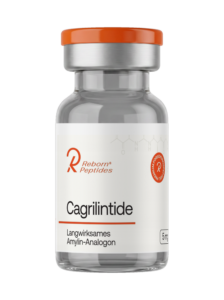
Cagrilintide
Metabolism, Weight & Muscle
69,90 €
74,90 €
incl. shipping & VAT

Certificate of analysis per batch

≥ 99 % purity (HPLC)

Shipping across the EU

Delivery in 3–5 business days
Strength: 10 mg
Quantity:

Fast & secure payment
Bacteriostatic water 10 ml
For reconstitution — included free with orders over €70.
Only 70,00 € until your free gift.

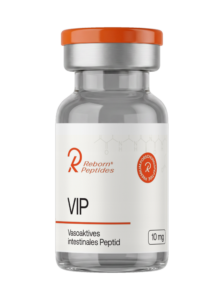
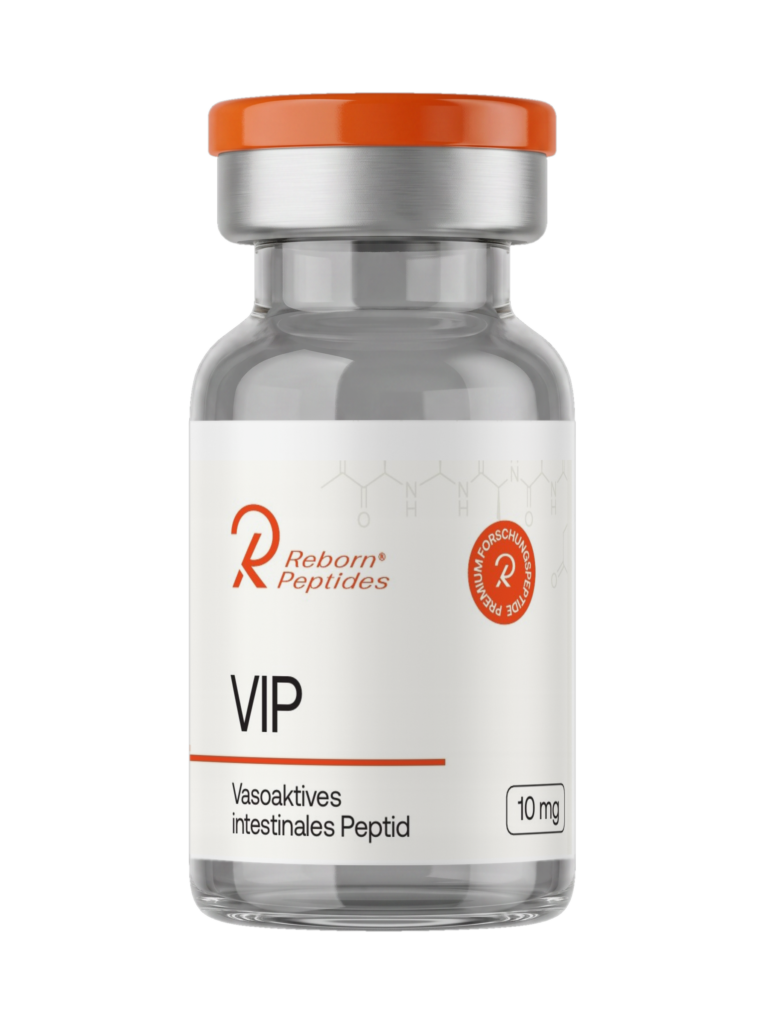
What is VIP
VIP peptide is an endogenous 28-amino-acid signal peptide in the secretin–glucagon peptide family. Its reference identity includes the 28-residue sequence and a C-terminal amide. Published literature describes VPAC1 and VPAC2 receptor systems and model-dependent signalling measurements; these observations are not specifications for supplied material.
Before a VIP peptide buy, laboratories should review the applicable product documentation and confirm that it supports the intended research procurement. Laboratories that buy VIP peptide material should check that product designation, batch code and analytical records correspond to one another. Any VIP peptide for sale is qualified by its matching batch documentation, not by literature findings or catalogue wording.
This material is offered strictly for laboratory research and is not for use in humans or animals. Identity, C-terminal form, content and purity require a matching label, batch code, product specification and batch-specific COA.
The ten cited papers comprise five reviews, three in vitro studies and two animal-model studies. Couvineau et al. review VPAC1 and VPAC2 receptor pharmacology and cAMP; Iwasaki et al., Wu et al., Said et al. and Delgado et al. address gastrointestinal models, cardiopulmonary airway- and vascular-muscle models, pulmonary models and signalling pathways, and cellular and molecular immune signalling, respectively. Every observation remains specific to the system, method and endpoint examined.
Burian et al. examine VPAC1 in macrophages derived from human monocytes. Hamnett et al. study a circadian-network model using ERK1/2 and DUSP4 measurements, while Kudo et al. examine electrical activity in suprachiasmatic-nucleus tissue slices. De Vadder et al. investigate a neural gut-brain axis in an in vivo animal model, and Delgado et al. examine an MPTP mouse model. None of these model observations characterises the supplied material.
VIP peptide (vasoactive intestinal peptide, historically also termed vasoactive intestinal polypeptide) refers to a sequence-defined 28-residue member of the secretin-glucagon peptide family. The amidated reference form ends in –NH2, has C147H238N44O42S and an average molecular mass of 3325.85 g/mol. The free-acid form ends in –OH, has C147H237N43O43S and an average molecular mass of 3326.83 g/mol. The difference reflects replacement of the C-terminal –OH group with –NH2. These reference-substance data support catalogue comparison; the matching batch documentation determines which form is present in supplied material. A salt form may alter the formula and mass relative to the free peptide form. Its reference identity and C-terminal amidation distinguish it from PACAP, secretin and GHRH. Chemical identity, biological measurement and batch documentation are separate evidence layers; literature findings cannot establish the identity, C-terminal form, content or purity of supplied material. Any purity statement must refer to the named batch and its matching COA.
This material is supplied strictly for laboratory research and is not for use in humans or animals. It is not a medicinal product, medical device, food or food supplement. Product designation, batch code, stated content and analytical documentation must refer to the same material, and any purity result remains specific to the analysed batch and method.

Evidence
A review describes VPAC1 and VPAC2 as class B GPCRs associated with Gs, adenylyl cyclase and intracellular cAMP in the systems surveyed.
Couvineau et al. 2012 · PMID 21951273
A review describes neuronal, epithelial and endocrine cell functions across the systems surveyed.
Iwasaki et al. 2019 · PMID 31559013
A review surveys findings from experimental models of airway and vascular smooth muscle.
Wu et al. 2011 · PMID 21477377
A review examines signalling pathways across pulmonary models without establishing a uniform response direction.
Said et al. 2000 · PMID 11033049
A review describes cellular and molecular roles in immune signalling without establishing a single general response direction.
Delgado et al. 2004 · PMID 15169929
In macrophages derived from human monocytes, researchers reported VPAC1 responses to acute and chronic pro-inflammatory stimuli without specifying the direction of change.
Burian et al. 2010 · PMID 20026142
In a preclinical mouse suprachiasmatic-nucleus network model, the authors reported VIP-dependent network control associated with ERK1/2 and DUSP4 signalling.
Hamnett et al. 2019 · PMID 30710088
In ex vivo rodent suprachiasmatic-nucleus slices, researchers reported a prolonged electrical-activity change following VIP exposure, while EPAC and PKA inhibitors blocked induction under the experimental conditions.
Kudo et al. 2013 · PMID 23741043
In an in vivo animal model, researchers described VIP as a local mediator within a mechanism involving intestinal gluconeogenesis.
De Vadder et al. 2015 · PMID 25586379
In an MPTP mouse model, the authors reported less dopaminergic-neuron loss and reduced microglial activation.
Delgado et al. 2003 · PMID 12626429
Product designation, batch code, stated content and analytical documentation must refer to the same material; HPLC results remain specific to the named batch and method.
Reborn batch documentation · COA with HPLC and MS
Research status
10 selected sources — filterable by study type, each linking straight to the source.
Research Deep Dive
Model-qualified findings in depth — every claim tied to a PubMed-indexed source.
VIP peptide is an endogenous 28-amino-acid-residue neuropeptide in the secretin–glucagon superfamily. The published reference sequence has an amidated C-terminus. These structural data describe a molecular reference; without linked sample analysis, they do not establish the identity or properties of a received batch.
| Control field | Documented information |
|---|---|
| Name / synonyms | VIP peptide; peptide VIP; vasoactive intestinal peptide; vasoactive intestinal polypeptide |
| Class | endogenous 28-amino-acid-residue neuropeptide in the secretin–glucagon superfamily; a structural class, not a batch-specific property |
| Reference sequence | HSDAVFTDNYTRLRKQMAVKKYLNSILN-NH2, 28 residues and an amidated C-terminus |
| Receptors described in the literature | VPAC1 and VPAC2, class-B G-protein-coupled receptors |
| Signalling pathways described in the literature | adenylyl cyclase, cAMP, PKA and EPAC; depending on the receptor-pharmacology model, also ERK1/2 and DUSP4 |
| Molecular formula, amidated form | C147H238N44O42S, calculated from the reference sequence with an amidated C-terminus |
| Molecular mass, amidated form | approximately 3,325.85 g/mol, average mass of the free base |
| Molecular formula and mass, free-acid form | C147H237N43O43S; approximately 3,326.83 g/mol, average mass of the free base |
| CAS number | not stated; no verified reference is available in the dataset |
| Form and product code | lyophilised material; product code RP-1033 |
| Declared quantity | shown on the label and the batch certificate of analysis |
| Salt form and hydration state | established by the certificate of analysis and batch records |
| C-terminal amidation and batch purity | established for the batch through linked analytical data |
| Exact mass and sample identity confirmation | established through the batch sample reference, analytical method and report |
| Storage conditions and stability period | follow the label, product specification and records for the same batch |
Placement among laboratory research peptides is a catalogue classification and adds no batch-specific information. The compound-class reference provides terminology for comparing structural categories.
Structural and receptor-pharmacology context · Couvineau A and Laburthe M · PMID 21951273
The amidated reference form ends in –NH2 and the free-acid form in –OH. Their molecular formulas and average masses are distinct reference records. They neither describe an effect or equivalence nor assign a form to a received sample.
C147H238N44O42S and approximately 3,325.85 g/mol describe the average mass of the free base with –NH2 at the C-terminus.
C147H237N43O43S and approximately 3,326.83 g/mol describe the average mass of the free base with –OH at the C-terminus.
Salt form, hydration state, peptide content and C-terminal form must be established for the specific batch through coherent analytical data.
Both average masses refer to the free base. Neither they nor the formulas determine the salt form, hydration state or peptide content of a specific batch. Label, batch code, sample reference and mass-spectrometry record must refer to the same sample before identity can be assigned. The guide to purity, HPLC and mass spectrometry explains the distinct questions answered by chromatographic and identity methods.
Molecular form and scope · Delgado M, Pozo D and Ganea D · PMID 15169929
The cited publications describe findings in controlled research and are arranged chronologically. The guide to experimental study models explains why model type, preparation, measured variable and observation period must remain tied to each publication. No source analyses a supplied batch.
The review organised signalling pathways and outcomes in pulmonary models. Terms used in the source do not establish a uniform response direction beyond the systems reviewed; the conclusion remains bounded by its model selection and endpoints.
Said SI and Dickman KG · PMID 11033049A mouse model examined dopaminergic neurons and microglial activation within the stated design. The outcome belongs only to the species, comparison, observation period and model endpoints and defines no purpose for the material.
Delgado M, Varela N and Gonzalez-Rey E · PMID 12626429The review summarised cellular and molecular roles in immune signalling. It is not a new primary measurement, and its terminology supplies no general response direction outside the reported models.
Delgado M, Pozo D and Ganea D · PMID 15169929Macrophages derived from human monocytes were used to examine VPAC1 expression under stated stimuli; the cited account does not assign a direction to the change. This is a cell model using human material, not a study with human participants or a whole-organism system.
Burian B, Storka A, Marzluf BA et al. · PMID 20026142The review summarised airway and vascular smooth-muscle models and cellular signalling. These subjects delimit its literature frame; the outcomes are model-bound and establish no purpose for laboratory material.
Wu D, Lee D and Sung YK · PMID 21477377The receptor-pharmacology review described VPAC1 and VPAC2 as class-B receptors and discussed Gs, adenylyl cyclase and cAMP in bounded systems. These data concern literature models, not sample identity analysis.
Couvineau A and Laburthe M · PMID 21951273Electrical activity was recorded in suprachiasmatic-nucleus tissue slices, and signalling steps through EPAC and PKA were examined within that preparation. Direction, duration and blockade belong solely to those slices and experimental conditions.
Kudo T, Tahara Y and Gamble KL · PMID 23741043A rodent model described a neural gut–brain axis and a local mediator step within the mechanism examined. The reported direction belongs to the animal model and cannot be transferred to a product specification or material claim.
De Vadder F, Plessier F, Gautier-Stein A and Mithieux G · PMID 25586379A suprachiasmatic-nucleus network preparation was used to track ERK1/2 and DUSP4 in a circadian network. The observation remains limited to the preparation, selected signalling pathway and stated network outcome.
Hamnett R, Crosby P, Chesham JE and Hastings MH · PMID 30710088The review organised neuronal, epithelial and endocrine cell functions as literature fields. The compiled outcomes are not characteristics of a product batch and do not describe the analytical quality of laboratory material.
Iwasaki M, Akiba Y and Kaunitz JD · PMID 31559013This page does not transfer findings from research involving human participants to the offered laboratory material. Mention in pharmacological reviews does not make the material a medicinal product, food or supplement. The broader laboratory knowledge library supplies documentary context.
Publication records and model boundaries · PubMed · PMID 31559013
VIP peptide, peptide VIP, vasoactive intestinal peptide and vasoactive intestinal polypeptide are technical names connecting a subject area with a molecular reference and literature. The word “vasoactive” is historical and does not attribute any property to the offered material.
A reference sequence describes the published amino-acid order and stated C-terminus. It does not by itself confirm a physical batch's sequence, C-terminal form, salt form, hydration state, peptide content or purity.
A batch statement requires an unbroken documentary chain in which label, product code RP-1033, batch code, sample reference, analytical method and report reference concern the same material.
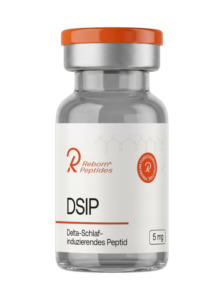
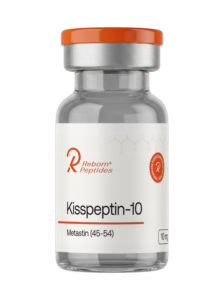
For catalogue orientation, thymosin alpha-1, kisspeptin-10, oxytocin acetate and DSIP have separate records and documentation. No property, analytical value or literature result transfers between entries.
Terminology and documentary boundary · Said SI and Dickman KG · PMID 11033049
The material record describes lyophilised peptide material. The guide to lyophilised material and laboratory containers explains the physical presentation, which does not prove molecular identity. The applicable storage and handling records should be reconciled with the label, specification and documentation for the same batch.
A certificate of analysis should connect substance name, product code, batch code, sample reference, analytical method, result and report version. The guide to understanding the COA distinguishes chromatographic results, identity evidence and traceability. An HPLC result describes the analysed sample's chromatographic profile within the method's limits; mass spectrometry may support identity assignment when method, sample reference, expected mass and report scope are documented together.
No general purity value is assigned without the corresponding batch certificate. This page gives no dosage, use schedule or instructions for use.
This material is exclusively intended for laboratory research. It is not intended to diagnose, treat, cure or prevent disease in humans or animals and is not a medicinal product, medical device, supplement or food.

FAQ
VIP peptide is an endogenous 28-amino-acid signal peptide in the secretin–glucagon peptide family. The amidated reference form ends in –NH2, has C147H238N44O42S and an average molecular mass of 3325.85 g/mol. The free-acid form ends in –OH, has C147H237N43O43S and an average molecular mass of 3326.83 g/mol. The difference reflects replacement of the C-terminal –OH group with –NH2. Matching batch documentation determines which form is present in supplied material; a salt form may alter the formula and mass relative to the free peptide form.
Couvineau et al. review VPAC1 and VPAC2 as class B G-protein-coupled receptors for VIP and PACAP, while Burian et al. examine VPAC1 in macrophages derived from human monocytes. These receptor assignments are pharmacological findings, not batch specifications.
The ten papers cover VPAC1 and VPAC2 receptor pharmacology and cAMP; gastrointestinal, cardiopulmonary, pulmonary and immune-signalling models; VPAC1 in macrophages derived from human monocytes; a circadian-network model with ERK1/2 and DUSP4; electrical activity in suprachiasmatic-nucleus tissue slices; a neural gut-brain axis in an in vivo animal model; and an MPTP mouse model. Findings remain limited to the stated systems, methods and endpoints.
No. Publications do not confirm the identity, C-terminal form, content or purity of supplied material. Those characteristics require matching batch documentation and analytical evidence.
It is supplied strictly for laboratory research and is not for use in humans or animals. No findings are presented as guaranteed outcomes.
HPLC may provide a method-specific chromatographic purity result for the analysed sample. Any purity statement applies only to the named batch and its matching COA.
We accept prepayment by SEPA bank transfer as well as credit card. All payments are processed securely and encrypted.
Discreet shipping from the EU, delivery in 3–5 business days. Neutral packaging with no reference to the contents.