≥ 99 % · HPLC
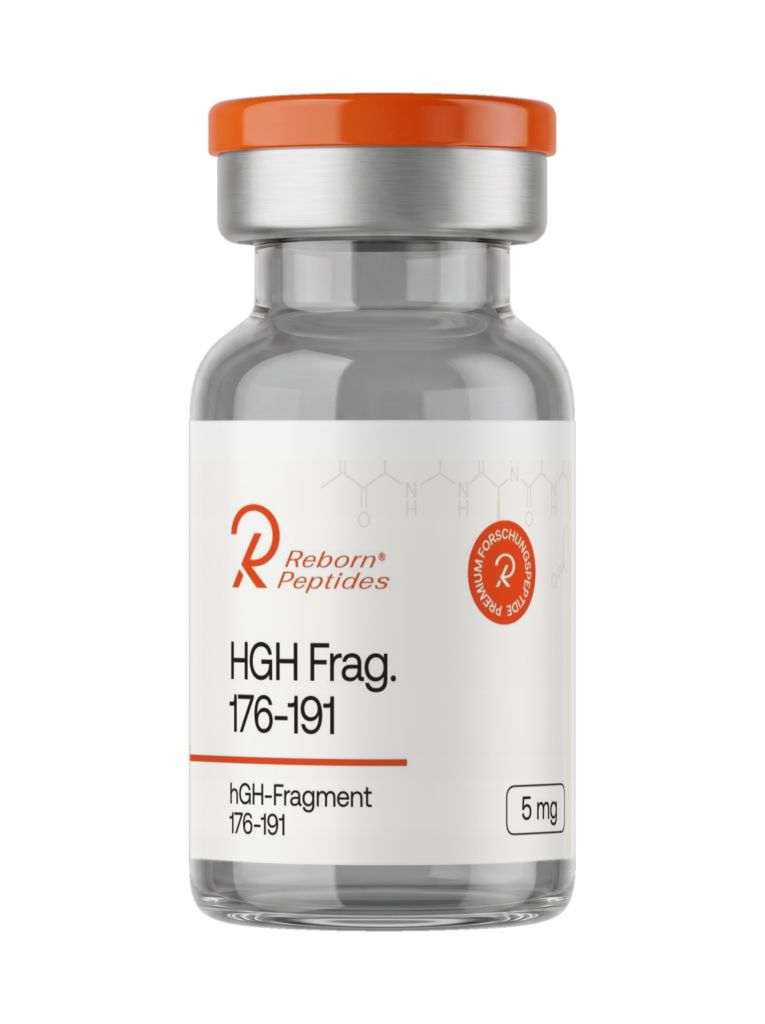
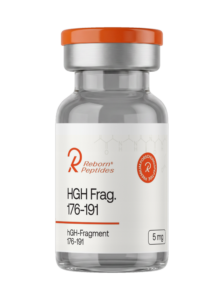
HGH Fragment 176-191
Metabolism, Weight & Muscle
38,90 €
38,90 €
incl. shipping & VAT

Certificate of analysis per batch

≥ 99 % purity (HPLC)

Shipping across the EU

Delivery in 3–5 business days
Strength: 10 mg
Quantity:

Fast & secure payment

Delivery: 02.11. – 03.11.
Bacteriostatic water 10 ml
For reconstitution — included free with orders over €70.
Only 70,00 € until your free gift.
 View Certificate of Analysis
Laboratory analysis
Tested by an independent EU laboratory using HPLC against a reference standard. Purity and content of the sample at a glance, full report as PDF – with a verification code to check directly with the lab.
PZ5DQXX0What is Epithalon
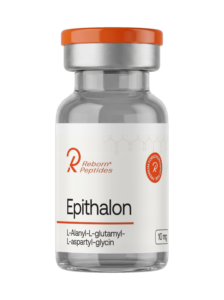
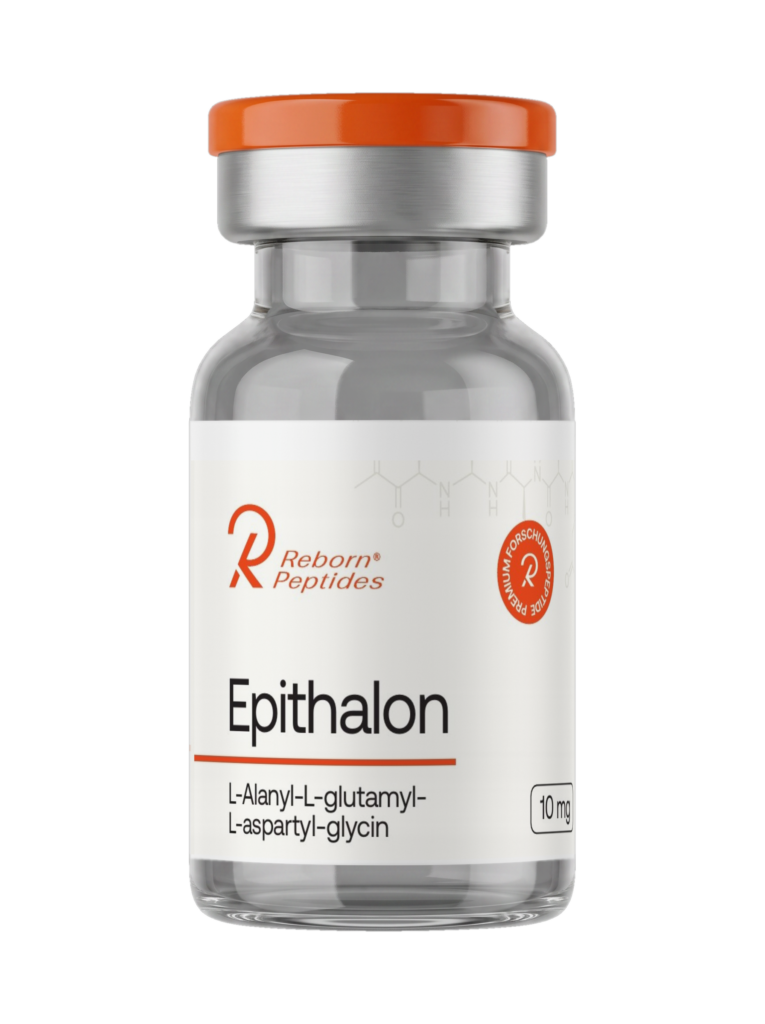
Epithalon is a synthetic linear tetrapeptide with the sequence Ala-Glu-Asp-Gly, abbreviated AEDG. Epitalon is a literature spelling variant for the same tetrapeptide, not a separate molecule. Epithalon is distinct from Epithalamin, a peptide-extract preparation associated with pineal tissue. Reborn catalogues Epithalon under SKU RP-1007; fill quantity and supplied form are taken from the released label and batch documentation.
The cited research covers cultured cells, defined molecular systems, biological-material identification and a bovine ex vivo model. Every observation remains limited to the specified molecule, model, method and endpoint. This material is supplied strictly for laboratory research and is not for use in humans or animals.
Epithalon is the synthetic AEDG tetrapeptide. Reference identifiers describe the free reference structure but do not establish the molecular form, identity, purity or performance of supplied material. The product specification and applicable batch documentation must identify the form used.
Published studies examined telomerase, telomere and cell-division endpoints in cultured human fibroblasts and cell lines; transcription in a defined molecular system; AANAT, pCREB and melatonin synthesis in pinealocyte culture; AEDG identification in a pineal polypeptide complex; and telomerase and developmental endpoints in bovine oocytes and embryos. These different models and endpoints cannot be merged or extrapolated beyond their published conditions.
Literature findings do not verify a Reborn batch. Laboratories must reconcile product name, AEDG sequence, molecular form, batch code and analytical records. HPLC may provide a chromatographic profile and a method-specific purity value for the tested batch, while complementary mass analysis has a separate scope. Purity is stated only for the applicable batch with its COA.
Binding storage conditions and stability information must come from the applicable product specification and batch documentation. Epithalon is offered solely for controlled laboratory research and is not intended for human or veterinary use.

Evidence
Telomerase activation and telomere elongation were reported in cultured human fetal fibroblasts under the published assay conditions.
Khavinson 2003 · PMID 12937682
Further cell divisions were reported in cultured human fibroblasts at their usual proliferative limit under the published conditions.
Khavinson 2004 · PMID 15455129
Telomere-length changes were reported alongside measured hTERT and telomerase activity in the investigated cultured human cell lines.
Al-Dulaimi 2025 · PMID 40908429
Telomerase activation and differences in maturation and developmental measures were reported in bovine oocytes and embryos under the experimental comparisons.
Ullah 2025 · PMID 39788414
Initiation of transcription for selected genes was reported within a defined promoter-sequence system.
Khavinson 2003 · PMID 14666197
The AEDG sequence was identified in an analysed pineal-gland polypeptide complex; this does not establish equivalence with Epithalamin or a supplied batch.
Khavinson 2017 · PMID 29124531
Differences in AANAT, pCREB and measured melatonin synthesis were reported in pinealocyte cultures under the study comparison.
Khavinson 2012 · PMID 22816096
Research status
7 selected sources — filterable by study type, each linking straight to the source.
Research Deep Dive
Model-qualified findings in depth — every claim tied to a PubMed-indexed source.
Epithalon is a synthetic linear tetrapeptide with the sequence alanine–glutamic acid–aspartic acid–glycine, abbreviated AEDG. Three peptide bonds connect its four residues. The spelling Epitalon is used in scientific literature for the same sequence-defined molecule. Sequence and reference identifiers establish the bibliographic entity against which records can be compared; they do not authenticate a received sample or predict an experimental result.
The formula and average molecular weight below describe the neutral free reference structure. They do not determine whether supplied material has the free form or another molecular form. That distinction, like identity and any analytical result, must be reconciled against the applicable label, specification and batch COA.
| Field | Reference specification |
|---|---|
| Name | Epithalon |
| Literature spelling variant | Epitalon |
| Class | Synthetic linear tetrapeptide |
| Sequence | Ala-Glu-Asp-Gly (AEDG) |
| Residue count | 4 |
| Molecular formula | C14H22N4O9 (free reference structure) |
| Molecular weight | 390.35 g/mol (free reference structure) |
| CAS Registry Number | 307297-39-8 (see chapter 04 on the second number in circulation) |
| PubChem CID | 219042 |
| InChIKey | HGHOBRRUMWJWCU-FXQIFTODSA-N |
| UNII | O65P17785G (preferred substance name Epitalon) |
| Supplied form / molecular form | pending reconciliation against label, specification and batch COA |
Identity and sequence context: Khavinson et al. 2017 · PMID 29124531
The source literature does not support one unified target claim. It reports distinct measurements in defined systems: telomerase activity and telomere length in cultured cells, transcription initiation at selected promoters in a molecular system, and AANAT, pCREB and melatonin synthesis in pinealocyte culture. These terms name experimental endpoints, not inherent properties of a supplied batch.
Telomerase activity is an assay measurement, while telomere length is a separate structural endpoint. Findings must stay attached to the cell type, comparison and method used.
Transcription initiation at defined promoter sequences describes activity within that molecular setup. It does not establish downstream outcomes in a cell or organism.
AANAT, phosphorylated CREB and measured melatonin synthesis are separate culture endpoints. Their joint measurement does not turn them into a general mechanism.
The 2003 fetal-fibroblast study reported telomerase activation and telomere elongation under its culture conditions. A separate 2004 fibroblast paper reported further cell divisions at the usual proliferative limit. Later work in cultured human cell lines measured telomere length, hTERT, telomerase activity and an ALT signal in some investigated lines. These studies are related by topic, but they are not interchangeable replications.
Mechanism-term sources: PMID 12937682 · PMID 15455129 · PMID 14666197 · PMID 22816096 · PMID 40908429
This section describes findings in controlled research and makes no statement about use. The evidence progresses across in vitro molecular and cell systems, biological-material identification and a preclinical ex vivo bovine model. Model, sample, method and endpoint delimit every interpretation; no listed publication analyses a Reborn Peptides batch.
A defined molecular transcription system was used to examine initiation at selected promoter sequences, including a telomerase-gene promoter. The result belongs to that experimental setup.
PMID 14666197 · DOI 10.1023/b:bebm.0000008986.02891.deCultured human fetal fibroblasts were examined with telomerase and telomere assays. The authors reported telomerase activation and telomere elongation under the published conditions.
PMID 12937682 · DOI 10.1023/a:1025493705728Cultured human fibroblasts at their usual proliferative limit underwent further cell divisions under the study conditions. This endpoint is not identical to telomere length.
PMID 15455129 · DOI 10.1023/b:bebm.0000038164.49947.8cPinealocyte cultures were assessed for AANAT, pCREB and melatonin synthesis. Reported differences remain limited to that culture comparison and those markers.
PMID 22816096 · DOI 10.1007/s10517-012-1689-5Cultured human cell lines were examined for telomere length, hTERT and telomerase activity, with an ALT signal in some investigated lines. Conclusions remain line- and method-specific.
PMID 40908429 · DOI 10.1007/s10522-025-10315-xAEDG was identified in an analysed pineal polypeptide complex. This is historical identity context, not equivalence between the complex, Epithalamin and synthetic Epithalon.
PMID 29124531 · DOI 10.1007/s10517-017-3922-8Bovine oocytes and embryos were examined for telomerase, maturation and post-thaw developmental measures under defined comparisons. The findings remain species-, model- and endpoint-bound.
PMID 39788414 · DOI 10.1016/j.lfs.2025.123381Study sources: PMID 14666197 · PMID 12937682 · PMID 15455129 · PMID 22816096 · PMID 40908429 · PMID 29124531 · PMID 39788414
Epithalon and Epitalon are spelling variants for the same synthetic AEDG tetrapeptide. Epithalamin is different: it is a peptide-extract preparation associated with pineal tissue, not a synonym for the sequence-defined compound. Names, identifiers, analytical results and experimental observations must not be transferred between the extract and the tetrapeptide.
The 2017 identification of AEDG within an analysed pineal polypeptide complex supplies historical context. It establishes neither equivalence with Epithalon nor any supplied batch identity.
The two registry numbers seen in catalogues also require separation. 307297-39-8 belongs to the defined AEDG tetrapeptide; the FDA record links it to UNII O65P17785G under the preferred substance name Epitalon. By contrast, 64082-79-7 traces to a historical NLM ChemIDplus deposit titled Epithalamin. Its later attachment to Epitalon entries is an old record merger or misassociation, not evidence that the two materials share identity.
A registry number alone does not resolve molecular form either. Epitalon acetate is separately registered as 307297-40-1. Accordingly, reliable matching starts with the full name and AEDG sequence, then checks formula, declared molecular form and batch-linked analytical documentation. No single catalogue field substitutes for that chain.
Historical identity source: Khavinson et al. 2017 · PMID 29124531
Supplied form, molecular form, storage conditions and stability information are pending reconciliation against label, specification and batch COA. No temperature, physical presentation or stability period is inferred from molecular literature. Sequence length alone establishes none of these properties.
For batch review, match the product name and AEDG sequence to the label and specification, then match the material's batch code to its COA. The certificate should identify the sample, analytical method, test date and result. An inconsistent link means it cannot be assumed to describe that material.
Any HPLC purity value is method- and batch-specific and cannot be generalised. HPLC alone does not necessarily establish sequence or molecular form; complementary identity evidence has a separate scope.
Laboratories intending to buy epithalon for controlled research in the EU should evaluate reference and batch identity separately. Papers define the investigated molecule, model, method and endpoint; released documentation defines supplied material. Neither substitutes for the other.
Epithalon is presented solely as research material for controlled laboratory work. The cited evidence consists of molecular, cell-culture, biological-material and bovine ex vivo research; it establishes no conclusion beyond those named systems and measurements.
Research use only. For laboratory research only. Not for human or veterinary use. Not intended to diagnose, treat, cure or prevent any disease. Not a medicinal product, food or cosmetic.

FAQ
The following identifiers are from PubChem (CID 219042). Salt form (free peptide versus acetate), exact molecular weight and primary and alternative identifiers are research reference data; batch identity is established through quality documentation.
Epithalon is supplied strictly for laboratory research. Batch-specific COA and HPLC/MS documentation, together with the lot number, provide the basis for assessing the respective batch. Telomerase, telomere length, gene expression, melatonin synthesis and lifespan in model organisms are research endpoints limited to the stated models. Some foundational publications originate from a single research group; published findings and replication reports do not establish effects of the supplied material in humans.
Epithalon is a synthetic linear tetrapeptide with the sequence Ala-Glu-Asp-Gly, abbreviated AEDG.
No. Epitalon is also used in scientific literature as a spelling for the same AEDG tetrapeptide.
No. Epithalon is the defined synthetic AEDG tetrapeptide, while Epithalamin is a peptide-extract preparation associated with pineal tissue. Their results, names and identifiers are not interchangeable.
307297-39-8 is recorded for the defined AEDG tetrapeptide. 64082-79-7 entered the databases through a historical substance record titled Epithalamin and was later attached to entries for the peptide, so it should be read as a catalogue reference rather than as identity evidence.
The cited work includes cultured human cells, a defined molecular transcription system, pinealocyte culture, biological-material identification and a bovine ex vivo model. Each observation remains limited to its model, method and endpoint.
It is supplied strictly for laboratory research and is not for use in humans or animals.
The applicable COA should connect the product name, batch code, sample, method, test date and result. Any HPLC purity value applies only to the tested batch.
Binding storage conditions and stability information must come from the applicable product specification and batch documentation.
We accept prepayment by SEPA bank transfer as well as credit card. All payments are processed securely and encrypted.
Discreet shipping from the EU, delivery in 3–5 business days. Neutral packaging with no reference to the contents.