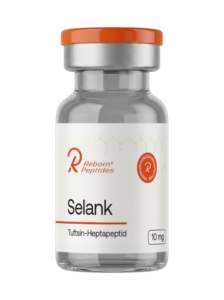
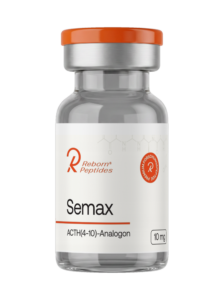
Selank vs Semax — two different sequences and their literature
The selank vs semax comparison begins with molecular identity. Both are synthetic linear heptapeptides discussed in laboratory literature, but they differ in sequence and reference relationship. This page places their identity records and published model systems side by side. It does not rank the materials or recommend one for any purpose. For wider context, see peptide research basics.
Selank vs Semax: identity data side by side
- Development code / designation: Selank — TP-7; Semax — Semax
- Reference relationship: Selank — Tuftsin analogue; Semax — ACTH(4-10) analogue
- Sequence: Selank — Thr-Lys-Pro-Arg-Pro-Gly-Pro; Semax — Met-Glu-His-Phe-Pro-Gly-Pro
- One-letter code: Selank — TKPRPGP; Semax — MEHFPGP
- CAS: Selank — 129954-34-3; Semax — 80714-61-0 (PubChem record)
- PubChem CID: Selank — 11765600; Semax — 9811102
- Molecular formula: Selank — C33H57N11O9; Semax — C37H51N9O10S
- Molecular mass: Selank — 751.9 g/mol; Semax — 813.9 g/mol
- Material form: Selank — Lyophilised; Semax — Lyophilised
- Salt form: Selank — requires batch-specific verification; Semax — requires batch-specific verification
Database entries support reference-level identification, not the identity or purity of received material. The formulae and masses above describe PubChem’s free-peptide records for both peptides. The documented form of any supplied material—free peptide, salt or another form—must be checked against its label, specification and batch-linked Certificate of Analysis (COA).
The records for the Selank research compound and Semax peptide are assessed independently.
Names and modified forms
Capitalisation and the reversed search wording semax vs selank do not change either substance’s identity. TP-7 is the development code associated with Selank; a catalogue spelling does not replace sequence and analytical records.
N-acetyl Selank, sometimes labelled NL-Selank in catalogues, describes an acetylated material rather than the unmodified sequence compared here. N-acetyl Semax amidate likewise describes a separately modified material. This page does not verify the identifiers, formulae, masses or findings of those variants.
Where the two sequences come from
Selank contains the tuftsin motif Thr-Lys-Pro-Arg followed by the C-terminal extension Pro-Gly-Pro. “Tuftsin analogue” describes a structural relationship; it does not transfer findings from tuftsin to Selank.
Semax belongs to a different reference family. The ACTH(4-7) fragment Met-Glu-His-Phe followed by Pro-Gly-Pro forms the chain commonly described as an ACTH(4-10) analogue. The two chains differ in their first four residues and their structural origins.
Both peptides are seven residues long and end in Pro-Gly-Pro, but those features establish neither equivalence nor a shared mechanism. Findings reported for one complete molecule apply only to that molecule.
Scope of the published study models
The cited corpus includes a literature review, in vitro work on a human cell line and on human serum, rodent studies and two investigations with human participants. In vitro and in vivo study models remain distinct: every observation is bound to the named substance, species or system, tissue, method, time point and endpoint. A review is not a primary measurement, and none of these publications analyses a current commercial batch.
Selank literature: transcripts, protein and enzyme activity
Siebert et al. (2017) reviewed publications concerning tuftsin derivatives (PMID 28745220; model qualifier: literature review). That synthesis neither verifies a batch nor constitutes a new experiment.
Volkova et al. (2016) assessed a panel of 84 genes in the frontal cortex of rats and reported time-dependent differences involving GABA-related genes (PMID 26924987; model qualifier: rat model, frontal cortex). Filatova et al. (2017) measured mRNA in the human neuroblastoma cell line IMR-32 and found no change for the peptide alone; different profiles appeared only under the authors’ combined conditions (PMID 28293190; model qualifier: in vitro human cell line, not a study in human participants).
Inozemtseva et al. (2008) examined BDNF expression in the rat hippocampus in vivo (PMID 18841804; model qualifier: in-vivo rat model). Kolik et al. (2019) measured BDNF protein ex vivo in hippocampus and frontal cortex alongside author-defined behavioural endpoints in rats exposed chronically to ethanol (PMID 31625062; model qualifier: in-vivo rat model, ex-vivo tissue measurement).
Kolomin et al. (2011) examined 84 inflammation-associated genes in mouse spleen and reported changes in part of that panel (PMID 21609736; model qualifier: mouse model, spleen). Zozulya et al. (2001) studied participants classified using DSM-IV and separately reported concentration-dependent inhibition of enkephalinase activity in human plasma (PMID 11550013; model qualifier: investigation with human participants plus ex-vivo plasma measurement). Findings from research with human participants do not describe the laboratory material discussed here.
Semax literature: signalling measurements and expression profiles
Dolotov et al. (2006) reported four hippocampal measurements—BDNF protein, TrkB tyrosine phosphorylation, BDNF exon III mRNA and trkB mRNA (PMID 16996037; model qualifier: rat model). A second Dolotov paper from 2006 measured BDNF protein in rat basal forebrain after in-vivo exposure and specific binding in cell membranes isolated from the same region (PMID 16635254; model qualifier: rat study; in-vivo BDNF measurement plus ex-vivo binding in isolated basal-forebrain cell membranes).
Medvedeva et al. (2014) examined cortical gene expression in focal ischaemia (PMID 24661604; model qualifier: rat focal-ischaemia model, transcriptomics). Sudarkina et al. (2021) reported exposure-associated differences in selected brain protein and mRNA measurements 24 h after transient middle cerebral artery occlusion (PMID 34201112; model qualifier: rat ischaemia-reperfusion model; targeted immunodetection and RT-PCR).
Eremin et al. (2005) reported differences in serotoninergic markers after the peptide alone; differences in dopaminergic markers appeared only under the authors’ combined condition with D-amphetamine (PMID 16362768; model qualifier: rodent models). Bashkatova et al. (2001) measured nitric-oxide generation and lipid-peroxidation-related markers in incomplete global ischaemia; the abstract reports a smaller nitric-oxide rise in peptide-exposed groups than in model controls and no corresponding direction for the lipid-peroxidation indices (PMID 11245825; model qualifier: rat model). These are experimental endpoints under specified model conditions, not guaranteed properties of material.
Direct comparison: one shared study design
One cited source places both peptides in a single design with human participants: Panikratova et al. examined resting-state functional connectivity in 52 healthy participants receiving Selank, Semax or placebo, and reported both shared and substance-specific differences in right amygdala–right temporal cortex connectivity (PMID 32342318; model qualifier: study with human participants, resting-state fMRI). That design neither ranks the materials nor makes its results applicable to the laboratory material described here. A selank vs semax comparison of that kind cannot establish equivalence.
Two further cited records also cover both peptides: an in vitro assay on enkephalin-degrading enzymes from human serum (PMID 11443939) and a rat 6-OHDA lesion model with author-defined behavioural endpoints (PMID 28702721). Every remaining source measures one peptide only. Differences in tissues, species, comparators, exposure conditions, time points and endpoints prevent those studies from forming a broader direct comparison.
Nor can a finding for one substance answer selank or semax as a selection question: transcripts, proteins, binding, proteomic profiles, neurochemical markers, behavioural endpoints and enzyme activity are not interchangeable. Database records establish reference identity fields, not performance. None of the cited publications assesses short- or long-term risk as an endpoint of its own.
Batch documentation and traceability
For a selank vs semax record, reference identity and sample verification are separate evidence chains: compound name, chemical form, label and batch number should agree with the specification and applicable COA. A batch document should identify sample, method, analysis date and result within its stated scope; if batch number or material form differs, it cannot verify the received material.
A CAS number or PubChem CID does not prove salt form, purity or stability. An analytical result applies only to the tested batch and method; it must not become a general purity promise.
Frequently asked questions
What is the difference between Selank and Semax?
Selank is TKPRPGP, a tuftsin analogue; Semax is MEHFPGP, an ACTH(4-10) analogue. They share a terminal Pro-Gly-Pro motif but differ in their first four residues, reference relationships and identifiers.
Are the N-acetyl forms the same materials?
No. N-acetyl Selank and N-acetyl Semax amidate are separately modified designations; their identity and analytical data require batch-specific verification of their own.
Can a finding for one peptide be applied to the other?
Not automatically. Each observation belongs to the complete molecule, model, tissue, method and endpoint stated in its source. A shared terminal motif alone does not establish that a result for one peptide also applies to the other.
Has a head-to-head study established which one to choose?
Three cited records examine both peptides under one shared protocol (PMID 32342318, PMID 11443939, PMID 28702721). Each compared measurements, not suitability; none ranks the two or describes the laboratory material discussed here.
Does a database record or paper prove batch purity?
No. Databases describe an identity record, papers describe study designs. Purity requires a result tied to the tested batch, method and matching documentation.
Research use only
This page is limited to substance identity, study models and laboratory documentation. It provides no protocol, administration guidance or human-use information.
All materials described here are reserved exclusively for laboratory research. They are not intended for humans or animals and are not medicinal products, foods, supplements, cosmetics or medical devices. Not for human or veterinary use.
Sources
- 32342318: Substance — Selank and Semax in one design; Model qualifier — study with 52 healthy human participants, resting-state fMRI before as well as 5 and 20 minutes after administration of Selank, Semax or placebo; shared and substance-specific differences in right amygdala–right temporal cortex connectivity. Panikratova YR et al. 2020, Doklady Biological Sciences 490(1):9-11, DOI 10.1134/S001249662001007X. Results from studies with human participants are not transferred to the laboratory material described here.
- 11443939: Substance — Selank and Semax in one design; Model qualifier — In vitro; enkephalin-degrading enzymes from human serum, both peptides in one assay
- 28702721: Substance — Selank and Semax in one design; Model qualifier — Rat model with 6-OHDA-induced dopaminergic lesion; author-defined behavioural endpoints, both peptides
- 28745220: Substance — Selank; Model qualifier — Literature review
- 26924987: Substance — Selank; Model qualifier — Rat model; 84-gene panel in frontal cortex
- 28293190: Substance — Selank; Model qualifier — In vitro; human neuroblastoma cell line IMR-32
- 18841804: Substance — Selank; Model qualifier — In-vivo rat model; hippocampal BDNF expression
- 31625062: Substance — Selank; Model qualifier — In-vivo rat model for author-defined behavioural endpoints; ex-vivo tissue measurement of BDNF protein
- 21609736: Substance — Selank; Model qualifier — Mouse model; 84-gene panel in spleen
- 11550013: Substance — Selank; Model qualifier — Clinical investigation with human participants; supplementary plasma enzyme measurement
- 16996037: Substance — Semax; Model qualifier — Rat model; hippocampal BDNF/TrkB measurements
- 16635254: Substance — Semax; Model qualifier — Rat study; in-vivo basal-forebrain BDNF protein and ex-vivo specific binding in isolated basal-forebrain cell membranes
- 24661604: Substance — Semax; Model qualifier — Rat focal-ischaemia model; transcriptomics
- 34201112: Substance — Semax; Model qualifier — Rat transient-middle-cerebral-artery-occlusion model; targeted immunodetection and RT-PCR at 24 h
- 16362768: Substance — Semax; Model qualifier — Rodent models; serotoninergic markers after the peptide alone, dopaminergic markers only with D-amphetamine
- 11245825: Substance — Semax; Model qualifier — Rat incomplete-global-ischaemia model; nitric oxide and related markers