Lyophilized Peptide Material, Vials and Formats
Lyophilisation, or freeze-drying, removes water from frozen material and leaves a dry solid. A lyophilized peptide may be supplied in a sealed vial linking the material, label and batch identifier as one traceable laboratory item. Everything discussed on this page is exclusively for laboratory research.
This overview describes only the supplied material form and its container. It makes no statement about use, route or quantities to be applied, because these materials are reserved for research purposes. Preparation methods and experiment-specific decisions are outside its scope.
What is lyophilized peptide material
Lyophilisation begins by freezing a material. In physical terms, this explains what does lyophilized mean. Under reduced pressure, frozen water is then removed mainly by sublimation: ice passes into vapour without first becoming bulk liquid. A later drying stage may reduce residual moisture further. The exact process depends on the material and formulation, so “dry” does not mean that every trace of moisture is absent.
The resulting lyophilised material is a solid. Depending on formulation, fill and processing conditions, it may look like a coherent cake, a compact pellet, a thin film or a loose residue. These descriptions concern physical appearance only. They do not define molecular identity or analytical quality.
Removing bulk water can reduce hydrolytic degradation pathways that proceed more readily in solution. Composition, residual moisture, container closure and documented conditions still matter. Wang’s review discusses the chemical and physical stability considerations relevant to lyophilized protein and peptide materials (PMID 10967427). Angkawinitwong 2015 places solid-state protein formulation and freeze-drying in a review (PMID 25565441); both sources concern material and formulation questions, not effects. Zapadka 2017 reviews intrinsic and extrinsic factors affecting peptide physical stability and aggregation; its abstract expressly mentions temperature and lyophilisation (PMID 29147559). This does not imply any stability or storage assurance for a specific material or batch.
Drying does not make material unchangeable: Srinivasan 2015 documents particle formation and growth in lyophilised secretin—material analysis, no organism (PMID 25636302), for the preparation examined. Stärtzel 2018 reviews arginine, one excipient, in freeze-dried protein preparations (PMID 29183741). It concerns proteins and one particular excipient; it neither establishes identical composition for every formulation nor promises general stability.
Lyophilized and non-lyophilized material compared
Lyophilized peptide powder and the same substance in solution differ principally in water content. Their behaviour also depends on the substance, formulation and stresses of freezing and drying.
A lyophilisate carries only residual moisture, so hydrolytic degradation pathways that proceed readily in solution have less opportunity to run. A material already in solution has passed that point: its context is set by the solvent, the concentration and the conditions under which it is held. Neither state is inherently the better one. Which is appropriate follows from the substance, the documented specification and the work planned around it.
This is also the common reason lyophilized peptide material is supplied dry and brought into solution at its destination rather than shipped as a prepared solution. That is a description of ordinary supply practice, not a claim about how any particular substance or batch behaves in transit; conditions during shipment and storage are governed by the released specification, not by the material’s physical state.
The declaration differs as well, and this is where the two states are most often confused. A lyophilisate is declared as a mass — the content of the container. A solution is described by concentration and volume, which are properties of a prepared preparation rather than of the supplied unit. A declared mass therefore cannot be read as a concentration, and no figure on this page describes a prepared solution.
In either state, identity and declared content are assessed against the label, the batch code and any analytical document attributable to that batch. Physical form is not evidence of those attributes. The transition itself — how a dry material is brought into solution — belongs to the laboratory transition guide and is not covered here.
What the appearance of a lyophilisate does and does not tell you
A lyophilisate has no mandatory visual form: a lyophilized cake may be intact or partly collapsed, while a pellet, film, loose particles or uneven residue can occur. Appearance can reflect formulation and process history but cannot identify the cause.
Small declared contents can look like less material than expected. Visual volume is influenced by density, formulation components and the area over which the solid is distributed. It is therefore not a reliable estimate of mass. Comparing apparent size between two containers is not a valid content test.
The label provides the designation and declared content; the batch code connects the container to its records; the analytical certificate reports the tests and results attributed to that batch. The guide to understanding the COA explains how those document fields should be read together.
Visible observations still belong in a receiving record. Unexpected colour, displaced material or signs of moisture should be described factually and assessed under the laboratory’s acceptance procedure. An observation should not be converted into an untested chemical explanation.
Vials as containers
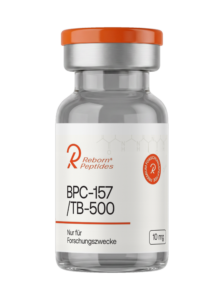
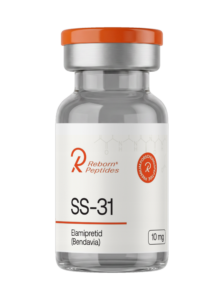
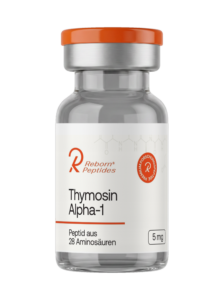
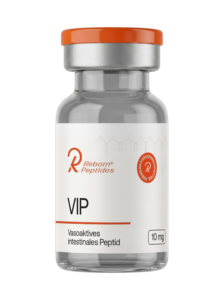
A sealed glass container keeps this laboratory material enclosed and traceable. It is a unit of record, not a separately supplied item: Reborn does not sell empty containers, closures or laboratory consumables. A typical closure combines a septum and crimped cap to limit exposure to environmental moisture and contamination. Light protection depends on the glass, secondary packaging and documented storage arrangement.
The first receiving check is whether the container and seal are intact. Cracks, a displaced closure, visible leakage or other damage should be recorded before the item is accepted into stock. An intact seal is an initial packaging observation, not evidence of chemical identity or batch quality.
The label and batch code belong with the container throughout its laboratory record. Separating them from the lyophilized peptide material breaks traceability between the physical item, declared content and applicable COA. Where secondary packaging carries additional identifiers, those identifiers should remain linked in the inventory record as well.
Declared content and fill quantities
A stated quantity describes the declared content of the catalogue unit. It is a container specification, not an experimental quantity. It must be read together with the substance name, form, label and batch documentation.
Each declared content below is confirmed against the released product record. A declared content is a catalogue and container attribute; it is not an analytical result and does not replace the label, specification or batch certificate of the individual container.
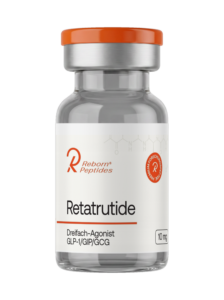
- Retatrutide: 10 mg, lyophilized.
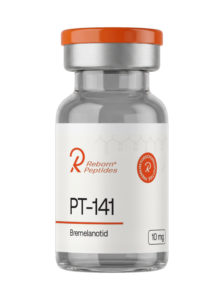
- PT-141: 10 mg of lyophilised material per vial, catalogued under SKU P41.
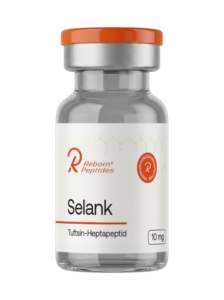
- Selank: 10 mg declared content, lyophilized.
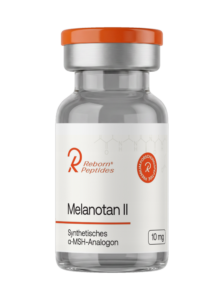
- Melanotan-2: 10 mg of lyophilised material per vial, SKU ML10.
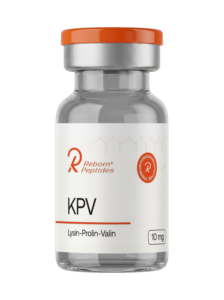
- KPV: 10 mg of lyophilised material per vial, catalogued under SKU KP10.
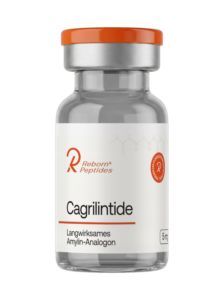
- Cagrilintide: 5 mg of lyophilised material per vial, catalogued under SKU CGL5.
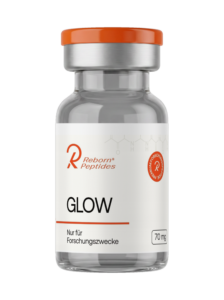
- GLOW Blend: GHK-Cu 50 mg + TB-500 10 mg + BPC-157 10 mg; 70 mg declared total per vial, lyophilized.
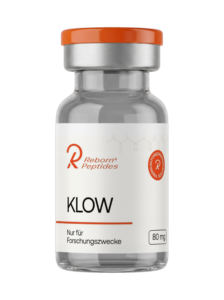
- KLOW Blend: GHK-Cu, TB-500, BPC-157 and KPV; 80 mg declared total per vial, lyophilized.
For GLOW and KLOW, the declared total is the sum of the components, not the amount of any one component — a combined declaration is not a single-substance figure.
None of these declarations establishes purity; any purity value must remain linked to the COA for the applicable batch. A matching nominal amount does not make two differently labelled materials equivalent.
Label, batch number and documentation
The document chain connects material and label to the catalogue entry, receiving record and batch-assigned document. Material name, catalogue reference and batch number must identify the same item; similar names or partial code matches are insufficient. The COA reports only results assigned to that batch.
Formats other than lyophilisate
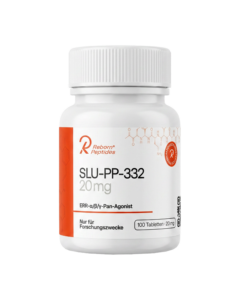
Not every catalogue material is a lyophilisate, and not every solid is supplied in a vial. SLU-PP-332 is listed in tablet format at declared strengths of 1 mg, 5 mg, 20 mg and 50 mg. Declared strength and supply format are catalogue and container attributes only.
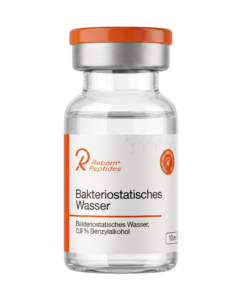
Bacteriostatic Water provides the contrasting liquid format. Its presence in the catalogue does not make it a lyophilisate. Powder, tablet and liquid describe supplied forms of laboratory materials. The selected form follows the properties and documented specification of the substance, not an idea about use.
Storage and released storage conditions
Released conditions must come from manufacturer information or the identified batch document. General category statements and other-batch documents cannot replace them. This section identifies that source; it gives no storage instruction and turns no temperature or time data into directions.
From lyophilisate to solution
Becoming a solution changes a dry material’s physical and chemical context. The laboratory transition guide covers that transition; the storage and handling guide covers subsequent conditions. Neither topic can be inferred from appearance or container alone.
What belongs in the receiving record
A receiving record should identify the substance, batch code, declared content, seal condition, receipt date and storage location, and whether label and COA agree. Retaining any SKU or additional catalogue identifier supports later reconciliation.
Observations should be specific: “seal displaced” or “thin film at base” is more useful than a general judgement. Any discrepancy between container, label and document should remain visible until resolved under the laboratory’s procedure. The wider knowledge hub connects receiving records with analytical scope, documentation and other material-control topics.
Frequently asked questions
What does the dry form mean?
Sublimation removed the water. The term describes form, not identity.
Which document belongs to the material?
The batch-assigned document; a similar name or partial code is insufficient.
Research-use statement
All materials referenced here are for laboratory research use only. The lyophilized peptide material described on this page remains within that scope. They are not for human or veterinary use. This page does not replace batch documentation, laboratory acceptance criteria, risk assessment or a controlled method established by the responsible organisation.
Sources
Wang W. (2000). International Journal of Pharmaceutics. PMID 10967427.
Srinivasan C et al. (2015). International Journal of Pharmaceutics. PMID 25636302.
Angkawinitwong U et al. (2015). PMID 25565441.
Stärtzel P (2018). Journal of Pharmaceutical Sciences. PMID 29183741.
Zapadka KL et al. (2017). Interface Focus. PMID 29147559. Review of peptide physical stability and aggregation.