Bestseller≥ 99 % · HPLC
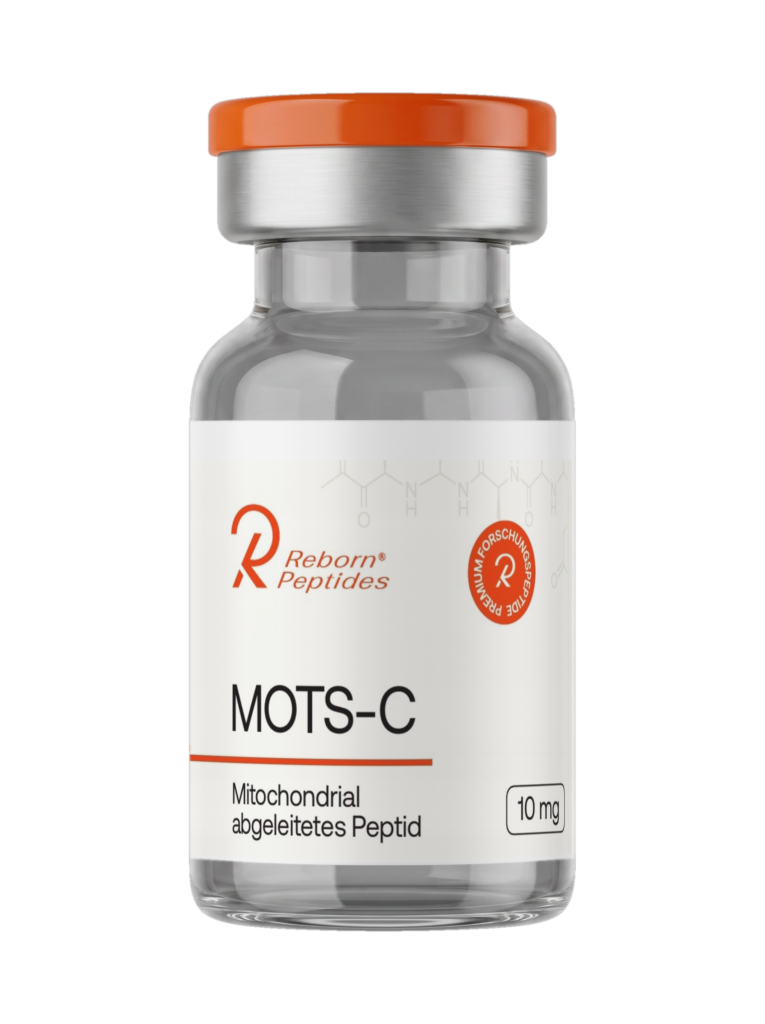
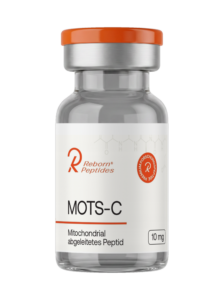
MOTS-C
Metabolism, Weight & Muscle
38,90 €
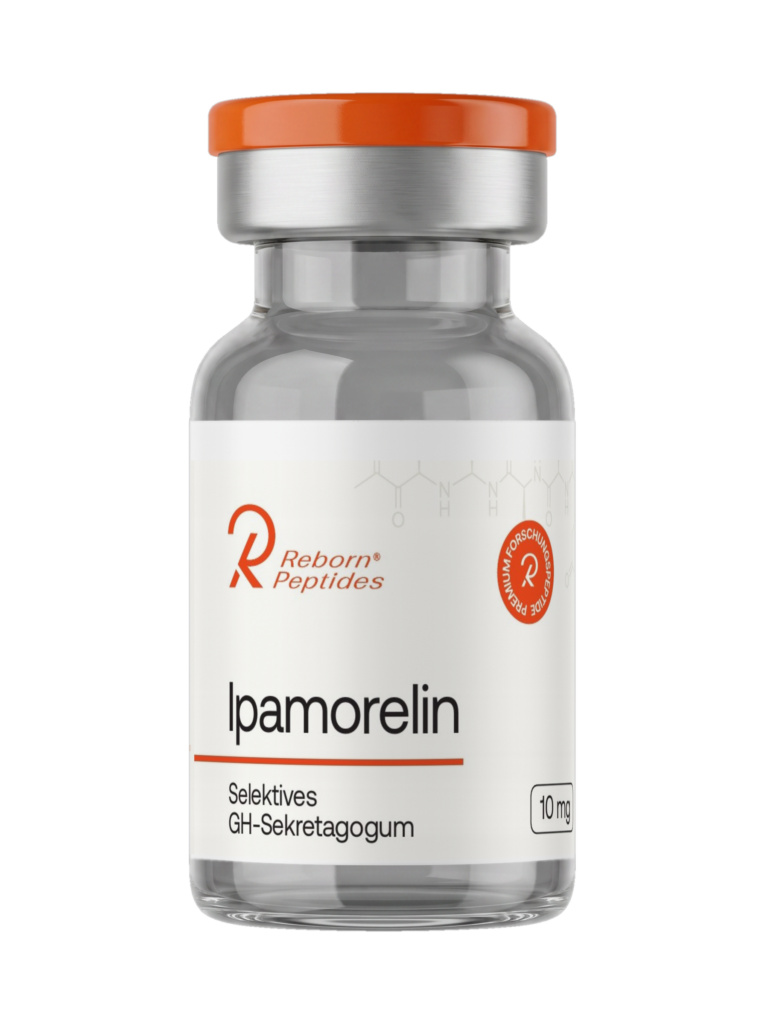
44,90 €
incl. shipping & VAT

Certificate of analysis per batch

≥ 99 % purity (HPLC)

Shipping across the EU

Delivery in 3–5 business days
Strength: 10 mg
Quantity:

Fast & secure payment

Delivery: 02.11. – 03.11.
Bacteriostatic water 10 ml
For reconstitution — included free with orders over €70.
Only 70,00 € until your free gift.
 View Certificate of Analysis
Laboratory analysis
Tested by an independent EU laboratory using HPLC against a reference standard. Purity and content of the sample at a glance, full report as PDF – with a verification code to check directly with the lab.
OITP9QL9What is Ipamorelin
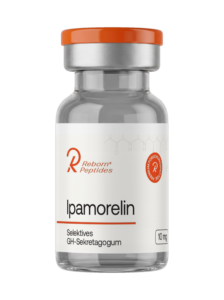
The ipamorelin peptide, also identified as NNC 26-0161, is a synthetic amidated pentapeptide classified in the literature as a growth-hormone secretagogue and GHSR-1a agonist. These terms describe a research class and receptor mechanism under defined experimental conditions; they do not establish the identity, purity or performance of a supplied batch.
Laboratories that buy ipamorelin do so as a catalogue reference compound; its physical presentation remains subject to confirmation against the released specification. A listing that offers ipamorelin for sale records a catalogue position, not an analytical result; the evidence for identity and purity sits in the released records, not in the entry itself.
The product is supplied strictly for laboratory research and is not for use in humans or animals. Its label, batch code, specification and corresponding certificate of analysis must remain traceably connected when qualifying the material.
Ipamorelin is a synthetic pentapeptide with the declared sequence Aib-His-D-2-Nal-D-Phe-Lys-NH2 and an amidated C-terminus. The literature identifies it by the development code NNC 26-0161 and describes GHSR-1a agonism and a selective response pattern in defined experimental systems. That pharmacological classification is separate from analytical qualification of a supplied batch.
The cited research spans receptor systems, preclinical animal models and human studies. Reported findings include receptor binding and measured hormonal responses, skeletal and gastrointestinal endpoints in rat or rodent models, and pharmacokinetic-pharmacodynamic or gastrointestinal-recovery research involving people. Every observation remains limited to its original model, controls, methods and endpoints. In the randomised controlled human study, the primary endpoint was not statistically significant.
For laboratory procurement, the label, SKU RP-1013, batch code, specification, identity evidence and COA must be reconciled. HPLC provides a chromatographic profile and a method-specific purity result for the tested sample; any purity statement therefore applies only to the batch identified on the corresponding COA. Literature cannot establish the identity, stated content, purity, salt form or stability of the current batch.
Binding storage conditions and a stability period must follow the approved product and batch records. Ipamorelin is strictly for laboratory research and is not for use in humans or animals.

Evidence
In in-vitro and preclinical in-vivo systems, receptor binding and measured hormonal responses were used to characterise the compound; the reported selectivity remains limited to that design.
Raun et al. 1998 · PMID 9849822
Concentration-time and GH-response relationships were examined in a pharmacokinetic-pharmacodynamic study involving human volunteers; the parameters remain specific to its population and analytical model.
Gobburu et al. 1999 · PMID 10496658
Bone-growth, bone-mineral-content and bone-formation endpoints were investigated across distinct rat models and cannot be transferred beyond their respective conditions.
Johansen et al. 1999 · PMID 10373343 · Svensson et al. 2000 · PMID 10828840 · Andersen et al. 2001 · PMID 11735244
Transit, motility and gastric-dysmotility measurements were examined in separate rodent models with distinct procedures and methods.
Venkova et al. 2009 · PMID 19289567 · Greenwood-Van Meerveld et al. 2012 · PMID 27186127
A randomised controlled human study investigated gastrointestinal-recovery endpoints, and its primary endpoint was not statistically significant.
Beck et al. 2014 · PMID 25331030
Literature does not establish the identity, content, purity, salt form or stability of a supplied batch; analytical results must remain linked to the applicable batch.
Reborn batch documentation · COA with HPLC and identity evidence
Research status
8 selected sources — filterable by study type, each linking straight to the source.
Research Deep Dive
Model-qualified findings in depth — every claim tied to a PubMed-indexed source.
Ipamorelin is documented as a synthetic pentapeptide and growth-hormone secretagogue, with the literature development code NNC 26-0161. That code identifies the reference compound in the literature; it is never a batch number. The declared sequence is Aib-His-D-2-Nal-D-Phe-Lys-NH2. Aib, D-2-Nal and D-Phe are non-proteinogenic or D-configured components, while the Lys-NH2 ending defines the amidated C-terminus.
Sequence and terminal form must be assessed together. The formula and mass below are assigned specifically to the amidated form, rather than presented as free-standing values. Database identifiers define a reference identity, but cannot authenticate experimental material or a supplied batch.
| Field | Documented reference |
|---|---|
| Designation | Ipamorelin |
| Development code | NNC 26-0161; literature code, not a batch number |
| Class | Synthetic pentapeptide; growth-hormone secretagogue; GHSR-1a agonist |
| Sequence | Aib-His-D-2-Nal-D-Phe-Lys-NH2 |
| C-terminus | Amidated; Lys-NH2 ending |
| Molecular formula | C38H49N9O5, assigned to the amidated form |
| Molecular mass | 711.9 g/mol, assigned to the amidated form |
| PubChem CID | 9831659 |
| UNII | Y9M3S784Z6 |
| CAS (free base) | 170851-70-4 (free base) |
| InChIKey | NEHWBYHLYZGBNO-BVEPWEIPSA-N |
| SKU | RP-1013 |
A literature reference, a database record and a catalogue identifier answer different questions. Matching supplied material to this reference identity requires released documentation tied to the physical batch.
Identity source: Raun et al. 1998 · PMID 9849822
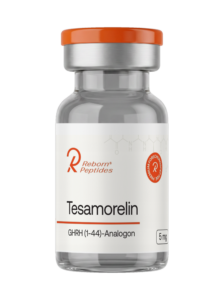
Ipamorelin is classified as a GHSR-1a agonist within the ghrelin/GHS-receptor secretagogue class. This is distinct from GHRH analogues, including tesamorelin, which act through the GHRH receptor. The distinction is scientific classification only and does not predict results across research systems.
Raun and colleagues characterised GHS-receptor binding in an in-vitro system and hormonal measurements in preclinical in-vivo systems.
In the in-vitro system and preclinical in-vivo systems of Raun 1998, “selective” refers only to the contrast between the measured GH response and the ACTH and cortisol measurements under that publication's conditions.
The wording is not a general substance property, a safety conclusion or a quality characteristic of supplied material.
The authors' description of the first selective GH secretagogue must remain attached to that experimental comparison. It cannot be expanded beyond the controls, methods and variables reported in the publication. Likewise, receptor classification cannot establish the sequence, purity or molecular form of a later batch.
Mechanism source: Raun et al. 1998 · PMID 9849822 · DOI 10.1530/eje.0.1390552
This section describes findings in controlled research. The records span receptor systems, preclinical rodent models, human pharmacokinetic-pharmacodynamic modelling and a randomised controlled human study. Compound-name agreement does not merge their populations, methods or interpretive reach.
GHS-receptor binding was examined in an in-vitro system, while GH, ACTH and cortisol responses were measured in in-vitro and preclinical in-vivo systems.
PMID 9849822 · DOI 10.1530/eje.0.1390552Concentration-time and GH-response relationships were measured in a human pharmacokinetic-pharmacodynamic modelling study.
PMID 10496658 · DOI 10.1023/a:1018955126402Longitudinal bone growth and body weight were measured in a preclinical rat model, while total IGF-I, IGF-binding proteins and serum bone-turnover markers were unchanged in that preclinical rat model.
PMID 10373343 · DOI 10.1054/ghir.1999.9998Bone mineral content was measured in a preclinical adult female rat model, with another secretagogue included in the comparison design.
PMID 10828840 · DOI 10.1677/joe.0.1650569Bone-formation measurements were examined in a preclinical glucocorticoid-exposed rat model.
PMID 11735244 · DOI 10.1054/ghir.2001.0239Transit and motility were measured in a preclinical rodent model of postoperative ileus.
PMID 19289567 · DOI 10.1124/jpet.108.149211Gastric dysmotility was examined in a separate preclinical rodent model.
PMID 27186127 · DOI 10.2147/JEP.S35396Gastrointestinal recovery endpoints were measured in a randomised controlled human study, and the primary endpoint in that randomised controlled human study was not statistically significant.
PMID 25331030 · DOI 10.1007/s00384-014-2030-8The unchanged findings in Johansen 1999 and the non-significant primary finding in Beck 2014 remain integral to this evidence map. Neither may be recast as confirmation.
Study sources: Raun 1998 · Gobburu 1999 · PMID 10496658 · Johansen 1999 · Svensson 2000 · Andersen 2001 · Venkova 2009 · Greenwood-Van Meerveld 2012 · Beck 2014
Four evidence levels require four separate scopes. Receptor-system observations remain assay-bound. Preclinical rodent records remain species- and design-bound. Human pharmacokinetic-pharmacodynamic modelling remains tied to its sampled population and analytical model. The randomised controlled human record remains a separate study, and its primary finding was not statistically significant.
The scientific class boundary must also remain intact: a ghrelin/GHS-receptor agonist is not a GHRH analogue merely because both classes appear in growth-hormone research. Class terminology does not establish equivalence between ipamorelin and tesamorelin or support an outcome statement.
Database identity, experimental material and supplied material form three distinct documentation levels. PubChem CID 9831659 describes a database reference. A publication reports the material characterised within its own methods. A supplied batch requires its own matching label, batch code, released specification and analytical record. A publication about a reference compound cannot prove that later supplied material has the same identity.
The cited literature does not establish the stated content, purity, salt or supplied form, storage conditions or stability of the catalogue material. Those points require product and batch records; none may be inferred from receptor terminology, model findings or database identifiers.
Boundary sources: Beck et al. 2014 · PMID 25331030
A stored German catalogue meta description records “lyophilised”, but confirmation against the released specification remains outstanding. It is therefore a catalogue entry awaiting confirmation, not an assured property. Salt or supplied form, stated content, storage conditions and stability period are open documentary points and are not asserted here.
The required documentation chain should connect Ipamorelin, SKU RP-1013, the label, batch code, released specification, analytical method, report identifier and result. A COA should identify the tested batch and the material to which each result applies. The presence of a released COA for the offered batch is not asserted on this page.
Any numerical purity statement must be batch-specific and supported by the corresponding COA. HPLC can document a method-specific chromatographic result for the analysed sample, but does not by itself establish every identity question. Identity evidence and chromatographic assessment are complementary, and results cannot be transferred between batches.
Ipamorelin is presented to EU laboratories as research material. Literature and database records provide reference context; neither replaces a released specification or matching batch documentation.
Research use only. For laboratory research only. Not for human or veterinary use. Not intended to diagnose, treat, cure or prevent any disease. Not a medicinal product, food or cosmetic.

FAQ
Ipamorelin, or NNC 26-0161, is a synthetic amidated pentapeptide classified in the literature as a growth-hormone secretagogue and GHSR-1a agonist. These are research classifications, not quality or performance claims for supplied material.
The declared sequence is Aib-His-D-2-Nal-D-Phe-Lys-NH2. The Lys-NH2 ending identifies the amidated C-terminus, and the sequence and terminal form should be assessed together.
In defined in-vitro and preclinical systems, Raun and colleagues reported a GH response without a comparable co-stimulation of ACTH and cortisol. This refers only to the measurements and conditions of that publication and is not a universal product attribute.
The cited literature includes in-vitro and preclinical receptor systems, rat and rodent skeletal or gastrointestinal models, a human pharmacokinetic-pharmacodynamic study, and a randomised controlled human gastrointestinal-recovery study whose primary endpoint was not statistically significant.
No. Publications describing a reference compound cannot verify the identity, content, purity, salt form or stability of a later batch. The applicable label, batch code, specification and COA must be reconciled.
HPLC supplies a chromatographic profile and method-specific purity result for the tested sample. Any purity statement applies only to the batch identified on the corresponding COA.
Strictly for laboratory research and not for use in humans or animals. It is not intended to diagnose, treat, cure or prevent disease.
We accept prepayment by SEPA bank transfer as well as credit card. All payments are processed securely and encrypted.
Discreet shipping from the EU, delivery in 3–5 business days. Neutral packaging with no reference to the contents.