≥ 99 % · HPLC
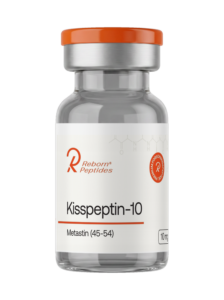
Kisspeptin-10
Libido & Sexual Function
50,90 €
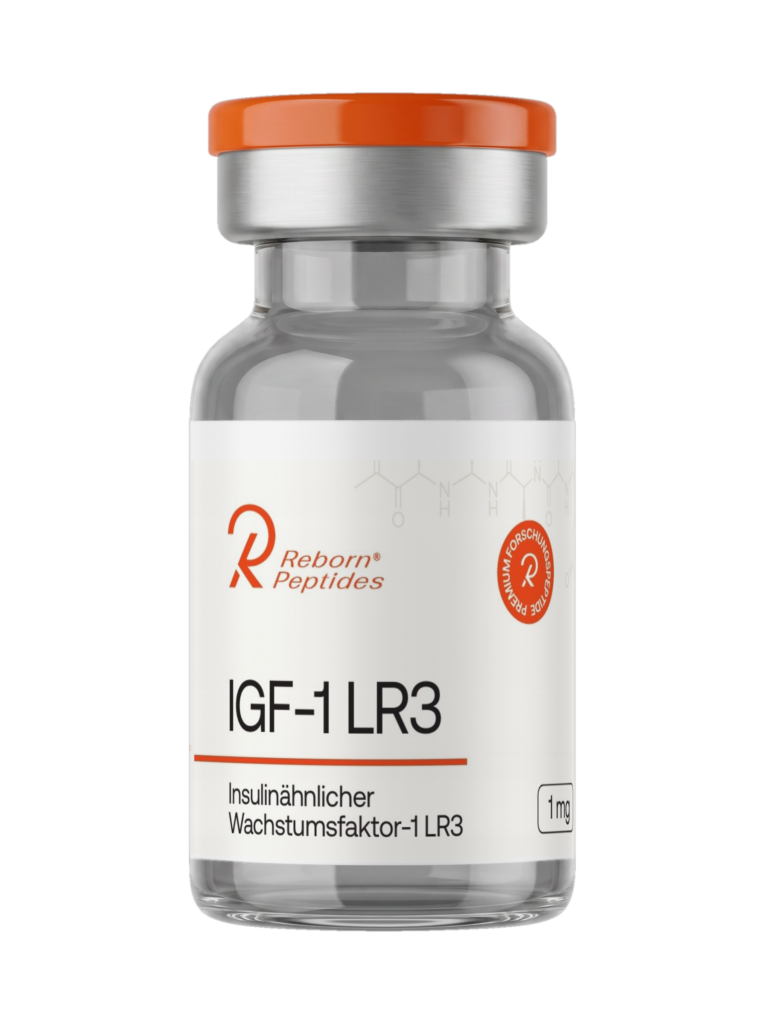
99,90 €
incl. shipping & VAT

Certificate of analysis per batch

≥ 99 % purity (HPLC)

Shipping across the EU

Delivery in 3–5 business days
Strength: 1 mg
Quantity:

Fast & secure payment
Bacteriostatic water 10 ml
For reconstitution — included free with orders over €70.
Only 70,00 € until your free gift.

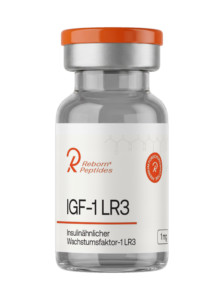
What is IGF-1 LR3
The IGF-1 LR3 peptide is a synthetic recombinant IGF-I analogue comprising 83 amino-acid residues. It combines a 13-residue N-terminal extension with a Glu3→Arg substitution in the mature IGF-I domain. The disulphide-closed sequence gives the calculated formula C400H619N111O115S9 and an approximate average molecular mass of 9111 Da; these calculated identity values do not characterise a supplied batch.
Analogue-specific research includes structural and binding assays, cell and tissue cultures, and preclinical animal models. Each observation remains limited to the named construct, model and endpoint. This material is supplied strictly for laboratory research and is not for use in humans or animals.
IGF-1 LR3, also described as Long R3 IGF-I or Long-[Arg3]IGF-I, is structurally distinct from mature native IGF-I, Des(1–3)IGF-I and R3-IGF-I. Its 83-residue construct contains the N-terminal sequence MFPAMPLSSLFVN and a Glu3→Arg substitution within the mature IGF-I domain. These names and molecular forms are not interchangeable.
In vitro studies have examined the analogue's solution structure and backbone dynamics, binding to recombinant unglycosylated IGFBP-3, and comparative endpoints in defined cell and tissue cultures. The reported reduced affinity in one IGFBP-3 assay does not imply absent binding or extend to every binding protein, species or assay.
Preclinical studies in guinea pigs and pigs measured model-specific physiological and circulating endpoints. A separate analytical study used immunopurification and high-resolution mass spectrometry to distinguish intact LongR3-IGF-I from related analogues and N-terminal degradation products. None of these findings certifies a commercial batch or predicts an outcome outside the investigated model.
Product identity requires agreement among the complete sequence, declared molecular form, batch code and analytical record. HPLC can document chromatographic purity only for the analysed batch under the stated method, while mass spectrometry supports molecular-mass assignment. Storage and stability conditions must follow the approved product and batch records. IGF-1 LR3 is exclusively for laboratory research and is not for human or veterinary use.
Evidence
Long-[Arg3]IGF-I contains a 13-residue N-terminal extension and a Glu3→Arg substitution relative to mature native IGF-I.
Laajoki et al. 2000 · PMID 10744677
For the stated sequence with three disulphide bonds closed, the calculated formula is C400H619N111O115S9 and the approximate average molecular mass is 9111 Da; these values do not characterise a batch.
Laajoki et al. 2000 · PMID 10744677
N-terminally modified analogues showed lower affinity in the tested recombinant unglycosylated IGFBP-3 biosensor configuration; this is not a universal binding or potency value.
Heding et al. 1996 · PMID 8662901
Comparative LR3 endpoints have been examined in defined ovarian, HEK293, CHO, bovine follicle, bovine embryo and transformed-cell systems.
Grimes et al. 1992 · PMID 1379161 · Voorhamme et al. 2006 · PMID 17172665 · Thomas et al. 2007 · PMID 17636166 · Prelle et al. 2001 · PMID 11181549 · Muhlbradt et al. 2009 · PMID 19258508
Guinea-pig and pig studies report species- and design-specific measurements that do not warrant extrapolation to another species.
Conlon et al. 1995 · PMID 7561636 · Dunaiski et al. 1997 · PMID 9488001
Immunopurification with high-resolution mass spectrometry distinguished intact LongR3-IGF-I from related analogues and N-terminal degradation products; method detectability does not certify a Reborn batch.
Mongongu et al. 2021 · PMID 33587816
Identity and any purity value require the matching batch code and analytical record; HPLC and mass spectrometry answer different analytical questions.
Reborn batch documentation · COA with HPLC and MS
Research status
10 selected sources — filterable by study type, each linking straight to the source.
Research Deep Dive
Model-qualified findings in depth — every claim tied to a PubMed-indexed source.
IGF-1 LR3 is a synthetic recombinant analogue of IGF-I comprising 83 amino-acid residues. The construct combines a 13-residue N-terminal extension, MFPAMPLSSLFVN, with a Glu3→Arg substitution inside the mature IGF-I domain. Mature native human IGF-I contains 70 residues; that native sequence boundary and the two LR3 modifications must be kept separate when assigning literature or analytical results.
Laajoki and colleagues investigated the solution structure and backbone dynamics of Long-[Arg3]IGF-I by NMR. This provides structural evidence for the named construct, not authentication of supplied material. A product designation, complete sequence, declared molecular form, batch code and analytical record must refer to the same material before a batch is assigned to a study.
| Field | Reference specification |
|---|---|
| Name | IGF-1 LR3 |
| Code / synonyms | Long R3 IGF-I; Long-[Arg3]insulin-like growth factor-I |
| Originator | to be reconciled against released label, specification and batch documentation |
| Class | Synthetic recombinant IGF-I analogue |
| Length | 83 amino-acid residues |
| Structural design | 13-residue N-terminal extension plus Glu3→Arg substitution |
| Target profile | IGF receptor and IGF-binding-protein research in specified experimental systems |
| Molecular formula | C400H619N111O115S9, calculated from the 83-residue sequence with three disulphide bonds closed; reduced form C400H625N111O115S9 |
| Molecular mass | approximately 9,111 Da average mass for the disulphide-closed form, calculated from the sequence; reduced form approximately 9,118 Da |
| PubChem CID | No compound-specific CID assigned in a name query for the LR3 construct, checked 17 August 2026 |
| CAS Registry Number | to be reconciled against released label, specification and batch documentation |
The calculated formula and mass describe the stated sequence and disulphide assumption; they do not identify a physical sample. UniProt P05019 concerns native human IGF-I and is not an LR3 accession. Likewise, the absence of a compound-specific PubChem CID is a database finding rather than evidence about a batch.
Structural source: Laajoki et al. 2000 · PMID 10744677
The IGF system comprises ligands, receptors and IGF-binding proteins. Within this system, receptor activation and binding-protein association are different measurements. A change in affinity for one binding protein under one assay configuration cannot be converted into a universal statement about receptor activity, biological availability or response.
Heding and colleagues measured association, dissociation and affinity for recombinant unglycosylated IGFBP-3 in an in vitro biosensor system. Reduced affinity in that configuration does not mean absent binding.
Voorhamme and colleagues studied culture growth, survival and activation of IGF-IR and the insulin receptor in serum-free HEK293 and CHO cell cultures. Those endpoints remain cell-line and condition specific.
Shared pathway terminology does not make native IGF-I, IGF-1 LR3, R3-IGF-I and Des(1–3)IGF-I interchangeable analytes.
Heding and colleagues associated N-terminally modified analogues with lower affinity for the tested IGFBP-3 configuration. Grimes and colleagues compared IGF-I, Des(1–3)IGF-I and LR3 in ovarian granulosa-cell culture while measuring IGFBP-2 and IGFBP-3 production and IGFBP-3 mRNA. Thomas and colleagues examined IGFBP-2/-3 localisation and expression alongside other endpoints in an in vitro bovine follicle model. Together, these records show why the analyte, binding protein, species, sample and assay must stay attached to every interpretation.
Native IGF-I pathway studies remain context only. Rommel and colleagues measured PI3K/Akt/mTOR and PI3K/Akt/GSK3 relationships in mouse myotube culture, while Stitt and colleagues examined FOXO factors and ubiquitin ligases in cell and animal models. Bailes and Soloviev reviewed the wider ligand, receptor and binding-protein network. None of these three publications is a primary measurement of LR3.
Target-system sources: Heding et al. 1996 · PMID 8662901 · Grimes et al. 1992 · PMID 1379161 · Voorhamme et al. 2006 · PMID 17172665 · Thomas et al. 2007 · PMID 17636166 · Rommel et al. 2001 · PMID 11715022 · Stitt et al. 2004 · PMID 15125842 · Bailes & Soloviev 2021 · PMID 33557137
This section describes findings in controlled research and makes no statement about use. The records span isolated-protein methods, cell and tissue systems, and preclinical animal models. They must be read by analyte, model, species, method and measured endpoint rather than treated as one undifferentiated evidence set.
Ovarian granulosa-cell culture was used to compare IGF-I, Des(1–3)IGF-I and LR3 through binding-protein production, mRNA and model-specific response measurements.
PMID 1379161An isolated-protein biosensor assay measured association, dissociation and affinity for recombinant unglycosylated IGFBP-3. The configuration does not represent every binding protein or assay.
PMID 8662901NMR characterised solution structure and backbone dynamics of isotopically labelled Long-[Arg3]IGF-I. This is structural evidence, not batch analysis.
PMID 10744677Bovine embryos produced in vitro were assessed for development and mRNA relating to IGFBPs and type-I IGF receptors.
PMID 11181549Serum-free HEK293 and CHO cultures were used to examine growth, survival and activation of IGF-IR and the insulin receptor.
PMID 17172665An in vitro bovine follicle culture compared LR3 with recombinant human IGF-I using follicle, estradiol, morphology and IGFBP measurements.
PMID 17636166Transformed human cell lines and mouse prostate tissue were used to investigate IGFBP-3 expression, IGF-IR/IRS-1/PI3K/AKT signalling and proliferation.
PMID 19258508A preclinical guinea-pig model assessed organ measurements and circulating IGF-I, IGF-II and IGFBP concentrations. Findings remain species and design specific.
PMID 7561636A short preclinical pig study measured feed intake, weight change and plasma GH, IGFBP-3, endogenous IGF-I, insulin and glucose.
PMID 9488001Immunopurification and high-resolution mass spectrometry distinguished intact analogue forms and N-terminal degradation products in an analytical laboratory study with a rat-model component.
PMID 33587816No human intervention record for IGF-1 LR3 is represented in this evidence map. Cell-line, isolated-tissue and animal measurements do not establish outcomes in another model or certify a supplied batch.
Study sources: PMID 1379161 · PMID 8662901 · PMID 10744677 · PMID 11181549 · PMID 17172665 · PMID 17636166 · PMID 19258508 · PMID 7561636 · PMID 9488001 · PMID 33587816
IGF-1 LR3, R3-IGF-I and Des(1–3)IGF-I are separate molecular forms. IGF-1 LR3 carries both the 13-residue N-terminal extension and the Glu3→Arg substitution. R3-IGF-I carries the position-3 substitution without the Long R3 extension. Des(1–3)IGF-I lacks the first three residues of mature IGF-I. Native IGF-I has neither of these analogue definitions.
This distinction matters in two linked but separate domains. In binding research, an N-terminal change can alter an analogue's measured interaction with a named IGFBP under a defined assay. The Heding biosensor record concerns recombinant unglycosylated IGFBP-3 and cannot be generalised to all IGFBPs. Grimes compared several molecular forms in one granulosa-cell system, but a comparative response does not collapse their identities.
In analytical research, the intact mass, N-terminal structure and possible degradation products create a different problem. Mongongu and colleagues used immunopurification with high-resolution mass spectrometry to distinguish intact LongR3-IGF-I, Des(1–3)IGF-I, R3-IGF-I and N-terminal degradation products. That study demonstrates method-specific analytical discrimination; it does not authenticate any Reborn batch.
A defensible batch record therefore preserves an explicit chain: declared analogue name, complete sequence, expected molecular form, batch code, identity method and result. HPLC can report a chromatographic profile or method-specific purity result, but retention behaviour alone should not be treated as proof that the intact analyte is LR3 rather than a related analogue. Conversely, a mass result addressing identity does not automatically establish chromatographic purity. Both questions remain method- and batch-specific.
The spellings “IGF-1 LR3”, “Long R3 IGF-I” and “Long-[Arg3]insulin-like growth factor-I” can identify the same 83-residue construct when the sequence definition agrees. The labels R3-IGF-I and Des(1–3)IGF-I cannot. Terminology is therefore part of sample traceability, not merely editorial style.
Analogue-distinction sources: Mongongu et al. 2021 · PMID 33587816 · Heding et al. 1996 · PMID 8662901 · Grimes et al. 1992 · PMID 1379161
Physical form, stated content, storage conditions and stability period must be reconciled against the released label, specification and documentation for the applicable batch. None is inferred from the molecular literature. If a released record describes the material as lyophilised, that word specifies presentation only; it does not establish sequence identity, content, stability or purity.
The documentation chain should connect product designation, batch code, analytical method, test date and result. The analyte description must identify the 83-residue Long R3 construct rather than R3-IGF-I, Des(1–3)IGF-I or native IGF-I. Any discrepancy among label, specification and COA should be resolved before the material is described as a matter of fact or assigned to an experiment.
Any numerical purity statement applies only to the tested batch and the stated analytical method. HPLC and molecular-identity testing answer different questions. High-resolution mass spectrometry may support discrimination among intact analogue forms and N-terminal variants in a validated workflow, while an HPLC result describes the chromatographic measurement reported for that batch. Neither result should be transferred to another batch.
Analytical context: Mongongu et al. 2021 · PMID 33587816 · Laajoki et al. 2000 · PMID 10744677
IGF-1 LR3 is supplied to laboratories in the EU as research material. Literature records define research questions and model-specific measurements; they do not certify the identity, content, physical form, purity or stability of supplied material. Those properties require the released specification, label and batch documentation.
Experimental findings must remain attached to the named analogue, model and endpoint. Results involving native IGF-I, a related analogue, isolated protein, cultured cells, tissue or an animal model are not interchangeable and do not predict an outcome outside the stated system.
Research use only. For laboratory research only. Not for human or veterinary use. Not intended to diagnose, treat, cure or prevent any disease. Not a medicinal product, food or cosmetic.

FAQ
It is a synthetic recombinant IGF-I analogue of 83 amino-acid residues, defined by a 13-residue N-terminal extension and a Glu3→Arg substitution within the mature IGF-I domain.
No. Mature native human IGF-I contains 70 residues, while the Long R3 construct contains 83 residues and the Glu3→Arg substitution. Findings for native IGF-I cannot automatically be assigned to LR3.
No. Des(1–3)IGF-I lacks the first three residues of mature IGF-I, and R3-IGF-I has the position-3 substitution without the Long R3 N-terminal extension.
The formula C400H619N111O115S9 and approximate average mass of 9111 Da were calculated from the stated 83-residue sequence with three disulphide bonds closed. Calculated values describe the sequence assumption, not a supplied sample.
Published work cited here includes in vitro structural and binding assays, cell and tissue cultures, preclinical guinea-pig and pig models, and analytical laboratory research with a rat model. Findings remain restricted to each named model and endpoint.
The product name, complete sequence, molecular form, batch code and analytical record should agree. Any purity statement applies only to the tested batch and the corresponding COA.
Strictly as material for laboratory research, not for use in humans or animals. It is not a medicinal product, food supplement or medical device.
We accept prepayment by SEPA bank transfer as well as credit card. All payments are processed securely and encrypted.
Discreet shipping from the EU, delivery in 3–5 business days. Neutral packaging with no reference to the contents.