≥ 99 % · HPLC
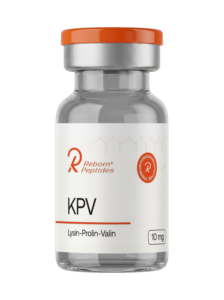
KPV
Regeneration & Longevity
54,90 €
69,90 €
incl. shipping & VAT

Certificate of analysis per batch

≥ 99 % purity (HPLC)

Shipping across the EU

Delivery in 3–5 business days
Strength: 5 mg
Quantity:

Fast & secure payment

Delivery: 02.11. – 03.11.
Bacteriostatic water 10 ml
For reconstitution — included free with orders over €70.
Only 70,00 € until your free gift.
 View Certificate of Analysis
Laboratory analysis
Tested by an independent EU laboratory using HPLC against a reference standard. Purity and content of the sample at a glance, full report as PDF – with a verification code to check directly with the lab.
QTZV8RS5What is Cagrilintide
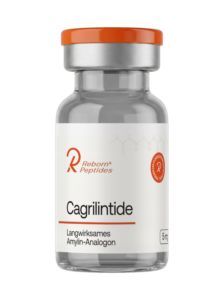
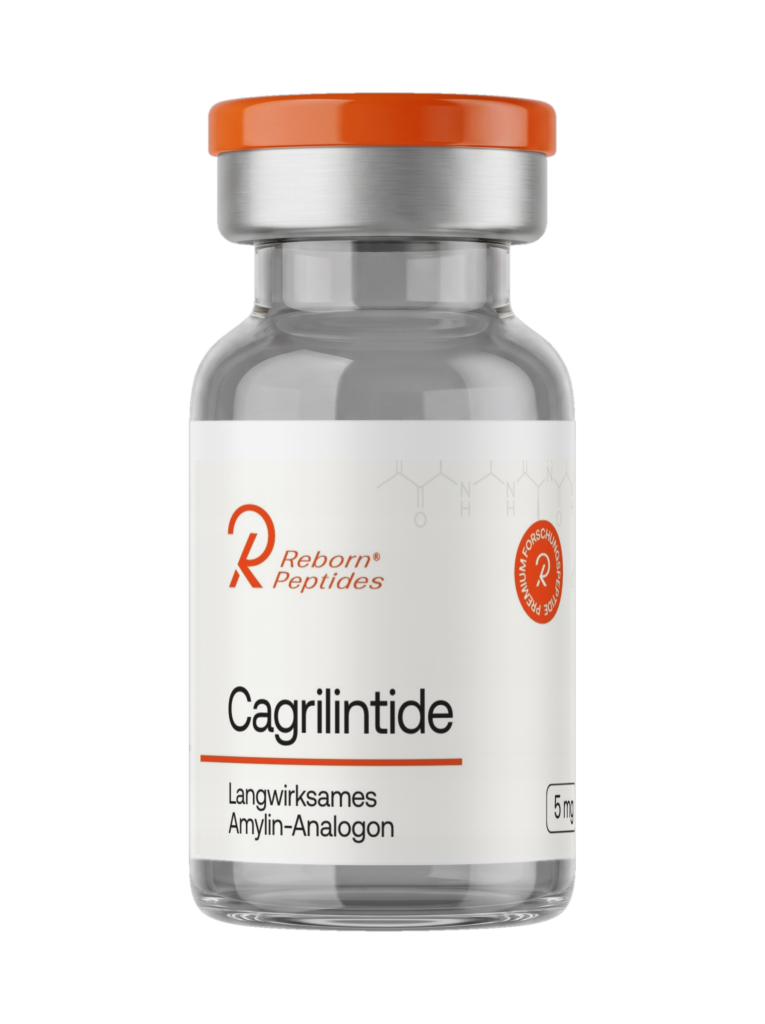
Cagrilintide is a synthetic, lipidated amylin analogue identified as AM833 in development literature. Laboratory studies examine its molecular design and receptor pharmacology in defined AMYR and CTR systems.
The cited sources cover distinct evidence layers: in-vitro and preclinical development, cell-based and structural receptor work, a human investigation and a narrative review. Each finding applies to its stated model; none verifies the identity or analytical characteristics of catalogue material.
Cagrilintide is supplied strictly for laboratory research, not for use in humans or animals.
Laboratories reviewing cagrilintide for sale should assess the product specification and the matching batch documentation together before procurement.
Cagrilintide is described in published development research as a synthetic, lipidated and long-acting amylin receptor agonist. The development programme addresses structural optimisation and preclinical selection; separate receptor studies examine binding, activation, regulation and ligand-receptor structure in defined receptor configurations.
Cagri peptide denotes the same catalogue material, classified in the literature as an amylin analog. Neither wording establishes the identity or analytical characteristics of supplied material.
Amylin receptors are complexes formed when the calcitonin receptor associates with a receptor-activity-modifying protein. Different RAMP partners create distinct AMYR subtypes, so receptor findings must remain tied to the expressed components, assay and endpoint. CTR studied without a RAMP is a separate receptor configuration.
A cited randomised, double-blind, multicentre phase 2 investigation provides a separate human evidence layer; its endpoints are not product attributes. That investigation does not verify any Reborn batch.
Material assessment requires the product specification, batch identifier and matching COA. Any HPLC statement is specific to the tested batch and documented method; literature findings cannot establish commercial-batch identity, content or purity. The material is strictly for laboratory research, not for use in humans or animals.

Evidence
Published work documents structural optimisation and preclinical selection, without verifying any commercial batch.
Kruse et al. 2021
Cell-based experiments examined 25 binding, activation and regulation endpoints across defined AMYR and CTR configurations.
Fletcher et al. 2021
Cryo-EM structures resolve how the ligand engages AMY1R, AMY2R, AMY3R and CTR; structural data describe the resolved complex, not a supplied batch.
Cao et al. 2025, Gu et al. 2026
A randomised, double-blind, multicentre phase 2 investigation represents a separate evidence level; its endpoints are not product attributes.
Lau et al. 2021
A narrative review maps receptor architecture and terminology but is not independent experimental confirmation.
Eržen et al. 2024
Identity, content and purity require the matching specification and COA; any HPLC result is batch- and method-specific.
Reborn batch documentation
Research status
6 selected sources — filterable by study type, each linking straight to the source.
Research Deep Dive
Model-qualified findings in depth — every claim tied to a PubMed-indexed source.
Cagrilintide is described in the development literature as a synthetic, lipidated analogue of amylin. The development code AM833 identifies the molecule within that programme. Lipidation formed part of a deliberate structure–activity strategy concerned with molecular stability, protein association and prolonged experimental exposure. In this limited context, “long-acting” describes the molecular design investigated in the literature; it is not a statement about the behaviour, stability or analytical character of a commercial batch.
The reference classification and the identity of supplied material are separate questions. A shared designation cannot establish sequence, lipid attachment, molecular form or measured mass. A chromatographic peak alone cannot assign molecular identity. Sequence, molecular formula, molecular mass and CAS identifier remain unresolved until reconciled with released batch documentation.
| Field | Reference specification |
|---|---|
| Designation | Cagrilintide |
| Development code | AM833 |
| Molecular class | Synthetic, lipidated amylin analogue |
| Target profile | AMYR and CTR receptor systems in defined research models |
| SKU | RP-1005 (catalogue identifier; not an analytical statement) |
| Sequence | pending COA reconciliation |
| Molecular formula | pending COA reconciliation |
| Molecular mass | pending COA reconciliation |
| CAS | pending COA reconciliation |
Structure–activity interpretation depends on a characterised input material. Product designation, batch identifier, declared specification and identity analytics should therefore be read together. HPLC may describe a chromatographic profile or a method-specific purity result for a tested batch, while a suitable mass-spectrometric method may support molecular assignment. These methods answer different analytical questions and neither turns a literature description into batch authentication.
Molecular-development source: Kruse et al. 2021 · PubMed record
AMYR and CTR describe related but distinct receptor contexts. CTR is the calcitonin receptor. An amylin receptor, abbreviated AMYR, forms when CTR associates with a receptor-activity-modifying protein, or RAMP. Different RAMP partners create distinct AMYR subtypes and can change ligand binding, signalling and receptor regulation. A report that merely says “amylin receptor” is therefore incomplete unless the expressed receptor components and experimental system are also stated.
The calcitonin receptor can be examined as a defined receptor configuration. Its expression system, controls and readout remain part of the result.
Association of CTR with a specified RAMP creates an AMYR subtype. RAMP identity must be documented rather than inferred from the broad receptor-family label.
Comparative cell assays covered binding, activation and regulatory endpoint classes. Together, these measurements distinguish binding, activation and receptor regulation instead of collapsing them into a single readout.
Fletcher and colleagues characterised AM833 across 25 binding, activation and regulatory endpoints in cell-based assays. Within the tested AMYR and CTR configurations, the authors described a non-selective agonist profile with distinct pharmacological features. Here, “agonist” means that receptor activation was measured in a defined test system. It does not predict observations in a different cell line, receptor configuration, organism or study design.
Binding affinity, second-messenger signalling, internalisation and regulatory measurements are separate endpoint classes. Each depends on the assay format, receptor components, controls and readout. Comparisons between CTR alone and specified CTR/RAMP complexes can help attribute a signal to its receptor context, but a result in one recombinant system cannot automatically transfer to another. Published receptor pharmacology supplies no analytical evidence for a catalogue batch.
Structural work adds a second, independent view of the same receptor question. Cryo-electron microscopy has resolved the ligand in complex with AMY1R, AMY2R, AMY3R and CTR, describing the contacts and the receptor conformations captured under the stated experimental conditions. A resolved structure explains how a ligand engages a receptor in that preparation; it is neither a potency statement nor an identity check for material in a vial.
Comparative receptor-pharmacology and structural sources: Fletcher et al. 2021 · PubMed record Cao et al. 2025 · PubMed record Gu et al. 2026 · PubMed record
This section describes findings in controlled research and makes no statement about use. The six records occupy different evidence levels and should be read by model type, method and endpoint class. Their sequence below moves from molecular development through cell-based and structural receptor work to a separate human investigation and, finally, a narrative synthesis.
Development research examined structural optimisation and selection of a lipidated amylin analogue through in-vitro and preclinical methods. Endpoint classes included molecular design, stability-related properties and receptor-linked characterisation; all observations remain model-bound.
Kruse et al. 2021 source recordComparative cell-based pharmacology evaluated 25 endpoints across binding, activation and regulation in defined AMYR and CTR configurations. These assay observations are not batch specifications and do not transfer automatically beyond the tested systems.
Fletcher et al. 2021 source recordCryo-electron microscopy resolved the ligand bound to Gs-coupled AMY1R, AMY2R, AMY3R and CTR, and compared those complexes with previously reported receptor structures. Structural data describe the resolved complex under the stated conditions; they authenticate no supplied material.
Cao et al. 2025 source recordCryo-electron microscopy resolved AMY1R-Gs and CTR-Gs complexes alongside Gs-signalling measurements, and identified the residue contacts and intramolecular features associated with binding across both receptors. The findings are structural and assay-bound.
Gu et al. 2026 source recordRandomised, double-blind, multicentre phase 2 investigation in humans; endpoints are a separate evidence level and are not reproduced as product attributes.
Lau et al. 2021 source recordA narrative review maps amylin, receptor architecture and analogue research. It provides terminology and context rather than independent experimental confirmation, and primary records remain necessary for individual assay observations.
Eržen et al. 2024 source recordThe hierarchy prevents transfer between evidence layers. Development work explains why a molecular feature was investigated; receptor assays describe signals in specified cell systems; a human investigation is a distinct category; and a review organises earlier literature. None authenticates supplied material or establishes a batch-independent analytical property.
Human-study evidence-level source: Lau et al. 2021 · PubMed record
“Cagrilintide” is the designation used for the analogue, while “AM833” is its development code. “Lipidated amylin analogue” describes its molecular class in the published programme. “Cagri peptide” is an informal catalogue shorthand, not a distinct chemical identity. None of these names establishes the sequence, molecular form, amount or analytical result of material associated with a batch.
“Amylin receptor agonist” is a receptor-pharmacology classification. It identifies activation measured in an appropriate model, not a universal outcome. AMYR is also not one isolated receptor protein: it refers to a receptor complex formed from CTR and a RAMP. The relevant RAMP partner, cell background and measurement method therefore belong in any precise interpretation. CTR alone and different AMYR subtypes should not be treated as interchangeable assay systems.
“Long-acting” is retained solely as a description of the molecular design investigated in the development literature. It is not a stability statement, storage claim or promise for supplied material. Likewise, “25 endpoints” describes the scope of a published comparative assay programme; it does not mean 25 confirmed properties of a catalogue item. A narrative review can clarify these relationships and the wider receptor field, but it does not replace primary evidence or batch analytics.
Terminology and receptor-context source: Eržen et al. 2024 · PubMed record
Cagrilintide is supplied to laboratories in the EU as research material. Acceptance should be based on the product specification and matching batch documentation. The designation and batch identifier should align with the test date, analytical method and reported result. Any discrepancy between label, specification and certificate of analysis should be resolved before the material is described as a matter of fact or assigned to a controlled laboratory study.
HPLC may document a chromatographic profile and a method-specific purity result for the tested batch. Such a result applies only to that batch and method; it is not a blanket property of cagrilintide as a class. Identity requires suitable evidence of its own. This record makes no assertion about physical presentation, amount, storage conditions, temperature range, stability period or shelf life because those points are not established by the approved source record.
Literature evidence and supply documentation serve different functions. Publications define molecular questions, receptor contexts and model-specific observations. The applicable specification and batch records document what material was tested and how. A complete research record keeps the literature context alongside the applicable batch documentation, with each serving its own purpose.
Research use only. For laboratory research only. Not for human or veterinary use. Not intended to diagnose, treat, cure or prevent any disease. Not a medicinal product, food or cosmetic.

FAQ
Identifiers from PubChem (CID 171397054). Salt form and exact molecular weight require the matching batch COA.
Cagrilintide is supplied strictly for laboratory research. Batch-specific COA and HPLC/MS documentation, together with the lot number, provide the basis for assessing the respective batch. This page describes research areas and published study findings, without claims of effects in humans. The material is not supplied as a medicinal product.
Cagrilintide, identified as AM833 in development literature, is a synthetic and lipidated peptide investigated through molecular-development and receptor-pharmacology research. Published classification does not verify catalogue-material identity.
Cell-based and structural work examines AMYR configurations and CTR. An AMYR forms when CTR associates with a RAMP, and each observation remains specific to the expressed receptor components and assay conditions.
The in-vitro study assessed 25 endpoints across binding, activation and receptor regulation. Those measurements characterise only the stated experimental systems.
Molecular-development research, cell-based pharmacology, the distinct human investigation and narrative review context answer different questions. Human-study endpoints are not reproduced as catalogue-product attributes.
The narrative review provides context for amylin-receptor architecture and terminology. Its value is contextual: it maps terminology and receptor architecture without adding a new experiment.
The product specification, batch identifier, analytical method and matching COA should be read together. Any HPLC purity result applies only to the tested batch and documented method.
Cagrilintide is strictly for laboratory research, not for use in humans or animals. The catalogue restriction remains laboratory research only, irrespective of the published model.
We accept prepayment by SEPA bank transfer as well as credit card. All payments are processed securely and encrypted.
Discreet shipping from the EU, delivery in 3–5 business days. Neutral packaging with no reference to the contents.