≥ 99 % · HPLC

5-amino-1MQ
Metabolism, Weight & Muscle
50,90 €
44,90 €
incl. shipping & VAT

Certificate of analysis per batch

≥ 99 % purity (HPLC)

Shipping across the EU

Delivery in 3–5 business days
Strength: 10 mg
Quantity:

Fast & secure payment

Delivery: 02.11. – 03.11.
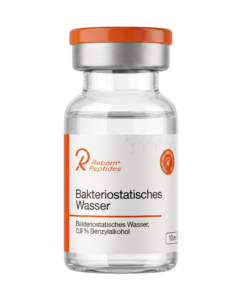
Bacteriostatic water 10 ml
For reconstitution — included free with orders over €70.
Only 70,00 € until your free gift.
 View Certificate of Analysis
Laboratory analysis
Tested by an independent EU laboratory using HPLC against a reference standard. Purity and content of the sample at a glance, full report as PDF – with a verification code to check directly with the lab.
KAJ874ANWhat is PT-141
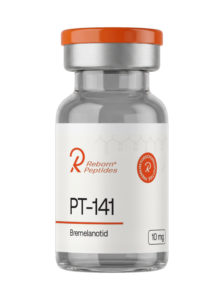
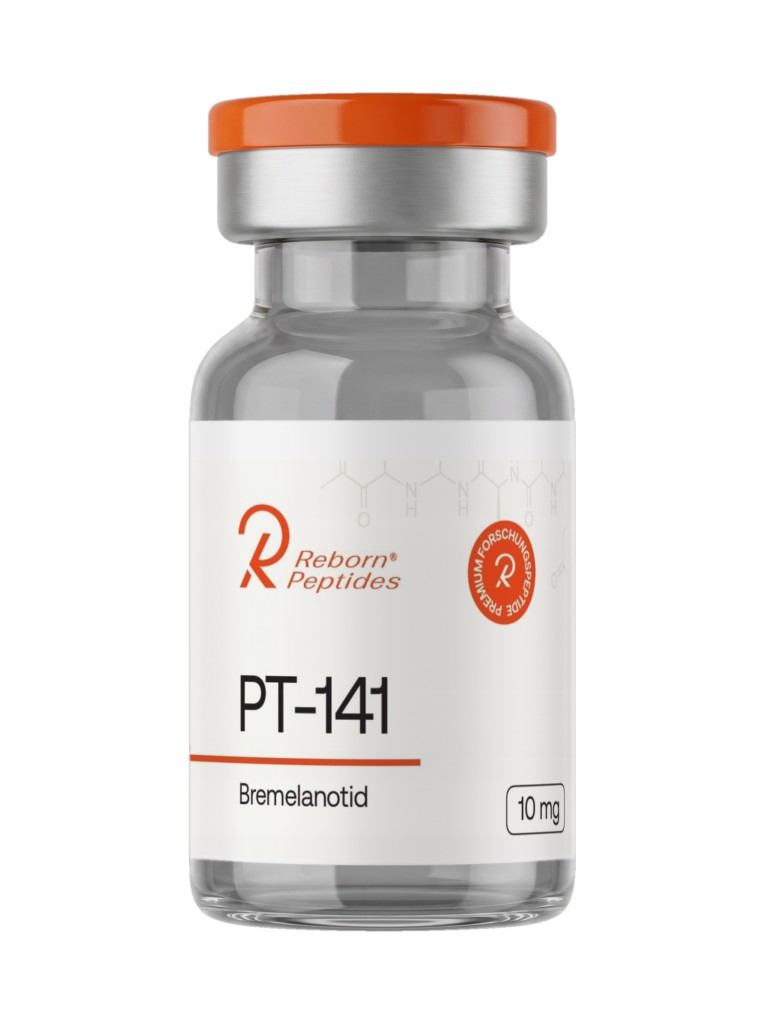
PT-141 is the research designation for bremelanotide, a synthetic cyclic heptapeptide examined as a melanocortin-receptor agonist. Published research describes activity at MC1R, MC3R and MC4R, with interpretation kept specific to the receptor system, model and endpoint studied.
PT-141 is supplied strictly for laboratory research and is not for use in humans or animals. Literature findings do not establish the identity, content or purity of a commercial batch; these require the matching product specification, batch code and COA.
Laboratories that buy PT-141 work from the catalogue name only as a starting point: the product specification and the matching batch documentation establish what the material is.
PT-141 and its international non-proprietary designation refer to the same peptide structure. The compound is written both as PT-141 peptide and, without the hyphen and in the plural, as PT 141 peptides; neither spelling resolves molecular identity, so both require the same identity assessment. A heptapeptide comprises seven amino-acid residues, while the cyclic architecture of PT-141 results from side-chain ring closure between Asp and Lys. PubChem records the free peptide form under CID 9941379.
Melanocortin receptors are G-protein-coupled receptors. Published work describes PT-141 as an agonist at MC1R, MC3R and MC4R, but receptor activity must remain tied to the assay, cell type, receptor expression and endpoint examined.
Pfaus and colleagues examined behavioural endpoints in a female-rat model. Diamond and colleagues conducted a small randomised crossover study with 18 premenopausal participants under a specific experimental framework. White and colleagues used ambulatory blood-pressure monitoring in a randomised human study. These distinct designs do not form a single transferable evidence level.
Sauter and colleagues developed a UHPLC-MS/MS method for quantifying the compound in plasma. This bioanalytical work demonstrates measurement in its stated system; it does not confirm the identity or purity of a Reborn batch.
Material quality must be assessed from documentation linked to the specific batch. Any HPLC purity result applies only to the tested batch and documented method. PT-141 is strictly for laboratory research and is not for use in humans or animals.

Evidence
PT-141 and its international non-proprietary designation denote the same synthetic cyclic heptapeptide; the free peptide form is recorded under PubChem CID 9941379.
PubChem CID 9941379
Published literature places PT-141 within melanocortin research and describes agonist activity at MC1R, MC3R and MC4R.
Hadley et al. 2006 · PMID 16412534
A female-rat study examined approach behaviour, lordosis, locomotor activity and conditioned place preference within its defined experimental design.
Pfaus et al. 2004 · PMID 15226502
A small randomised crossover study recorded physiological and subjective measures in 18 premenopausal participants under standardised conditions.
Diamond et al. 2006 · PMID 16839319
UHPLC-MS/MS was developed to quantify the compound in plasma; this method study does not establish the identity or purity of a commercial batch.
Sauter et al. 2020 · PMID 32353679
Literature does not establish commercial-batch identity, content or purity; any HPLC purity result applies only to the tested batch and documented method.
Reborn batch documentation · COA with HPLC
Research status
6 selected sources — filterable by study type, each linking straight to the source.
Research Deep Dive
Model-qualified findings in depth — every claim tied to a PubMed-indexed source.
PT-141 is a synthetic cyclic heptapeptide: it comprises seven amino-acid residues and has a ring-containing architecture. The condensed reference sequence is Ac-Nle-Asp(1)-His-D-Phe-Arg-Trp-Lys(1)-OH. In this notation, Nle denotes norleucine, D-Phe denotes D-phenylalanine and Ac denotes N-terminal acetylation. The paired “(1)” marks show side-chain closure between Asp and Lys. This information describes the reference structure, not the identity of material in an individual batch.
PubChem records the free peptide form under CID 9941379. Database identifiers assist reconciliation, but a name or database record cannot establish the physical form, counter-ion, content or analytical result of supplied material. Those points require the product specification and matching batch documentation. CAS identifier, molecular formula and molecular mass below describe the free peptide as a reference identity; the salt or solvate form and the measured content of any supplied batch remain a question for that batch’s COA.
| Field | Reference specification |
|---|---|
| Name | PT-141 |
| Code | PT-141 |
| Synonym / INN | bremelanotide |
| Class | Synthetic cyclic heptapeptide |
| Target profile | Melanocortin-receptor agonist; reported activity at MC1R, MC3R and MC4R |
| PubChem CID | 9941379 |
| CAS identifier | 189691-06-3 (free-peptide reference identity; verify batch form by COA) |
| Molecular formula | C50H68N14O10 (free peptide; salt or solvate form per COA) |
| Molecular mass | 1025.2 g/mol (average, free peptide; batch form per COA) |
Reference identity and batch identity are separate questions. Sequence notation can describe structural features, while analytical records document what was tested, by which method and for which batch. Neither should be substituted for the other.
Reference-identity source: PubChem CID 9941379 · Bioanalytical source: Sauter et al. 2020 · PMID 32353679
PT-141 is classified in the literature as a melanocortin-receptor agonist. “Agonist” means that receptor activation was observed within an appropriate experimental system; it is not a complete account of biological action. The reported target profile includes MC1R, MC3R and MC4R. These receptors belong to the G-protein-coupled receptor family, but a receptor name alone does not define assay conditions, signalling readout or comparative selectivity.
MC1R, MC3R and MC4R are reported research targets. The classification remains tied to the cited experimental systems.
Receptor species, expression level, cell background, comparator and measured readout shape an assay result.
Receptor activation is a mechanistic observation, not a batch specification or a transferable whole-organism outcome.
Comparisons across publications therefore require attention to receptor construct, model, exposure conditions, timing and endpoint. A signal measured in an engineered cell system cannot be treated as equivalent to a behavioural measure in an animal model or a physiological variable in a controlled human study. Apparent agreement at the receptor-label level does not erase these differences.
Reviews can place cyclic analogues within the historical development of melanocortin research and organise earlier findings. Their value is classificatory and interpretive: a review does not create a new primary measurement, establish the performance of an untested material or authenticate a supplied batch. The distinction between reference pharmacology and batch documentation remains essential throughout this evidence map.
Pharmacology source: Hadley and Dorr 2006 · PMID 16412534
This section describes findings in controlled research and makes no statement about use. The six records cover a validated bioanalytical method with an animal pharmacokinetic application, a behavioural animal model, two randomised human designs and two reviews. They answer different questions and must not be merged into a single expected result. The sequence below moves from laboratory measurement through animal and human research to secondary synthesis.
A UHPLC-MS/MS assay was validated for quantification of the reference compound in plasma and then applied to pharmacokinetic plasma samples from beagle dogs. This is a measurement method with an animal application, not a cell-based experiment; method performance does not establish identity or purity for a supplied batch.
PMID 32353679Behavioural endpoints were examined in a female-rat model. The observations remain specific to the species, experimental design, comparison and recorded endpoint class.
PMID 15226502A small randomised crossover design recorded physiological and subjective measurement classes in 18 premenopausal participants under standardised conditions. The narrow design limits broader inference.
PMID 16839319A randomised human study used ambulatory blood-pressure, heart-rate and pharmacokinetic measurements. These measurement classes do not constitute product properties.
PMID 27977473This historical review contextualised synthetic melanocortin peptides and cyclic analogues. It provides secondary synthesis rather than a new experimental result.
PMID 16412534This review considered chemical classification, receptor pharmacology and the wider literature. Its conclusions inherit the limitations of the underlying evidence.
PMID 35076581The two human records use different measurement frameworks and cannot be treated as replications of one endpoint. The rodent record remains preclinical. The analytical record validates a measurement approach in its stated matrix and method, not the composition of unrelated material. Reviews organise primary studies but sit at a different evidence level.
“PT-141” is the research code used throughout this record. “Synthetic” distinguishes laboratory production from an endogenous peptide, “heptapeptide” states that seven amino-acid residues are present, and “cyclic” describes the side-chain ring closure. “Melanocortin-receptor agonist” is a pharmacological classification. None of these terms, separately or together, authenticates the content of a container or provides a method-specific analytical result.
Likewise, receptor target, model and endpoint are not interchangeable terms. MC1R, MC3R and MC4R name receptor subtypes. In vitro refers to a controlled laboratory system outside an intact organism. An animal model addresses species-bound experimental questions. A randomised crossover design controls sequence and comparison within its defined participant framework. A review evaluates existing literature without adding a fresh primary measurement.
“Pharmacokinetic” describes measurements of concentration over time within a specified study design. “Bioanalytical” describes the validated measurement process used for a defined matrix. Neither term certifies an unrelated batch. Study findings must remain attached to author, year, journal, model and endpoint class.
These distinctions prevent evidence inflation. A mechanistic classification cannot be converted into a whole-organism prediction, a rodent observation cannot be transferred to humans, a participant measurement cannot become a characteristic of research material, and a review cannot replace primary data or batch analysis.
Classification review: Edinoff et al. 2022 · PMID 35076581
PT-141 is supplied as laboratory research material. The applicable product specification and matching batch documentation should connect the substance designation, batch code, test date, analytical method and reported result. Any discrepancy between these records should be resolved before material is assigned to a controlled experiment. No fill quantity, physical form, storage condition or stability period is asserted in this field set.
HPLC can document a chromatographic profile and a method-specific numerical result for the tested batch. Such a result applies only to that batch and the stated method; it is not a blanket purity claim. Chromatographic evidence and molecular-identity evidence also answer different analytical questions. The Certificate of Analysis should be read with the released product specification, without extending either document beyond what it reports.
Published receptor, animal, human and review literature provides context for experimental questions but does not certify supplied material. Laboratory records should preserve the separation between reference identity, study evidence, product specification and batch-specific analysis. This documentation-led boundary is central to responsible research-only handling.
Research use only. For laboratory research only. Not for human or veterinary use. Not intended to diagnose, treat, cure or prevent any disease. Not a medicinal product, food or cosmetic.

FAQ
PT-141 is the research designation for a synthetic cyclic heptapeptide studied in melanocortin-receptor research; the same structure appears in the literature under its international non-proprietary designation.
Published research describes agonist activity at MC1R, MC3R and MC4R. Each observation remains specific to the receptor construct, assay conditions and endpoint examined.
Heptapeptide means that the compound comprises seven amino-acid residues. Cyclic refers to its ring architecture, formed in PT-141 by side-chain closure between Asp and Lys.
The cited literature includes a female-rat model, randomised human studies, a bioanalytical methods study and reviews. These evidence types answer different questions and must be interpreted separately.
Sauter and colleagues developed a UHPLC-MS/MS method to quantify the compound in plasma and applied it to pharmacokinetic samples. The study does not establish the identity or purity of a commercial batch.
Findings must remain tied to the population or model, method, endpoint and comparison used. Rodent findings cannot be transferred to humans, and human-study results are not properties of laboratory research material.
The substance name, batch number, declared content, analytical methods and reported results should be read together. Any HPLC purity result applies only to the specific tested batch and its matching COA.
PT-141 is supplied strictly for laboratory research and is not for use in humans or animals.
We accept prepayment by SEPA bank transfer as well as credit card. All payments are processed securely and encrypted.
Discreet shipping from the EU, delivery in 3–5 business days. Neutral packaging with no reference to the contents.