≥ 99 % · HPLC
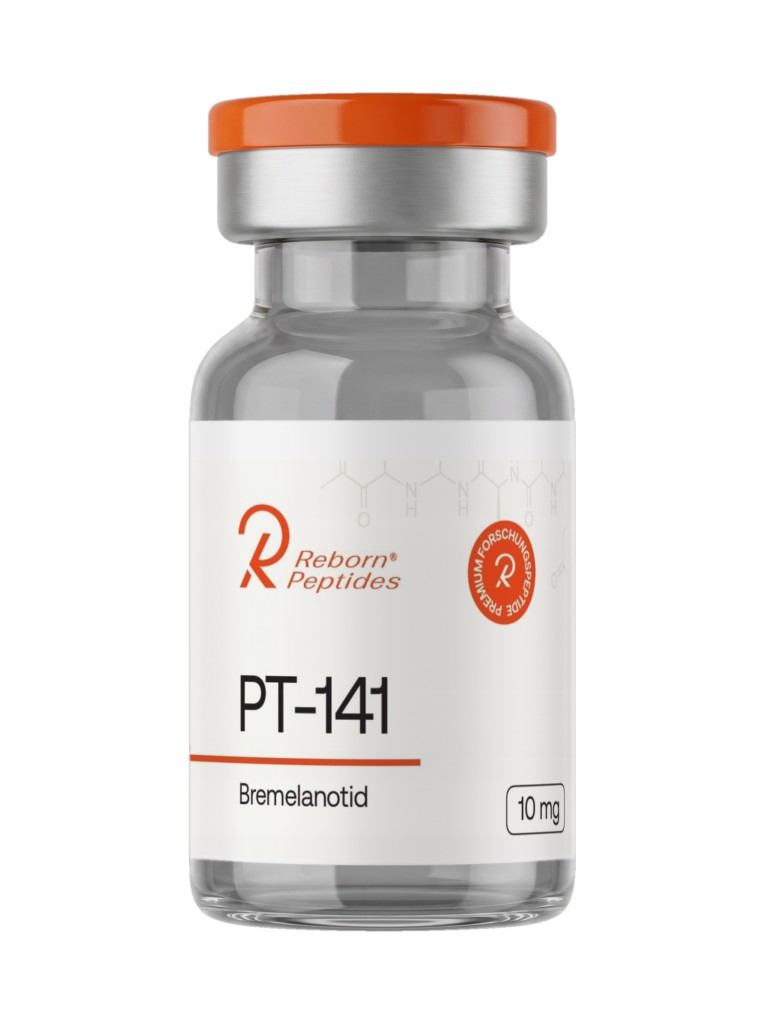
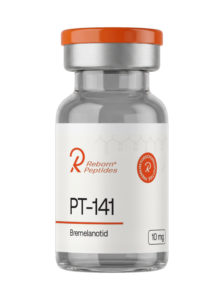
PT-141
Libido & Sexual Function
44,90 €
37,90 €
incl. shipping & VAT

Certificate of analysis per batch

≥ 99 % purity (HPLC)

Shipping across the EU

Delivery in 3–5 business days
Strength: 10 mg
Quantity:

Fast & secure payment

Delivery: 02.11. – 03.11.
Bacteriostatic water 10 ml
For reconstitution — included free with orders over €70.
Only 70,00 € until your free gift.
 View Certificate of Analysis
Laboratory analysis
Tested by an independent EU laboratory using HPLC against a reference standard. Purity and content of the sample at a glance, full report as PDF – with a verification code to check directly with the lab.
PR3KT5JRWhat is TB-500
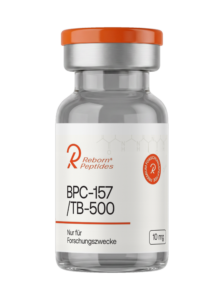
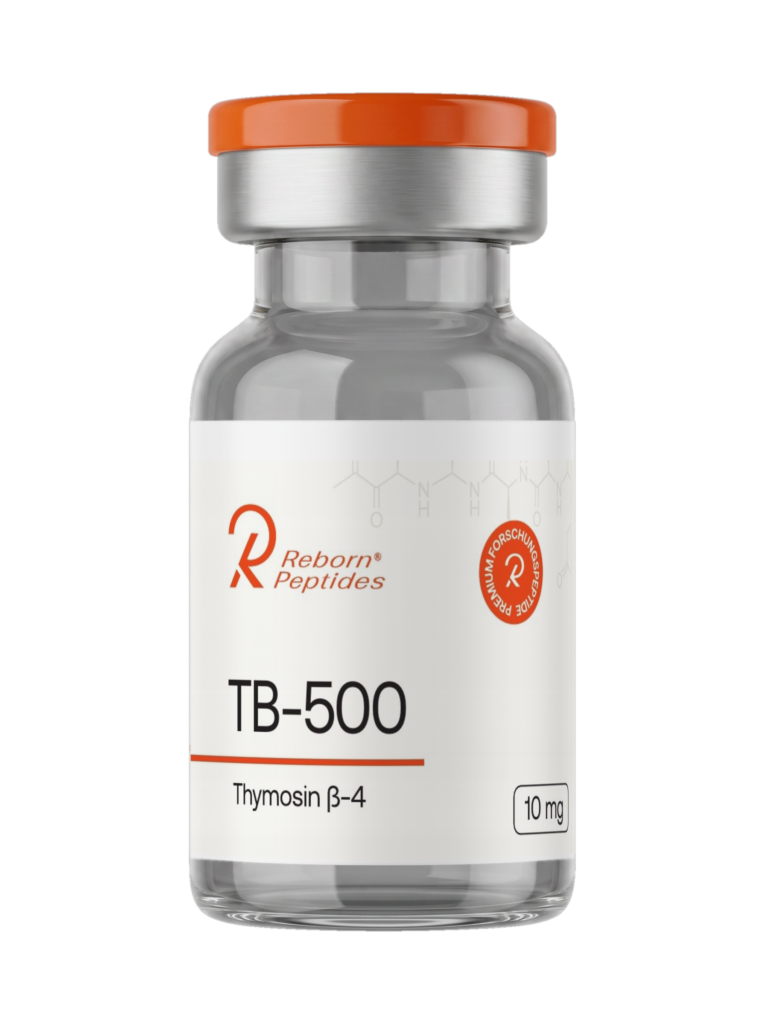
TB-500 is the trade name of a synthetic research peptide from the thymosin beta-4 (Tβ4) family, supplied as a lyophilised research material at 10 mg per vial. In studies, Tβ4 and its actin-binding motif have been examined in models of actin dynamics, cell migration and tissue remodelling.
The market uses the name TB-500 inconsistently — for the N-terminally acetylated actin-binding fragment Ac-LKKTETQ (7 amino acids, ~889 Da) as well as for full-length thymosin beta-4 (43 amino acids, ~4963 Da). The name does not define the molecule; the batch certificate of analysis reports purity and content by HPLC against a reference standard.
Thymosin beta-4 binds monomeric G-actin and holds it in a reservoir — a basic mechanism of cell architecture characterised in vitro by Safer and colleagues (1991) and extended by Sanders and colleagues (1992), who observed concentration-dependent changes in actin polymerisation and stress fibres in cell models.
Beyond biochemistry, the peptide has been studied in migration assays (Malinda 1997: four- to six-fold increase in directed endothelial-cell migration in vitro), in dermal remodelling models in rodents (Malinda 1999; Philp 2003) and in murine cardiac models with ILK-related signalling endpoints (Bock-Marquette 2004, Nature).
Analytical work by Esposito (2012) and Ho (2012) defined how TB-500 and thymosin beta-4 are identified and distinguished in laboratory testing — the basis for batch-level identity control.
Context: the evidence base is predominantly preclinical (in vitro and animal models). Thymosin beta-4 is not an approved medicine, and findings from these models cannot be transferred to humans.

Evidence
Thymosin beta-4 binds monomeric G-actin and regulates the balance between soluble and filamentous actin — its central, biochemically characterised mechanism.
Safer et al. 1991 · PMID 1999398
Directed endothelial-cell migration in vitro plus dermal and cardiac remodelling endpoints in rodent models.
Malinda 1997 · PMID 9194528 · Bock-Marquette 2004 · PMID 15565145
The market name TB-500 covers different molecular forms; analytical studies define how they are distinguished — Reborn confirms identity per batch COA.
Esposito 2012 · PMID 22962027 · Ho 2012 · PMID 23084823
Research status
4 selected sources — filterable by study type, each linking straight to the source.
Research Deep Dive
Model-qualified findings in depth — every claim tied to a PubMed-indexed source.
The name TB-500 is not used consistently across the research-supply market. In analytical literature, TB-500 has been described as the N-terminally acetylated fragment 17–23 of thymosin beta-4 — the heptapeptide Ac-LKKTETQ (Esposito et al. 2012; Ho et al. 2012; model types: analytical). The wider biological literature, however, examines full-length thymosin beta-4 (Tβ4), a 43-amino-acid actin-binding peptide. The molecules are related but not chemically identical — and that difference decides which studies apply to the material in a vial.
| Feature | Full-length thymosin beta-4 (43 aa) | TB-500 fragment in analytical literature |
|---|---|---|
| Sequence | Ac-SDKPDMAEIEKFDKSKLKKTETQEKNPLPSKETIEQEKQAGES | Ac-LKKTETQ (positions 17–23) |
| Length | 43 amino acids | 7 amino acids |
| Approx. mass | 4963.4 Da | ~889 Da |
| CAS number | 77591-33-4 | none registered |
| Literature base | Broad preclinical and mechanistic research | Identity and detection analytics |
The technical data refer to full-length thymosin β4; the batch certificate of analysis reports purity and content by HPLC against a reference standard — 4963.4 Da and ~889 Da do not describe the same substance, so the analytical mass on the COA settles the question for every batch.
Sources: Esposito 2012 · PMID 22962027 · Ho 2012 · PMID 23084823
Actin exists as soluble G-actin and can polymerise into filamentous F-actin; the balance between the two contributes to cell shape, movement and measurable remodelling processes. Thymosin beta-4 is biochemically characterised as an actin-sequestering peptide: Safer and colleagues found it indistinguishable from the actin-binding peptide previously called “Fx” and demonstrated binding to actin monomers (1991; model type: in-vitro biochemistry).
Sanders and colleagues subsequently showed that full-length Tβ4 altered actin polymerisation and reduced visible stress fibres in a concentration-dependent manner in epithelial cells and fibroblasts (1992; model type: in vitro). These are defined mechanistic reference points — observed cellular processes under controlled conditions, not evidence of any effect outside those models.
For laboratory work, the productive research question is therefore: which molecular form is present, which actin-related endpoint is being measured, and can the analytical method distinguish the fragment from full-length Tβ4?
Sources: Safer 1991 · PMID 1999398 · Sanders 1992 · PMID 1584803
The findings below describe outcomes in controlled preclinical research. They do not establish an approved use, support self-experimentation or predict an outcome outside the cited studies.
Tβ4 shown to bind monomeric G-actin; identity with the previously described peptide “Fx”.
Safer et al. · PMID 1999398Four- to six-fold increase in directed migration of human endothelial cells in the Boyden-chamber assay, with Matrigel support.
Malinda et al. · PMID 9194528Changes in re-epithelialisation, collagen deposition and angiogenesis-associated measurements in rat and mouse models.
Malinda et al. · PMID 10469335ILK-related signalling changes plus migration and survival endpoints for cardiac cells in murine models; prominent but strictly preclinical.
Bock-Marquette et al. · PMID 15565145Mass-spectrometric definition of TB-500 and its distinction from full-length Tβ4 — the methodological basis for batch-level identity control.
Esposito et al. · PMID 22962027Most frequently cited papers concern full-length thymosin beta-4 in cell or animal models. Results from these models cannot be generalised to humans, and no finding on this page is a statement about effects, benefits or safety outside the cited study. Thymosin beta-4 is not an approved medicine.
Evidence from different molecules must also not be pooled: Ac-SDKP is a distinct Tβ4 fragment with its own literature, and other research peptides sold alongside TB-500 are separate substances with separate evidence bases. Studies of individual components never establish a combined effect for a multi-component product.
This TB-500 research peptide is supplied as 10 mg of lyophilised material per vial. Lyophilised peptides are stored dry, protected from light and refrigerated; temperature cycling and moisture ingress are the practically relevant quality risks (Wang 2000; review of the stability and storage of lyophilised peptide preparations).
Batch documentation: A certificate of analysis connects the batch number, test date, identity method and analytical result. For TB-500 this reconciliation is decisive, because the market name covers different molecular forms — the measured mass in the COA confirms what is actually in the vial. Purity information is always batch-specific; this page makes no blanket purity claim.
Reborn lists TB-500 exclusively as a laboratory research material for laboratories and researchers across the EU. Ten PubMed-indexed sources — from foundational actin biochemistry through rodent remodelling models to the analytical identity literature — document the research landscape, and every scientific claim in this section is tied to one of them.
Research use only. For laboratory research only. Not for human or veterinary use. Not intended to diagnose, treat, cure or prevent any disease. Not a medicinal product, food or cosmetic.

FAQ
A synthetic research peptide from the thymosin beta-4 family. Its central biochemical property is binding monomeric G-actin; purity and peptide content of each batch are stated in the certificate of analysis (HPLC).
The market name is used inconsistently — sometimes for a 7-amino-acid fragment (Ac-LKKTETQ). The batch COA documents purity and content by HPLC against a reference standard; the technical data refer to full-length thymosin β4.
Predominantly preclinical: in-vitro biochemistry and cell assays plus rodent models for migration and remodelling endpoints. Every finding on this page carries its model qualifier.
Strictly as a research peptide for laboratory use only, not for use in humans or animals. Every batch is documented with a certificate of analysis (COA), HPLC and MS.
We accept prepayment by SEPA bank transfer as well as credit card. All payments are processed securely and encrypted.
Discreet shipping from the EU, delivery in 3–5 business days. Neutral packaging with no reference to the contents.