≥ 99 % · HPLC
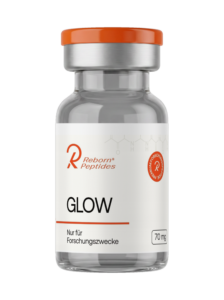
GLOW Blend
Regeneration & Longevity
124,90 €
28,90 €
incl. shipping & VAT

Certificate of analysis per batch

≥ 99 % purity (HPLC)

Shipping across the EU

Delivery in 3–5 business days
Strength: 10 mg
Quantity:

Fast & secure payment

Delivery: 02.11. – 03.11.
Bacteriostatic water 10 ml
For reconstitution — included free with orders over €70.
Only 70,00 € until your free gift.
 View Certificate of Analysis
Laboratory analysis
Tested by an independent EU laboratory using HPLC against a reference standard. Purity and content of the sample at a glance, full report as PDF – with a verification code to check directly with the lab.
X1CS5YAIWhat is Selank
The Selank peptide is the synthetic linear heptapeptide Thr-Lys-Pro-Arg-Pro-Gly-Pro, sequence code TKPRPGP, also carrying the development code TP-7. It is a tuftsin analogue: it contains the tuftsin tetrapeptide motif Thr-Lys-Pro-Arg and extends it at the C-terminus with Pro-Gly-Pro.
The database reference values CAS 129954-34-3, PubChem CID 11765600, molecular formula C33H57N11O9, molecular weight 751.9 g/mol and InChIKey JTDTXGMXNXBGBZ-YVHUGQOKSA-N describe the free peptide form recorded by PubChem. A documented salt form can change formula and mass, so the offered material must be reconciled against the released product specification and the batch COA.
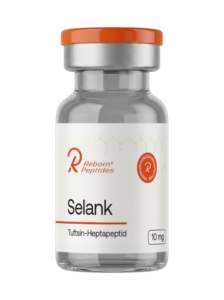
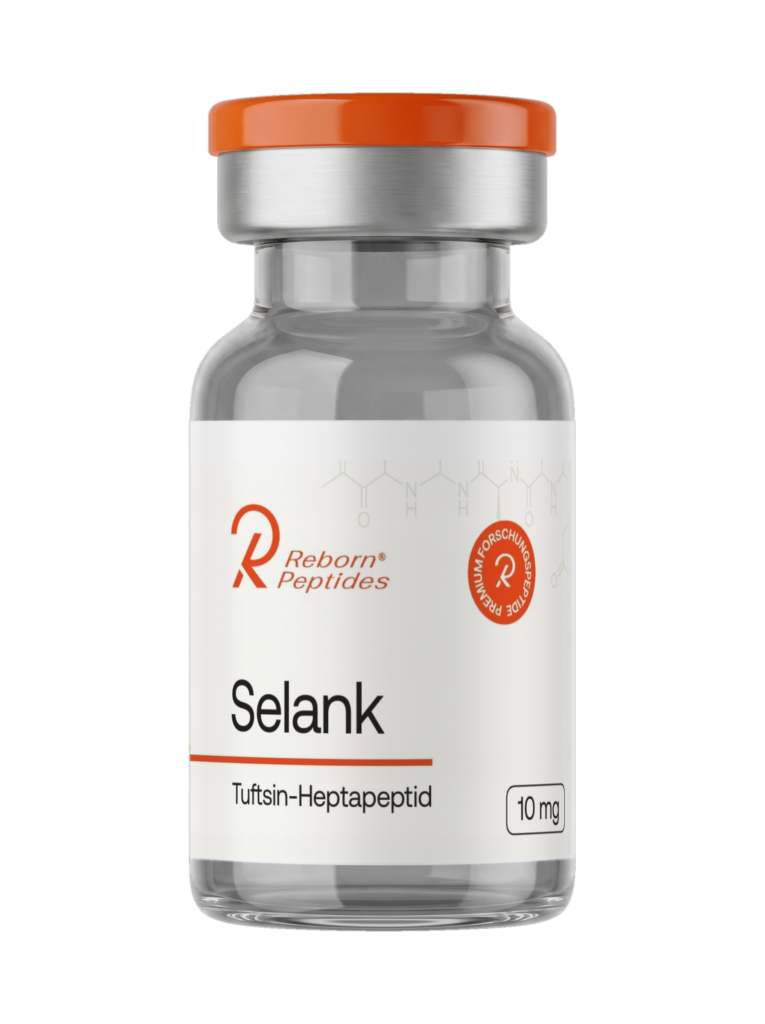
Reborn Peptides SRL lists Selank with a declared content of 10 mg in lyophilised form. Lyophilisation describes the freeze-dried state of the material; on its own it is evidence of neither identity nor purity.
The material is supplied strictly for laboratory research, not for use in humans or animals.
Selank is a synthetic linear heptapeptide with the sequence Thr-Lys-Pro-Arg-Pro-Gly-Pro, condensed as H-Thr-Lys-Pro-Arg-Pro-Gly-Pro-OH and recorded by PubChem under the sequence code TKPRPGP. Databases and publications also refer to it by the development code TP-7. Heptapeptide means seven linked amino-acid residues; linear distinguishes the structure from cyclic peptides, and neither the sequence nor the PubChem record indicates ring closure.
The designation tuftsin analogue describes a structural derivation, not an equivalence. Tuftsin is the tetrapeptide Thr-Lys-Pro-Arg; Selank carries that motif and adds Pro-Gly-Pro at the C-terminus. A shared sequence motif does not allow measurements from tuftsin experiments to be transferred to Selank without separate investigation. Siebert et al. reviewed published chemical and biological work on tuftsin derivatives, including Selank (PMID 28745220; model qualifier: review).
CAS 129954-34-3, PubChem CID 11765600, formula C33H57N11O9, molecular weight 751.9 g/mol and InChIKey JTDTXGMXNXBGBZ-YVHUGQOKSA-N refer to the free peptide form represented by PubChem. CAS and CID support reconciliation between catalogues; formula, sequence and InChIKey support structural identification. No database field replaces examination of the material supplied, and a salt form may alter formula and mass relative to the free peptide form.
Published Selank research spans cell-culture work, preclinical animal models, limited human research and reviews, and no established receptor accounts for every published observation. The cited work examines separate molecular levels: GABA-related transcripts in a preclinical rat model (Volkova et al. 2016, PMID 26924987) and in cultured human IMR-32 neuroblastoma cells, where Selank alone did not alter the mRNA levels examined (Filatova et al. 2017, PMID 28293190); BDNF-related measurements in the rat hippocampus in vivo (Inozemtseva et al. 2008, PMID 18841804) and in a later rat model recording hippocampal and prefrontal BDNF content (Kolik et al. 2019, PMID 31625062); and a panel of 84 inflammation-related genes in mouse spleen (Kolomin et al. 2011, PMID 21609736). A change in mRNA is neither direct evidence of binding nor automatic evidence of a corresponding change in protein abundance, and these evidence layers are not interchangeable.
Zozulya et al. 2001 (PMID 11550013) is a clinical investigation with human participants classified according to DSM-IV, with a supplementary measurement of enkephalin hydrolysis in human plasma in which concentration-dependent inhibition of the measured enkephalinase activity was described. An enzyme assay in plasma cannot be equated with a receptor assay or a comprehensive biological mechanism. This page does not transfer findings from studies with human participants to the offered laboratory material.
Selank and Semax are separate research peptides with separate sequences, literature and batch documentation; a shared C-terminal Pro-Gly-Pro motif does not make them equivalent. The development code TP-7 alone is not sufficient evidence of identity, and n-acetyl Selank is a market form variant requiring its own identity verification. The material is strictly for laboratory research, not for use in humans or animals.

Evidence
CAS 129954-34-3, PubChem CID 11765600, formula C33H57N11O9, 751.9 g/mol and InChIKey JTDTXGMXNXBGBZ-YVHUGQOKSA-N describe the free peptide form represented by PubChem; a salt form may alter formula and mass, and no database field replaces examination of the material supplied.
Released product specification and matching batch documentation
Tuftsin is the tetrapeptide Thr-Lys-Pro-Arg and Selank extends that motif with C-terminal Pro-Gly-Pro; a shared sequence motif does not allow transfer of measurements between the two substances.
Siebert et al. 2017 · PMID 28745220 · review
Time-dependent differences in selected GABA-related transcripts in the frontal cortex were reported in a preclinical rat model; an expression difference in selected genes does not demonstrate direct binding to a particular receptor.
Volkova et al. 2016 · PMID 26924987 · preclinical rat model
In human IMR-32 neuroblastoma cells, Selank alone produced no change in the mRNA levels under investigation; hypotheses developed in an organism model are not automatically confirmed in cell culture.
Filatova et al. 2017 · PMID 28293190 · in vitro, human neuroblastoma cell line
Hippocampal BDNF mRNA in vivo and BDNF content in hippocampus and prefrontal cortex are distinct measurements tied to their tissue, method and time point and must not be merged into a single endpoint.
Inozemtseva et al. 2008 · PMID 18841804 and Kolik et al. 2019 · PMID 31625062 · preclinical rat models
Expression changes in part of an 84-gene inflammation panel in mouse spleen are exploratory molecular endpoints and demonstrate neither a uniform systemic mechanism nor transferability to human tissue.
Kolomin et al. 2011 · PMID 21609736 · preclinical mouse model
A clinical investigation with human participants including a supplementary plasma enzyme measurement is not evidence for properties of the offered lyophilised research material; findings from studies with human participants are not transferred to that material.
Zozulya et al. 2001 · PMID 11550013 · clinical investigation with human participants
The COA must correspond unambiguously to the supplied batch across compound name, batch number, declared content, test date, method and result; an HPLC value documents the tested batch only and does not automatically replace an independent identity test, and the salt-form question remains open.
Released product specification and matching COA
Research status
7 selected sources — filterable by study type, each linking straight to the source.
Research Deep Dive
Model-qualified findings in depth — every claim tied to a PubMed-indexed source.
Selank is a synthetic linear heptapeptide and a tuftsin analogue. Its sequence contains seven residues in a defined order, combining the tuftsin fragment Thr-Lys-Pro-Arg with the C-terminal extension Pro-Gly-Pro. Scientific publications also refer to the substance by the development code TP-7.
The identifiers below refer to the free peptide form represented by PubChem. They provide reconciliation points for a reference structure, but none alone authenticates supplied material.
| Field | Reference specification |
|---|---|
| Designation | Selank |
| Development code | TP-7 |
| Chemical class | Synthetic linear heptapeptide; tuftsin analogue |
| CAS | 129954-34-3 |
| PubChem CID | 11765600 |
| Molecular formula | C33H57N11O9 |
| Molecular weight | 751.9 g/mol |
| InChIKey | JTDTXGMXNXBGBZ-YVHUGQOKSA-N |
| Condensed sequence | H-Thr-Lys-Pro-Arg-Pro-Gly-Pro-OH |
| PubChem sequence code | TKPRPGP |
| Structural derivation | Tuftsin fragment Thr-Lys-Pro-Arg plus Pro-Gly-Pro |
These registry identifiers apply to the free peptide form. A salt form may alter the formula and molecular mass, so the documented chemical form must be reconciled with the label, released specification and applicable batch COA. Database identity and batch identity remain separate information layers.
Structural context: Siebert et al., 2017 review
Tuftsin is the tetrapeptide Thr-Lys-Pro-Arg. Selank contains this full motif and adds Pro-Gly-Pro at the C-terminus. “Tuftsin analogue” therefore describes structural derivation; it does not make the two substances analytically or experimentally interchangeable.
Thr-Lys-Pro-Arg is present in both designations, while Selank continues with the defined Pro-Gly-Pro extension.
A shared sequence motif permits no transfer of measurements from tuftsin experiments to Selank without separate investigation.
Siebert et al. reviewed chemical variants and heterogeneous experimental fields involving tuftsin derivatives. As a review, it provides context across sources; the relevant primary publication must still be consulted for any specific scientific statement.
Tuftsin lineage: Siebert et al., 2017 — Review
No established receptor accounts for every published Selank observation. The research separates several measurement levels: GABA-related transcripts, BDNF-related measurements, immune-related gene expression and a supplementary enzyme measurement in human plasma. These levels are not interchangeable.
Volkova et al. reported time-dependent differences in selected GABA-related transcripts in the frontal cortex in a preclinical rat model. Filatova et al. used an in-vitro human neuroblastoma cell line and found that Selank alone did not alter the mRNA levels examined in that system; combined conditions produced different expression patterns. The single-substance null result prevents a uniform mechanism claim across these experimental systems.
Inozemtseva et al. measured time-dependent BDNF mRNA changes in the hippocampus in vivo in a preclinical rat model. Kolik et al. examined BDNF content in the hippocampus and prefrontal cortex in a preclinical rat model involving prolonged ethanol exposure. Kolomin et al. analysed a panel of 84 inflammation-related genes in mouse spleen at two time points in a preclinical mouse model and also examined peptide fragments.
mRNA is neither evidence of binding nor a measure of protein abundance. Tissue, model, method, comparison and measurement time remain part of each finding, and none of these molecular endpoints establishes properties of supplied material.
Endpoint records: Volkova et al., 2016 · Filatova et al., 2017 · Inozemtseva et al., 2008 · Kolik et al., 2019 · Kolomin et al., 2011
This section describes findings in controlled research and makes no statement about use. The rows are ordered by model type, from in vitro through preclinical animal models to review and clinical investigation. That order is organisational, not an evidential hierarchy, and every finding remains bounded by its stated model and endpoint.
qPCR recorded 84 genes in cultured IMR-32 cells. Selank alone produced no change in the GABA-related mRNA levels under investigation; combined conditions yielded different patterns.
PubMed sourceA preclinical rat model measured BDNF expression in the hippocampus in vivo and reported time-dependent changes in BDNF mRNA following the investigated exposure.
PubMed sourceA preclinical mouse model analysed 84 inflammation-related genes in spleen at two time points and also examined peptide fragments. These are exploratory transcript measurements.
PubMed sourceA preclinical rat model examined selected genes associated with GABA-related neurotransmission in the frontal cortex at two post-administration time points, with time-dependent expression patterns.
PubMed sourceA preclinical rat model involving prolonged ethanol exposure examined BDNF content in hippocampus and prefrontal cortex and recorded behavioural parameters. Findings remain tied to that model and its measurement times.
PubMed sourceThis review brings together chemical variants and different experimental fields involving tuftsin derivatives. Heterogeneous source types do not replace the relevant primary record.
PubMed sourceThe clinical investigation examined participant groups classified according to DSM-IV and included a supplementary enzyme measurement in human plasma. Concentration-dependent inhibition of measured enkephalinase activity was described in that supplementary measurement; the enzyme assay is not a receptor assay or a comprehensive mechanism.
PubMed sourceThe human cell line is not a study with participants. Zozulya et al., by contrast, is a clinical investigation with human participants and a supplementary enzyme measurement in human plasma. This page does not transfer findings from studies with human participants to the offered laboratory material.
Evidence map: seven model-qualified records linked in the timeline above.
Selank contains the full tuftsin motif Thr-Lys-Pro-Arg and extends it with Pro-Gly-Pro. Tuftsin and Selank therefore have different sequences, and their measurements cannot be treated as equivalent.
Selank and Semax are distinct research peptides, each with its own sequence, literature and batch documentation. This is an identity distinction only, not a comparison, ranking or recommendation.
N-acetyl Selank is a form variant listed in the market and requires its own identity verification. It must not be substituted for the sequence documented here on the basis of naming similarity. TP-7 is also referred to as the development code for Selank, but the code alone is not evidence of identity. The phrase Selank TP-7 does not replace sequence and batch-document reconciliation.
Nomenclature context: Siebert et al., 2017 — Review
For laboratories that buy Selank as reference material for a documented research project, Reborn Peptides SRL lists the material in lyophilised form with a declared content of 10 mg. Lyophilisation describes the freeze-dried state; it is not evidence of identity or purity. The declared content is catalogue information and must remain distinct from analytical findings.
The applicable COA must be attributable to the supplied batch through the product name and batch code. The compound name, declared content, test date, analytical method and reported result should be reconciled. An HPLC value can document chromatographically determined purity only for the tested batch and is not a blanket purity statement or an automatic substitute for an independent identity test.
The documented salt form remains part of this reconciliation because the PubChem identifiers describe the free peptide form. Binding storage information comes from the label, released specification and applicable batch COA; no temperature, stability period or shelf-life is stated here. Literature records, database identifiers and supply documentation answer different questions and cannot substitute for one another.
Research use only. For laboratory research only. Not intended for humans or animals. Not a medicinal product, food or cosmetic. This product is not intended to diagnose, treat, cure or prevent any disease.

FAQ
Selank is the synthetic linear heptapeptide Thr-Lys-Pro-Arg-Pro-Gly-Pro, condensed as H-Thr-Lys-Pro-Arg-Pro-Gly-Pro-OH with the PubChem sequence code TKPRPGP. CAS 129954-34-3, PubChem CID 11765600, formula C33H57N11O9, 751.9 g/mol and InChIKey JTDTXGMXNXBGBZ-YVHUGQOKSA-N describe the free peptide form recorded by PubChem, not the supplied batch.
TP-7 is the development code under which Selank also appears in databases and publications. It refers to the same stated research substance, but the code alone is not sufficient evidence of identity.
Tuftsin is the tetrapeptide Thr-Lys-Pro-Arg. Selank contains that motif and extends it at the C-terminus with Pro-Gly-Pro. This structural relationship does not permit measurements from the two substances to be treated as equivalent (Siebert et al. 2017, PMID 28745220; model qualifier: review).
Separate endpoints in separate systems: GABA-related gene expression in a preclinical rat model and in human IMR-32 cells, BDNF-related measurements in rat hippocampus and prefrontal cortex, and inflammation-related gene expression in mouse spleen. An expression difference in selected genes does not demonstrate direct binding to a particular receptor.
No. Zozulya et al. 2001 (PMID 11550013) is a clinical investigation with human participants including a supplementary enzyme measurement in human plasma. Its design, publication date and reported endpoints must be considered in every interpretation, and this page does not transfer findings from studies with human participants to the offered laboratory material.
Selank is tuftsin-derived with the sequence TKPRPGP; Semax is a separate catalogue position with its own sequence, literature and batch documentation. A shared C-terminal Pro-Gly-Pro motif does not make them equivalent, and this distinction is neither a ranking nor a recommendation.
Verifiable facts take priority: an unambiguous compound name, the sequence, the CAS number, the PubChem CID, the declared content, the lyophilised form, the batch code and an attributable COA. The development code TP-7 alone is insufficient evidence of identity, and agreement of the documented salt form must be clarified before internal laboratory release.
Reborn lists Selank with a declared content of 10 mg in lyophilised form; the freeze-dried state is by itself evidence of neither identity nor purity. The COA must correspond unambiguously to the supplied batch and link compound name, batch number, declared content, test date, analytical method and reported result. An HPLC value documents the chromatographically determined purity of the tested batch only, and it must also be established whether the documented material corresponds to the free PubChem structure or to a salt form.
We accept prepayment by SEPA bank transfer as well as credit card. All payments are processed securely and encrypted.
Discreet shipping from the EU, delivery in 3–5 business days. Neutral packaging with no reference to the contents.