≥ 99 % · HPLC
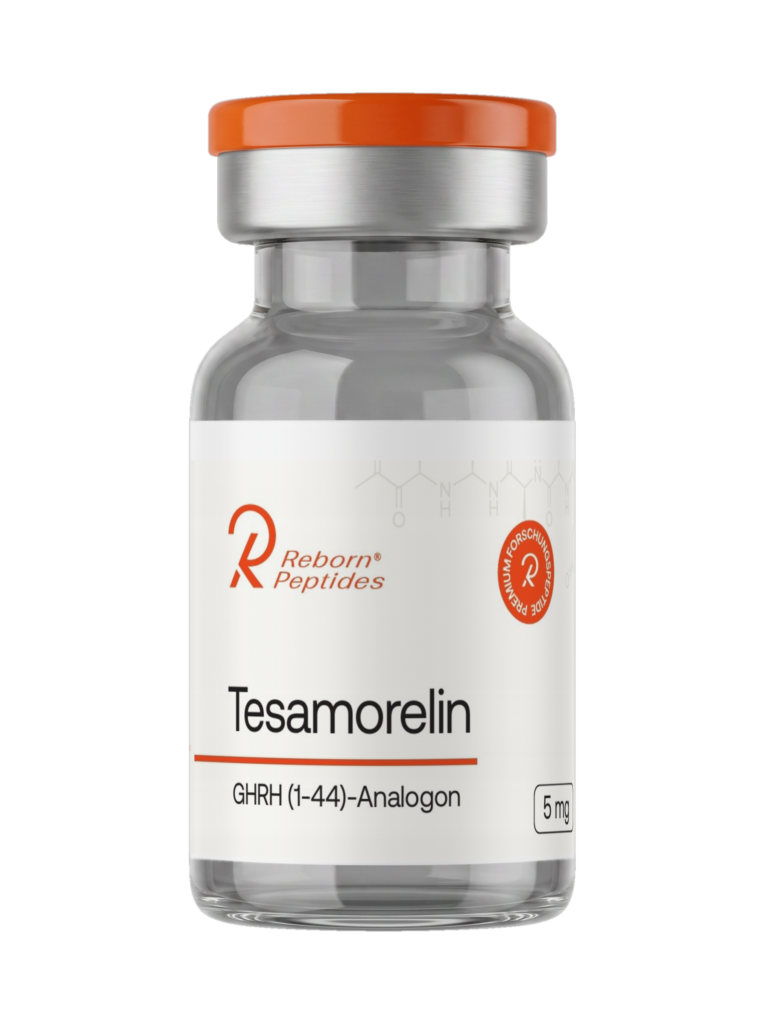
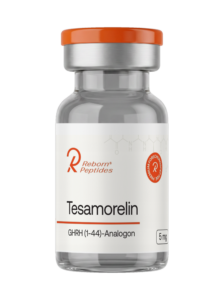
Tesamorelin
Metabolism, Weight & Muscle
53,90 €

57,90 €
incl. shipping & VAT

Certificate of analysis per batch

≥ 99 % purity (HPLC)

Shipping across the EU

Delivery in 3–5 business days
Strength: 10 mg
Quantity:

Fast & secure payment

Delivery: 02.11. – 03.11.
Bacteriostatic water 10 ml
For reconstitution — included free with orders over €70.
Only 70,00 € until your free gift.
 View Certificate of Analysis
Laboratory analysis
Tested by an independent EU laboratory using HPLC against a reference standard. Purity and content of the sample at a glance, full report as PDF – with a verification code to check directly with the lab.
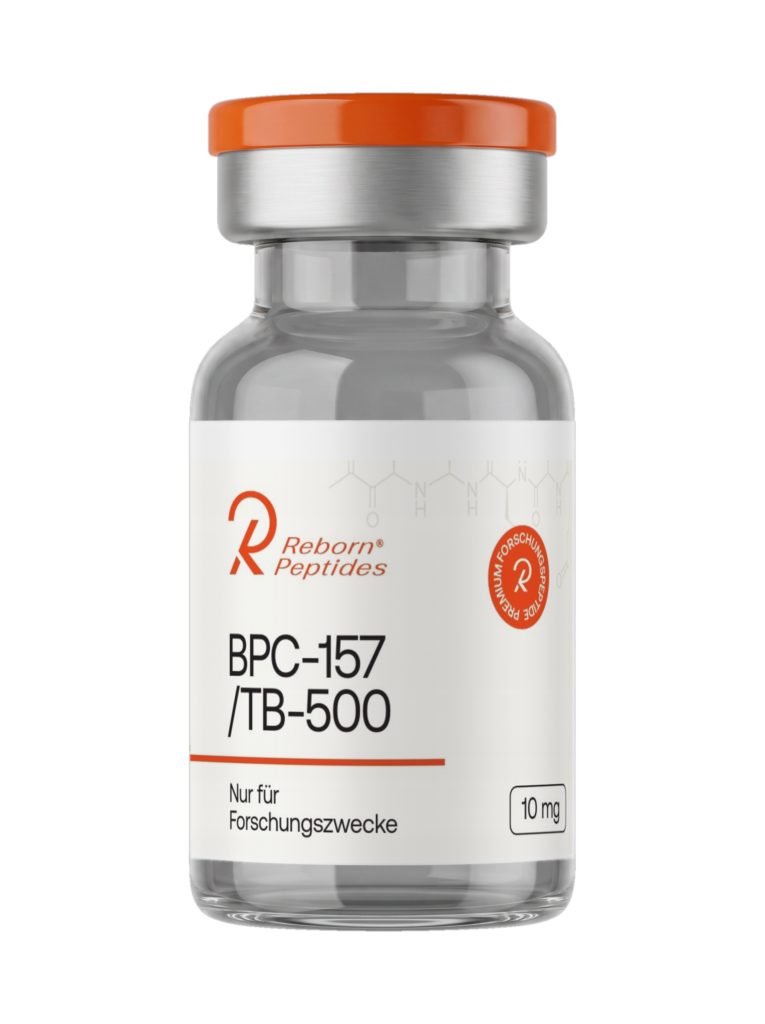
7KJXGK7XWhat is BPC-157
Laboratories that buy BPC-157 for a documented project should assess the stated substance identity, sequence, product specification and matching batch documentation separately. Material listed as BPC-157 for sale should be checked against the batch identifier, analytical method and matching batch documentation named in those records. The reference sequence is GEPPPGKPADDAGLV, a chain of 15 amino-acid residues.
Database identifiers describe a reference structure rather than the offered commercial batch. Published observations concern defined rat, cell, CAM and ex-vivo systems; they do not establish a single mechanism or properties of catalogue material.
The material is supplied strictly for laboratory research, not for use in humans or animals. Batch release requires attributable analytical records, and any HPLC purity result is specific to the tested batch and documented method.
The BPC-157 peptide is a synthetic pentadecapeptide with the sequence Gly-Glu-Pro-Pro-Pro-Gly-Lys-Pro-Ala-Asp-Asp-Ala-Gly-Leu-Val, also written GEPPPGKPADDAGLV. PubChem CID 9941957 records the reference structure with CAS 137525-51-0, molecular formula C62H98N16O22 and molecular weight 1419.5 g/mol; UNII lists 8ED8NXK95P. These reference values do not establish the identity or characteristics of a commercial batch, and no dedicated UniProt entry was found.
Pentadecapeptide BPC 157 is a documented literature designation. Body Protection Compound 157 denotes the same catalogue material; published work uses the closely related spelling “body protective compound-157”. Neither name was confirmed as an official synonym in the reviewed PubChem view, and neither states a biological function.
Preclinical publications examine angiogenesis-related behaviour, VEGFR2-, Akt-, eNOS- and NO-related measurements, cell migration, vascular responses, histological parameters and biomechanical endpoints. These are model-specific measurements rather than evidence of direct binding or one established molecular target. Rat, cell, CAM and ex-vivo findings cannot be transferred to other species or systems.
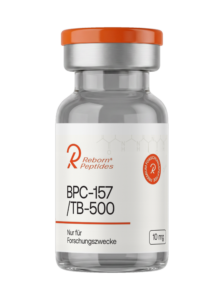
The catalogue lists BPC-157, Wolverine Blend and TB-500 as separate positions. No primary literature was identified for the BPC-157/TB-500 combination, so BPC-157 findings cannot be assigned to Wolverine Blend or to TB-500.
For research procurement, compare the catalogue designation with the product specification, batch identifier, analytical method and corresponding COA. HPLC addresses chromatographic purity for the tested batch and method, while MS addresses a distinct identity question; neither literature nor a database record characterises the supplied batch. The material is strictly for laboratory research, not for use in humans or animals.

Evidence
Rat, CAM and cell systems were used to examine angiogenesis-related behaviour and VEGFR2-, Akt- and eNOS-related markers; these endpoints do not demonstrate direct target binding.
Huang et al. 2015 · PMID 25995620; Hsieh et al. 2017 · PMID 27847966
Isolated rat aorta and vascular-cell assays addressed NO-related responses under defined experimental conditions, not a uniform mechanism across systems.
Hsieh et al. 2020 · PMID 33051481
Rat tendon explants and cultured fibroblasts were used to assess growth-, migration-, FAK/Paxillin- and other signalling-related measurements.
Chang et al. 2011 · PMID 21030672; Chang et al. 2014 · PMID 25415472
Biomechanical and histological measurements in a preclinical rat ligament model remain specific to that species, protocol and measurement schedule.
Cerovecki et al. 2010 · PMID 20225319
Morphological and vascular endpoints were examined across further defined rat protocols; findings remain specific to species, protocol, comparator and observation time.
Duzel et al. 2017 · PMID 29358856
A review maps heterogeneous preclinical publications but is not independent experimental confirmation.
Seiwerth et al. 2021 · PMID 34267654
Database identifiers and literature do not establish commercial-batch identity, content or purity; HPLC results apply only to the tested batch and method, while MS addresses a distinct analytical question.
Product specification and matching COA
Research status
8 selected sources — filterable by study type, each linking straight to the source.
Research Deep Dive
Model-qualified findings in depth — every claim tied to a PubMed-indexed source.
BPC-157 is a synthetic pentadecapeptide comprising 15 amino-acid residues. Its single-letter sequence is GEPPPGKPADDAGLV. The order of those residues is part of the reference identity: peptide length or the abbreviated name alone cannot establish that identity. “Synthetic” describes production of a defined peptide sequence rather than isolation of a complete naturally occurring protein.
Structured identifiers provide independent reconciliation points. PubChem records the reference structure as CID 9941957, with CAS 137525-51-0, molecular formula C62H98N16O22 and molecular weight 1419.5 g/mol. The UNII is 8ED8NXK95P. No dedicated UniProt entry was found in the reviewed search, so an identifier must not be inferred.
| Field | Reference specification |
|---|---|
| Designation | BPC-157 / BPC 157 |
| Chemical class | Synthetic pentadecapeptide, 15 amino acids |
| CAS | 137525-51-0 |
| PubChem CID | 9941957 |
| Molecular formula | C62H98N16O22 |
| Molecular weight | 1419.5 g/mol |
| UNII | 8ED8NXK95P |
| Sequence | GEPPPGKPADDAGLV |
| UniProt | no dedicated entry found |
These values describe the database reference structure, not the commercial batch. A name, sequence or database match does not document the supplied material. Product specification, batch code and analytical records must be reconciled separately; chromatographic purity and molecular identity are distinct analytical questions.
Chemical-context source: Chang et al. 2014 · PMID 25415472
No single, conclusively established mechanism accounts for the heterogeneous observations reported for BPC-157 across cell, tissue and animal systems. Publications measure endpoint classes that include cellular migration, angiogenesis-related behaviour, VEGFR2-, Akt- and eNOS-related markers, and NO-related vascular responses. These observations define research questions; they do not establish a primary molecular target or one causal pathway shared across tissues and species.
CAM, cultured endothelial-cell and rat models have been used to measure angiogenesis-related behaviour and VEGFR2-, Akt- and eNOS-associated markers. Human-derived cells in vitro are not clinical evidence.
Isolated rat aorta and supplementary cell assays address NO-related response classes under controlled conditions. Ex vivo observations remain outside the whole organism.
Correlation between markers, modulation within a signalling context and direct molecular interaction are different claims. The cited designs do not make them interchangeable.
A changed phosphorylation marker alongside altered cell behaviour may show an association within a defined experiment. Inhibitor experiments may support pathway involvement under those conditions. Neither observation alone identifies direct binding, every intermediate step or a universal molecular target. Concentration, timing, controls, matrix and readout remain integral to interpretation.
Hsieh and colleagues examined several systems in 2017, including a CAM assay, cultured human vascular endothelial cells and a preclinical rat model. Their measurements broaden the set of model-specific observations, but combining model types does not close the mechanism question. The 2020 work used isolated rat aorta plus endothelial- and smooth-muscle-cell assays. A vascular ring retains some tissue architecture, yet it cannot establish whole-organism behaviour.
Mechanism-question sources: Hsieh et al. 2017 · PMID 27847966 · Hsieh et al. 2020 · PMID 33051481
This section describes findings in controlled research and makes no statement about use. The records are ordered by model type rather than by implied evidential progression. Cell culture, explants, isolated tissue, animal protocols and review synthesis answer different questions and cannot be pooled into a single quantitative conclusion. This dossier contains no clinical study.
HUVEC experiments measured endothelial-cell endpoints alongside a separate rat protocol, while cultured rat tendon fibroblasts were used for growth-, migration- and signalling-related measurements. Cell culture reduces biological complexity and supplies no human outcome evidence.
Huang et al. 2015 · PMID 25995620Rat Achilles-tendon explants and cultured fibroblasts supported cell-growth, migration and FAK/Paxillin-related measurements. Isolated rat aorta and supplementary cell assays addressed NO-related vascular response classes. Both designs remain model-bound.
Chang et al. 2011 · PMID 21030672Rat protocols measured biomechanical, histological, morphological, vascular and endothelial endpoint classes under distinct experimental conditions. Duzel and colleagues covered ischaemic colitis, ischaemia-reperfusion and obstruction models. Species, protocol, comparator and observation time constrain every finding.
Cerovečki et al. 2010 · PMID 20225319 · Duzel et al. 2017 · PMID 29358856The review organises a broad preclinical literature. It generates no new primary experimental data, and its synthesis does not remove heterogeneity among cell, explant, isolated-tissue and animal designs.
The seven primary records represented here differ substantially in material characterisation, controls, assay architecture and endpoint selection. A shared substance designation is not a basis for treating cellular migration, protein markers, histology, vascular responses and biomechanical measurements as equivalent. Reproducibility assessment requires the design and methods of each original publication.
Timeline sources are linked within the model rows.
“BPC-157” and “BPC 157” designate the same reference peptide sequence. “Body Protection Compound 157” denotes the same reference material, and published work uses the closely related spelling “body protective compound-157”; neither name was confirmed as an official PubChem synonym in the reviewed view, and neither states a function. Confirmed identifiers and sequence provide clearer reconciliation than an expanded name.
A review is a synthesis of earlier publications, not another primary experiment. It can map terminology and model coverage, but a specific claim must still be checked against the relevant primary record. Review breadth does not convert preclinical observations into clinical evidence. Likewise, human-derived endothelial cells studied in vitro remain cultured cells, not a human study.
BPC-157, TB-500 and Wolverine Blend are separate catalogue positions. Wolverine Blend combines BPC-157 and TB-500, but no primary literature for that combination is included in this evidence inventory. Findings for BPC-157 cannot be transferred to TB-500 or the combination, and a shared catalogue context provides no analytical equivalence.
The evidence does not establish direct target binding, a uniform cross-model pathway, human outcomes or properties of a commercial batch. It also does not make different endpoint classes interchangeable. Each statement must retain its model, species, method and measurement boundary.
Review source: Seiwerth et al. 2021 · PMID 34267654
Laboratories that buy BPC-157 for a documented project should reconcile the designation, sequence, CAS, PubChem CID and batch code with the product specification and matching batch documentation. The certificate of analysis should attribute test date, analytical method and result to the relevant batch. A document without a matching batch identifier cannot substantiate the supplied material.
Any purity statement must be batch- and method-specific. HPLC may describe a chromatographic profile or purity result for the tested batch under the reported method; it does not establish a blanket property of BPC-157. HPLC also does not replace suitable mass-spectrometry-supported identity evidence. Purity assessment and molecular assignment answer different analytical questions.
Published research describes model-specific questions and measurements, whereas supply records document the material made available to a laboratory. Neither substitutes for the other. This record makes no assertion about physical presentation, content amount, storage conditions, temperature, stability period or shelf life. Released product specification and matching batch documentation remain decisive.
Research use only. For laboratory research only. Not for human or veterinary use. Not intended to diagnose, treat, cure or prevent any disease. Not a medicinal product, food or cosmetic.

FAQ
| Field | Value |
|---|---|
| Substance class | Synthetic pentadecapeptide (15 amino acids) |
| Synonyms | BPC-157, BPC 157, Body Protection Compound 157, PL 14736 |
| Sequence | Gly-Glu-Pro-Pro-Pro-Gly-Lys-Pro-Ala-Asp-Asp-Ala-Gly-Leu-Val (GEPPPGKPADDAGLV) |
| Molecular formula | C62H98N16O22 |
| Molecular weight | 1419.5 g/mol (PubChem) |
| CAS number | 137525-51-0 |
| PubChem CID | 9941957 |
| UNII | 8ED8NXK95P |
Reborn supplies BPC-157 strictly for research, with laboratory quality assessment and batch documentation (COA, HPLC, MS), purity as stated in the batch COA, and discreet shipping from the EU.
For research use only. BPC-157 from Reborn Peptides is intended exclusively for laboratory and in vitro research, not for use in humans or animals or as a medicinal, food or cosmetic product. Batch analysis. Each batch is documented with a certificate of analysis (COA), HPLC and MS records. Purity & batch. Purity is batch-specific; the respective COA states the measured values.
BPC-157 is classified as a laboratory reagent and is subject to general standards for research peptides. It is intended strictly for laboratory research, not for use in humans or animals. Storage requirements depend on the batch and product form; binding specifications are stated in the respective product and batch documentation.
BPC-157 is a synthetic pentadecapeptide with the sequence GEPPPGKPADDAGLV. PubChem CID 9941957, CAS 137525-51-0, formula C62H98N16O22 and molecular weight 1419.5 g/mol describe the database reference structure, not a commercial batch.
No. Body Protection Compound 157 denotes the same catalogue material as BPC-157; published work uses the closely related spelling “body protective compound-157”. Neither name was confirmed as an official PubChem synonym, and neither states a biological function.
Publications use preclinical rat models, CAM assays, isolated rat tissue, tendon explants and cultured endothelial, smooth-muscle and tendon cells. Each observation remains limited to its stated model and endpoint.
A review organises and contextualises earlier publications but does not generate new primary experimental data. To interpret a specific observation, consult the underlying experiment together with its model and endpoint.
BPC-157 is one research substance. Wolverine Blend is a separate catalogue composition that also lists TB-500. No primary literature was identified for the BPC-157/TB-500 combination, so BPC-157 findings do not characterise the blend or TB-500.
A COA should connect the substance designation, batch code, test date, analytical method and result to the tested batch. HPLC provides a method-specific chromatographic assessment, while MS addresses a different identity question; an HPLC result does not replace identity evidence.
The material is strictly for laboratory research, not for use in humans or animals. Published findings describe their experimental systems and do not establish attributes of the supplied batch.
We accept prepayment by SEPA bank transfer as well as credit card. All payments are processed securely and encrypted.
Discreet shipping from the EU, delivery in 3–5 business days. Neutral packaging with no reference to the contents.